
Post-Impressionist Artist
Vincent van Gogh
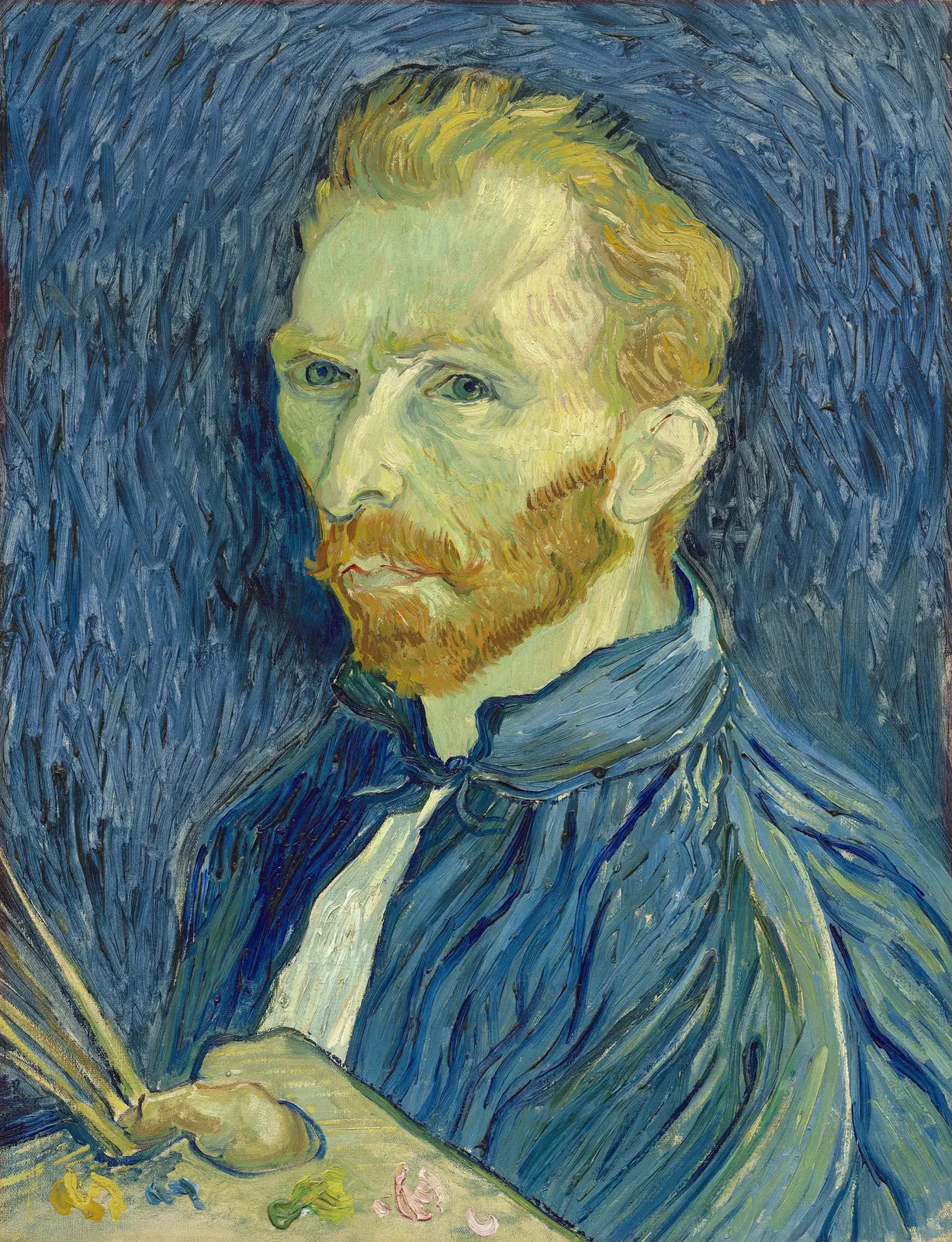
Van Gogh did not paint emotion after seeing the world; he painted to test what seeing could become. His art is built on a concrete problem: how can color, stroke direction, and surface pressure carry thought, belief, fatigue, and hope without collapsing into illustration.
1853–1890: a compressed career across two countries
Vincent van Gogh was born in 1853 in Zundert, in the Netherlands, and died in 1890 in Auvers-sur-Oise, France. He worked across The Hague, Nuenen, Antwerp, Paris, Arles, Saint-Remy, and Auvers, and each move altered his method: dark tonal construction in early Dutch years, chromatic expansion in Paris, and heightened directional brushwork in southern France.
Network, letters, and career turning points
Van Gogh was not an isolated outsider from start to finish. His brother Theo, active in the Paris art market, connected him to exhibitions, criticism, and artists. He studied prints, copied from other painters, and rebuilt borrowed systems into a personal language. His career unfolds in clear stages: formation and social realism, chromatic acceleration in Paris, then synthesis under pressure in Arles and Saint-Remy.
The letters are crucial evidence for this structure. They document daily decisions about palette, canvas format, speed, and revision, and they show how closely Van Gogh linked technique to purpose. He repeatedly evaluates whether a compositional choice is merely striking or genuinely necessary. This discipline helps explain why even his most intense paintings remain constructed rather than impulsive.
A key anecdote from Arles clarifies this discipline. Van Gogh rented the Yellow House in 1888 hoping to build a collaborative southern studio with Paul Gauguin; the project collapsed within months after escalating conflict. The break is often reduced to biography, but the letters show a technical issue underneath: Van Gogh wanted accelerated chromatic risk, while Gauguin defended more synthetic control. The failed collaboration sharpened Van Gogh's late method rather than ending it.
Style and method
His method depends on controlled intensity. Brushstrokes carry direction, so surfaces move rather than sit still. Complementary colors are used as structural tension, not ornament. Impasto thickness is calibrated to catch light and keep gesture visible at distance. The result is precise: form remains legible while affect stays active.
Recurring intentions and evolution
Across periods, Van Gogh's intention remains stable: make lived experience visible without giving up formal rigor. In Nuenen, that appears in dense social gravity; in Paris, in color experimentation; in Arles and Saint-Remy, in rhythmic compression where sky, field, cypress, and architecture become one energetic system. Even in late work, the paintings are not raw confessions. They are constructed visual arguments.
You can track that continuity through concrete motifs. In works around Arles, everyday subjects such as chairs, orchards, wheat fields, and night skies are treated as formal laboratories where color and directional stroke test different emotional registers. In Saint-Remy and Auvers, the same logic tightens: contours become more decisive, brush rhythm more compressed, and horizon structures more unstable. The method evolves, but the underlying question does not.
Key works and comparison path
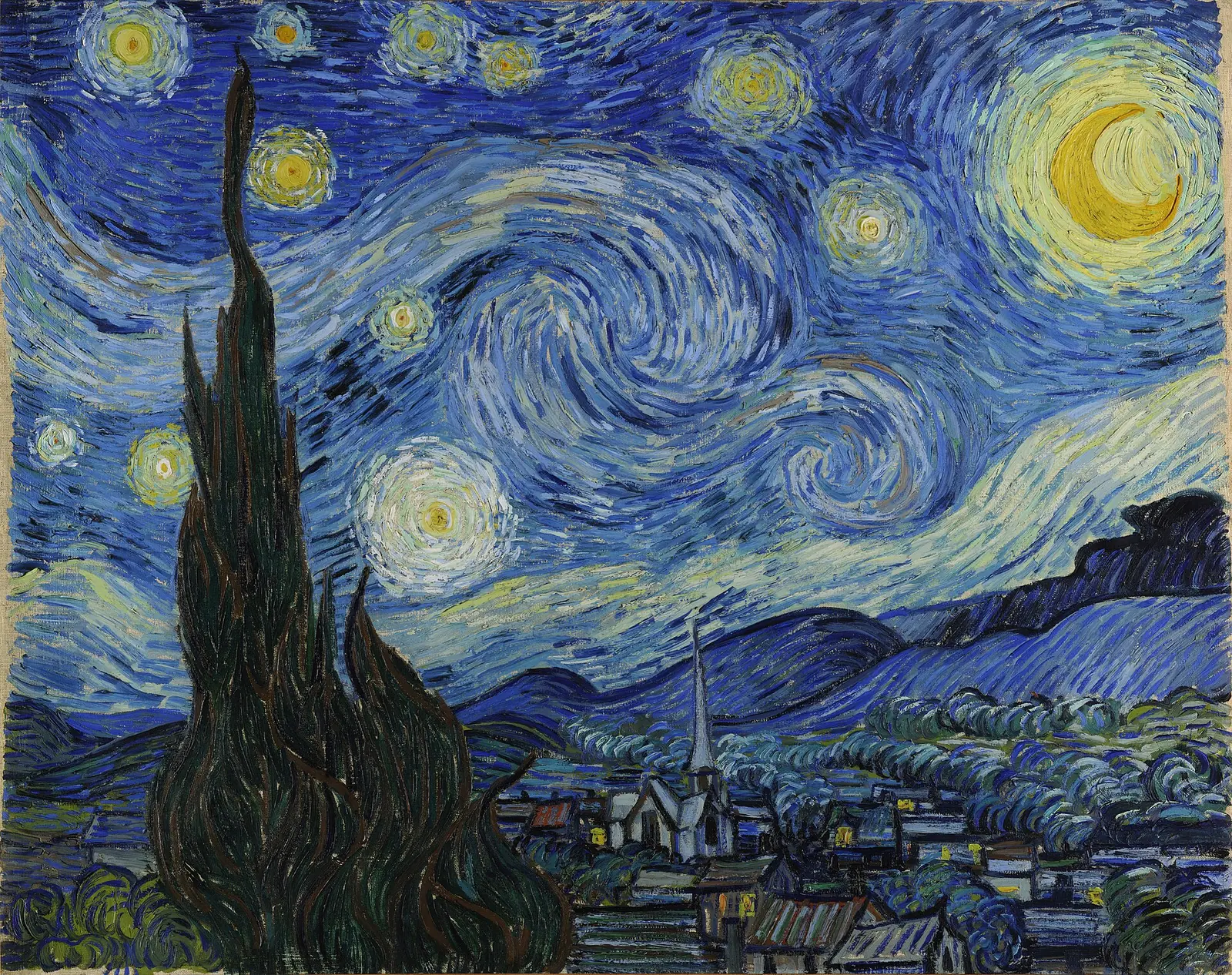
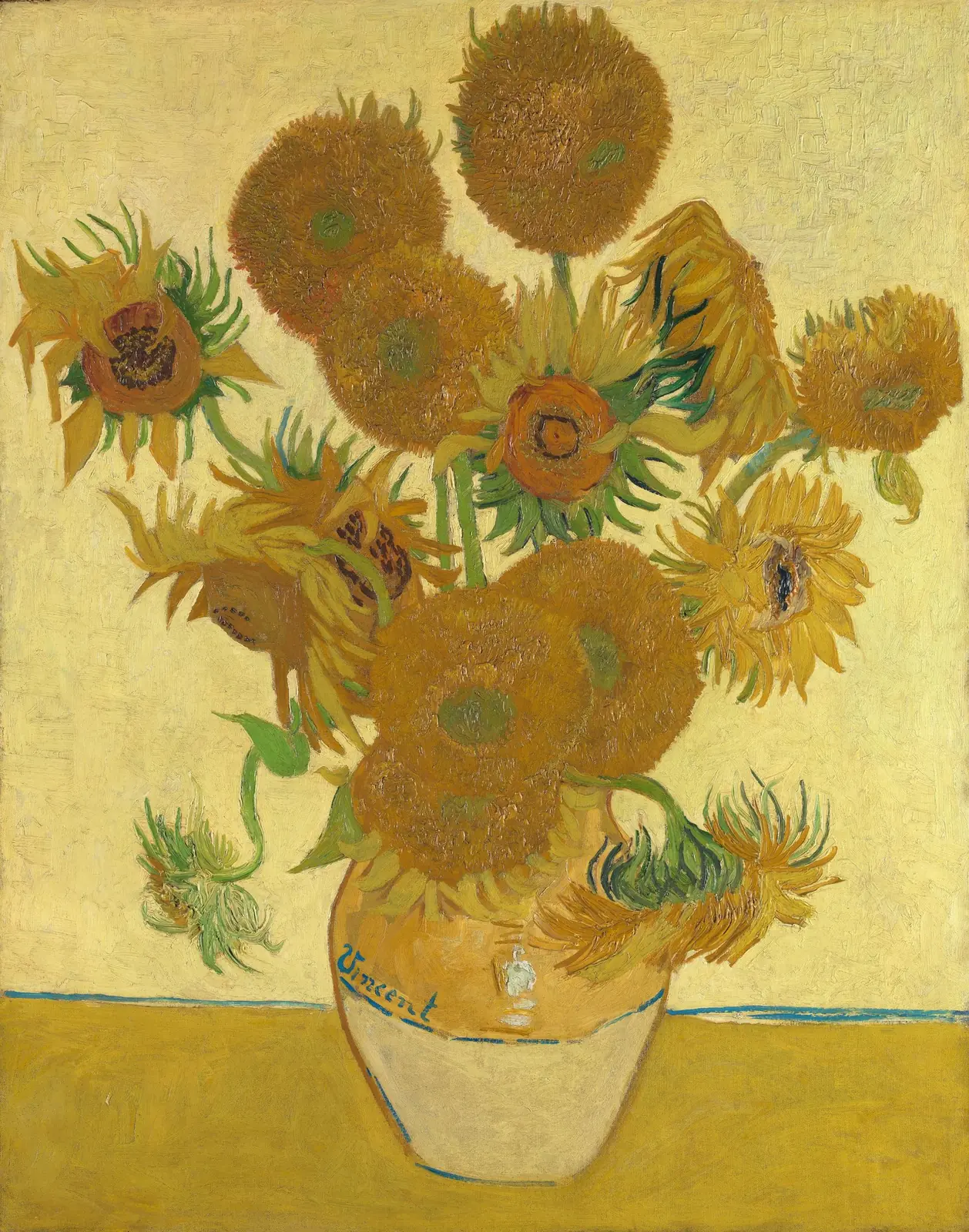
To read him comparatively, move from The Starry Night and Sunflowers to Monet and Munch. Monet studies light variation, Van Gogh intensifies light into affect, and Munch pushes affect toward existential rupture.
For movement-level context, connect this page to Post-Impressionism, then test the transfer with The Scream and How to Understand a Painting.
Historical position and legacy
Van Gogh's legacy is largely posthumous, but technically specific. His influence runs through Expressionism, Fauvism, and modern debates on whether color can carry ethical and psychological force without academic finish. Museums, letters, and conservation science keep refining this legacy by showing how his images were built, how pigments changed, and why the work stays structurally modern.
His historical position is therefore double. He is central to popular culture, but also to specialist research on material history and method. Infrared studies, pigment analysis, and letter cross-reading have made his work a key case for how biography, technique, and reception interact over time. That ongoing research prevents the profile from collapsing into the stereotype of the "tormented genius" and restores what matters most: sustained, deliberate pictorial intelligence.
Continue with the art quiz to validate recognition, context, and comparison.