
Artist Guide
Édouard Manet
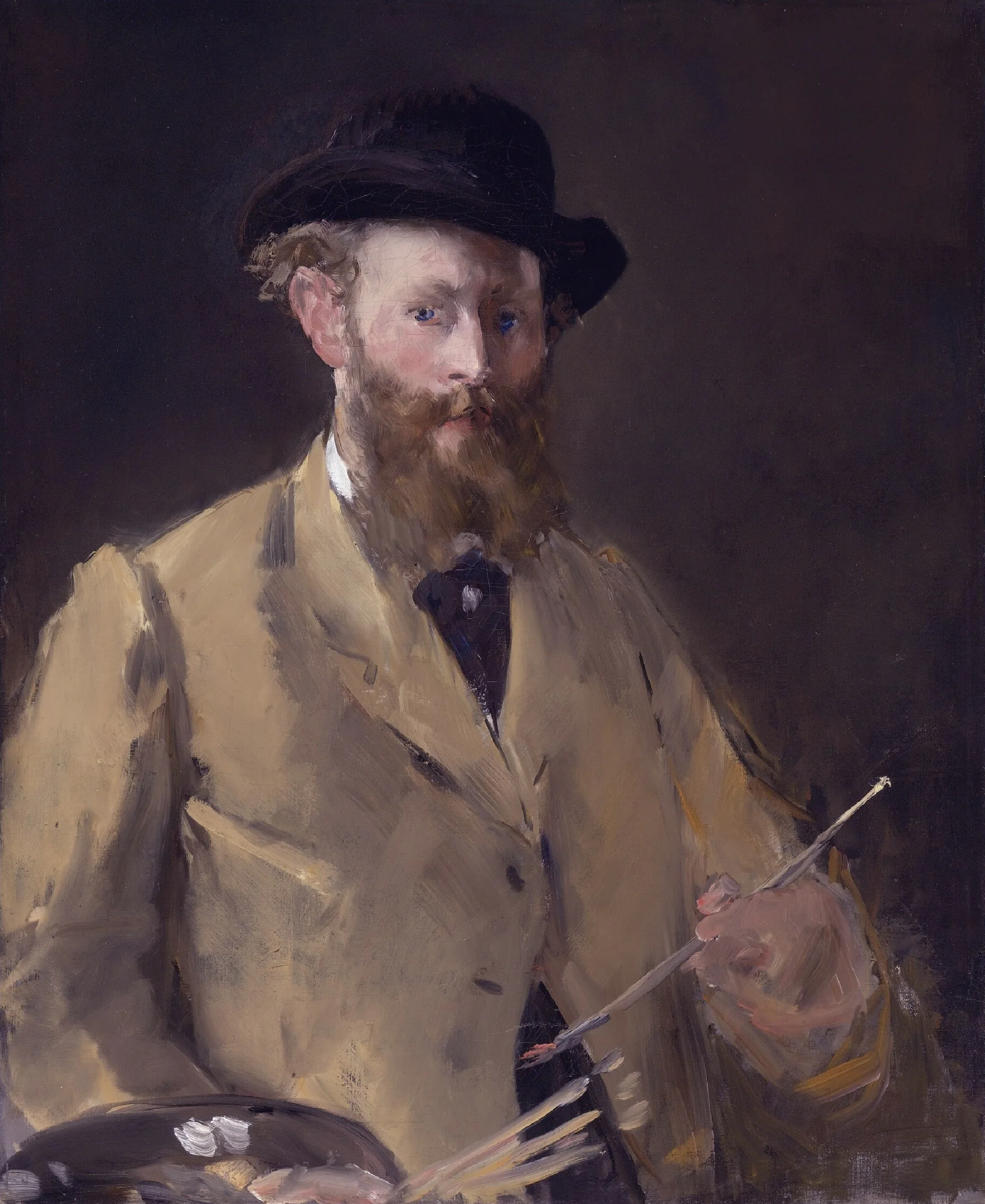
Manet makes modern painting public: the viewer is no longer safely outside the scene. His paintings confront spectators with bodies, leisure, money, class, service, and social looking. He knows the old masters intimately, but he uses that knowledge to remove the protective distance of myth and historical costume.
This is why Édouard Manet sits at the hinge between Realism, Impressionism, and modern painting. Scandal is only the public symptom. His deeper role is to make pictorial form and public life collide inside the same surface.
Academic training used against academic comfort
Born in Paris in 1832, Manet came from an upper-middle-class family and trained in the studio of Thomas Couture. He copied old masters, studied composition, and understood official ambition. His modernity does not come from ignorance of tradition. It comes from turning tradition into pressure.
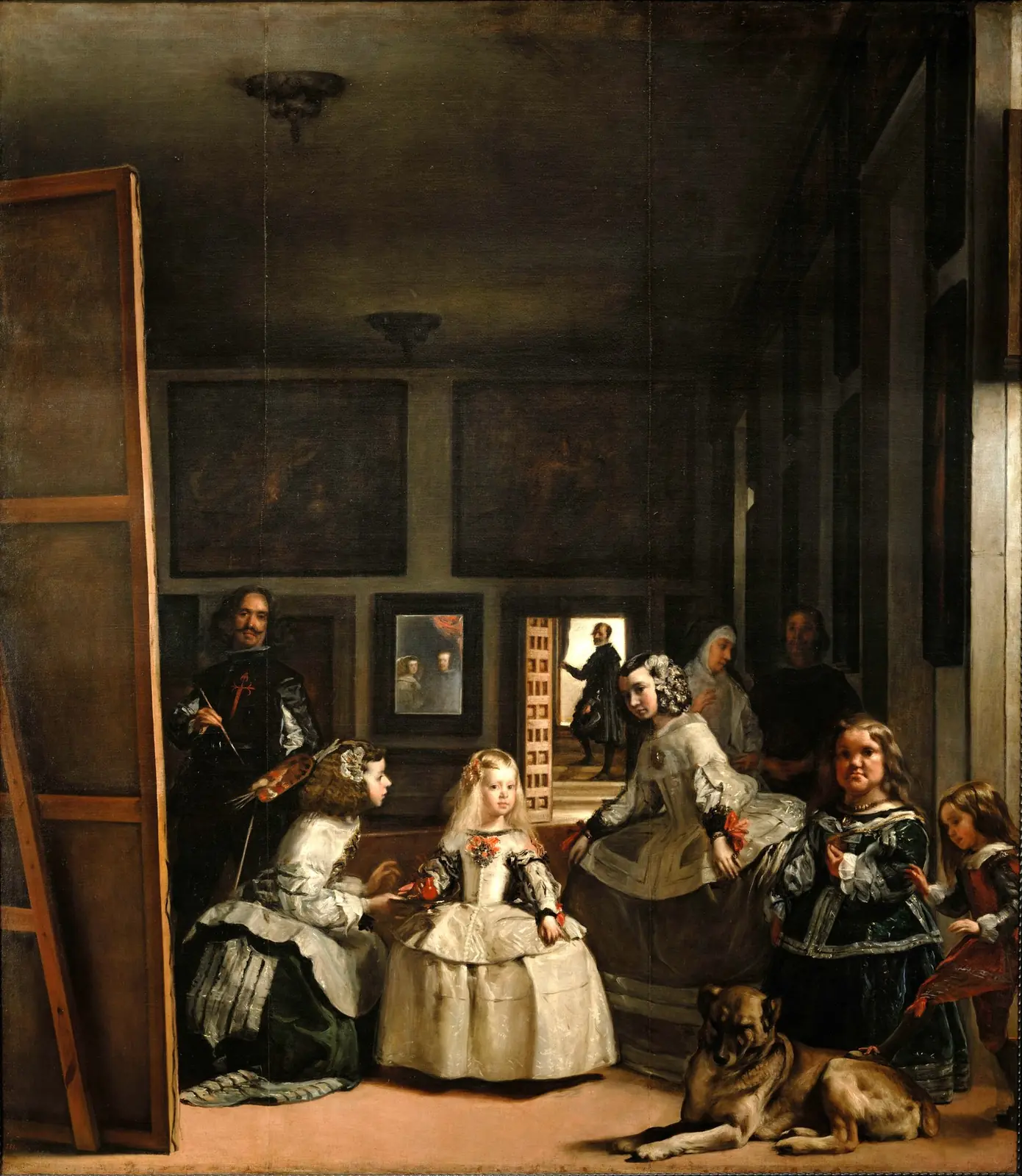
The Spanish painters mattered intensely. Velázquez gave Manet a model of direct presence and controlled tonal force; Goya offered another route into social bluntness and pictorial immediacy. Manet absorbs those lessons, then brings them into the Paris of cafés, gardens, theaters, railways, and Salon controversy.
1863 and 1865: scandal as a test of spectatorship
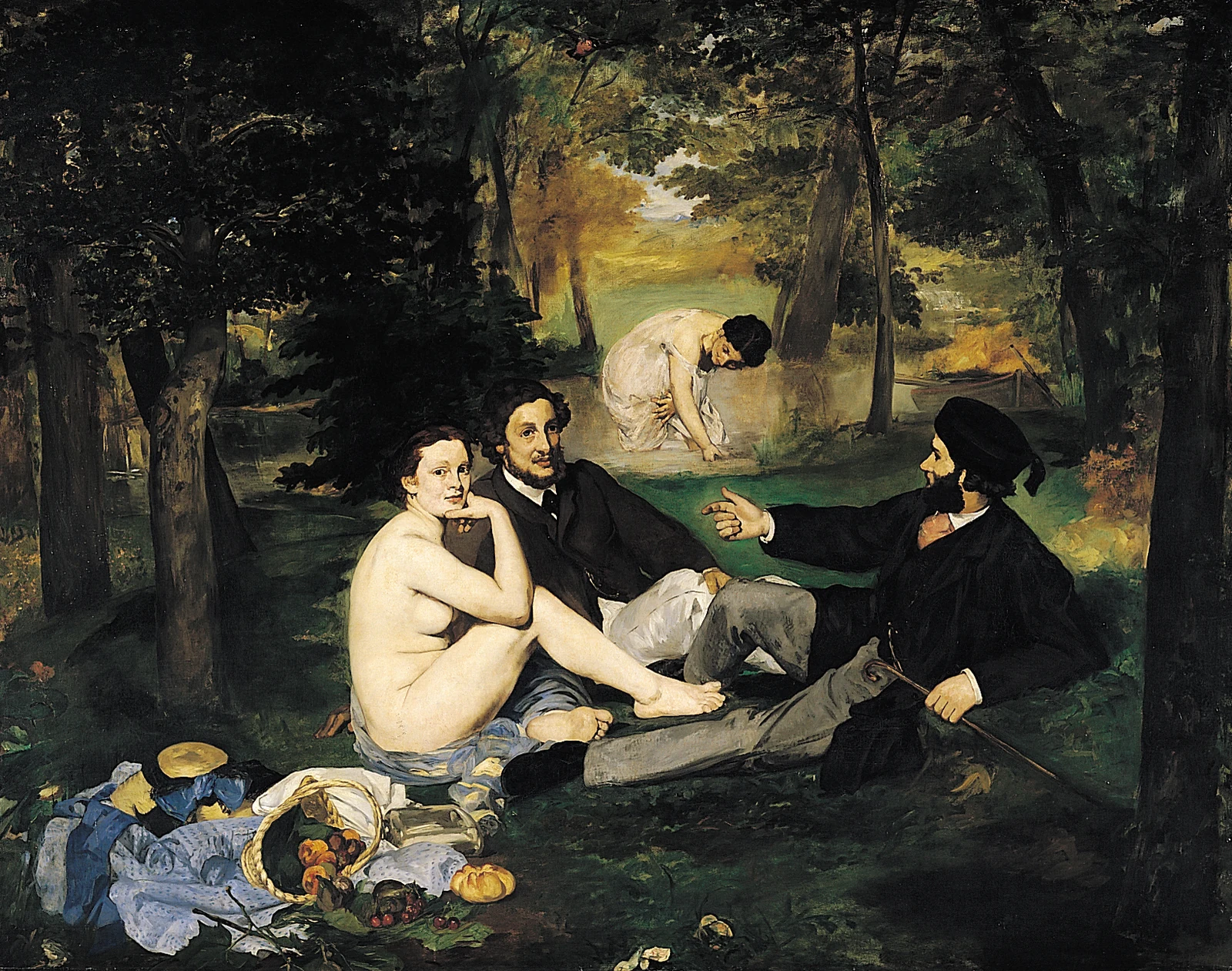
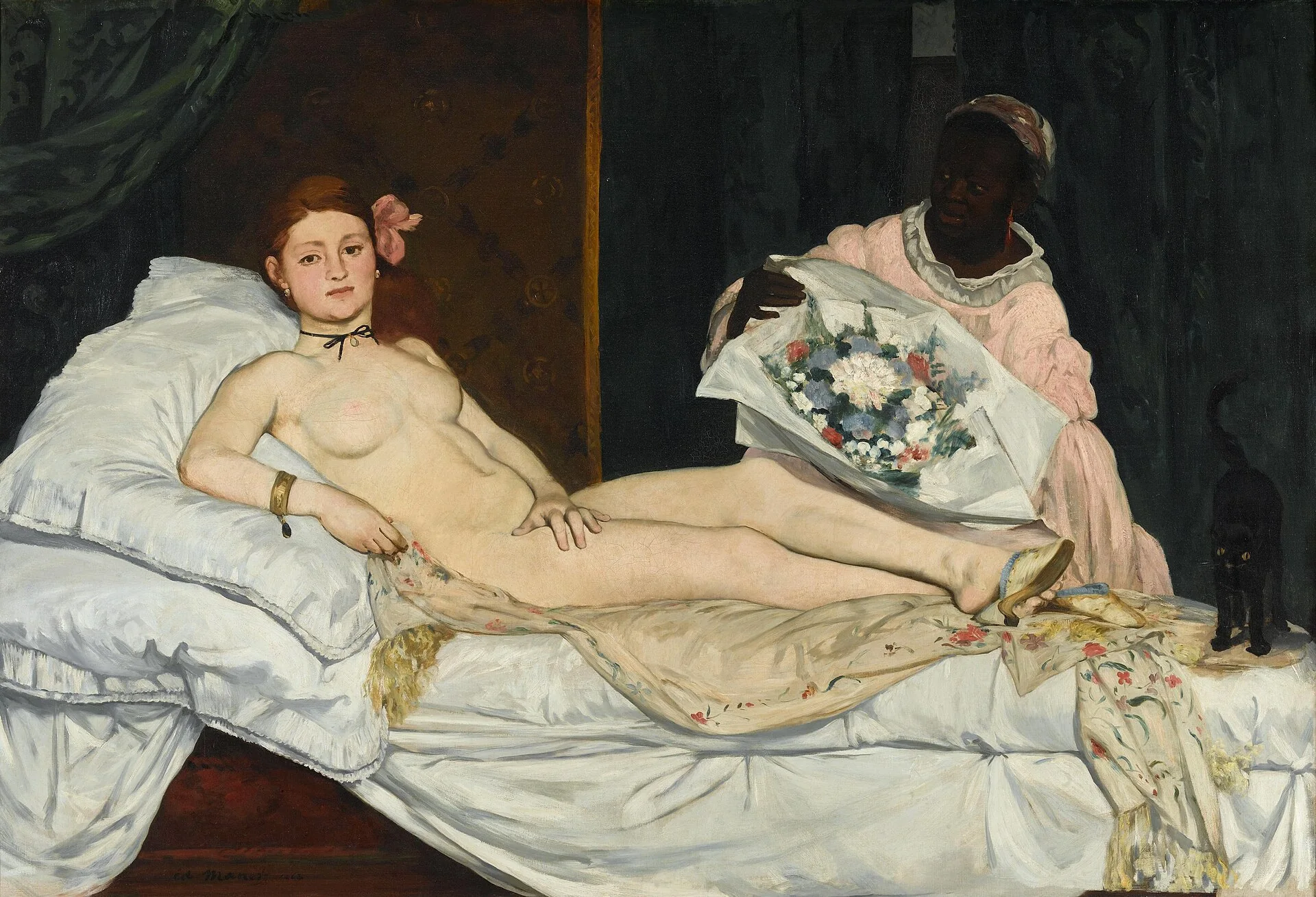
The public sequence begins sharply. In 1863, Le Déjeuner sur l'herbe was rejected by the official Salon and shown at the Salon des Refusés. In 1865, Olympia provoked another fierce response. These scandals were not accidents around the work. They exposed exactly what Manet was testing: what happens when inherited pictorial formats are forced to face contemporary social reality.
Le Déjeuner sur l'herbe uses an old compositional grammar, but the nude is no longer protected by myth. She sits beside clothed modern men, and the painting refuses to soften the unease. The shock comes from the collision between art-historical citation and present-tense social space.
Olympia removes even more shelter. The space is compressed, the transitions are abrupt, the gaze is direct, and the scene offers no mythological excuse. The body becomes inseparable from the transaction of looking.
Victorine Meurent and the modern model
Victorine Meurent is essential to the Manet group in the Explainary library. She appears in Le Déjeuner sur l'herbe, Olympia, and The Railway. Her recurrence gives the sequence a sharper coherence: Manet does not use the model as a neutral vehicle for style. He builds a repeated social presence that changes from picnic to nude to urban railway scene.
In each case, the gaze organizes the viewer's position. Manet's figures receive attention and make that attention visible.
The Railway: modern Paris through obstruction
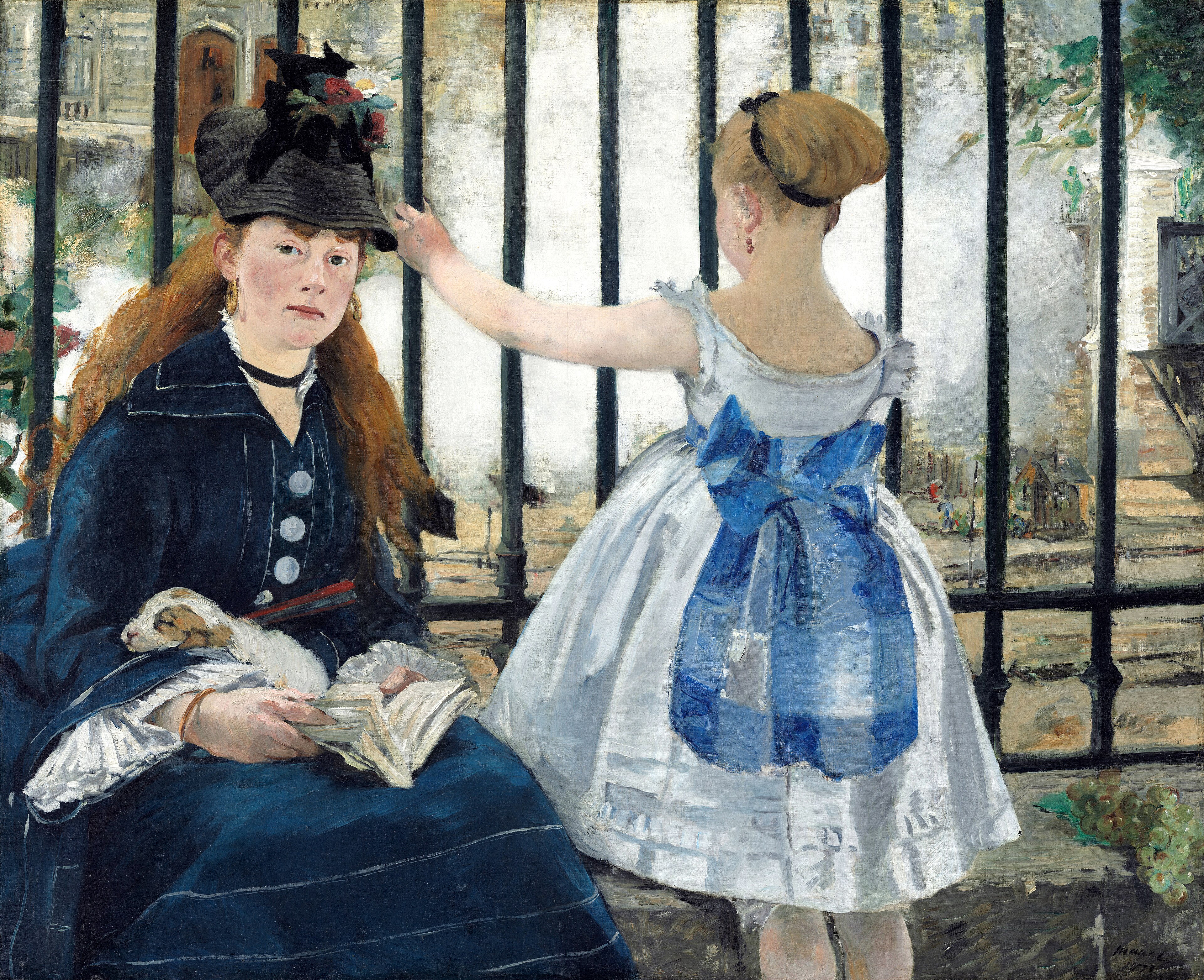
The Railway, painted near the Gare Saint-Lazare in 1873, is one of Manet's clearest answers to urban modernity. The subject is a railway, but no train appears. A woman faces the viewer, a child turns toward iron bars, and steam rises from the tracks below. Modern infrastructure enters as obstruction, divided attention, and atmosphere.
This difference matters beside Claude Monet. Monet later paints the Gare Saint-Lazare as energy, smoke, light, and repetition. Manet turns the same modern world into a social arrangement. He is less interested in the machine as spectacle than in what the machine does to looking, space, and human distance.
Brushwork, flatness, and the visible object
Manet's technique keeps the painting visibly constructed. Abrupt tonal changes, hard edges, compressed space, and selective finish prevent the viewer from sinking into seamless illusion. That choice is formal, but it is also social. A polished academic surface can make a scene appear stable and distant. Manet's surfaces keep pressure in the room.
The comparison with Las Meninas helps locate the ambition. Velázquez builds a courtly theater of looking; Manet hardens that inheritance into modern situations where the spectator is less invited than implicated.
A late synthesis at the Folies-Bergère
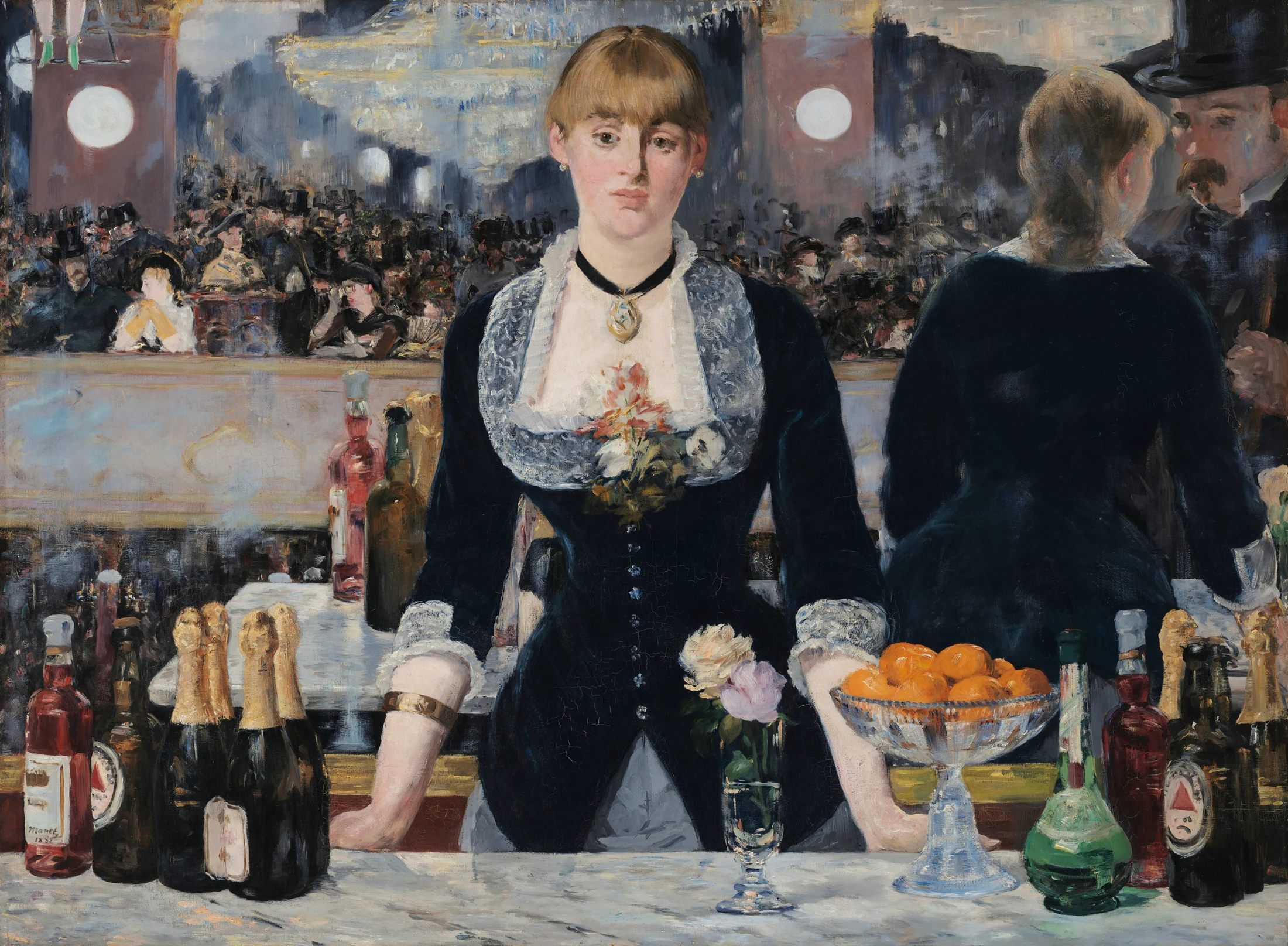
In A Bar at the Folies-Bergère, completed in 1882, Manet no longer needs a picnic or a reclining nude to expose modern life. A bar, a mirror, bottles, fruit, a crowd, and a still barmaid are enough. The painting turns entertainment into a structure of spectacle, service, commerce, and unstable reflection.
The mirror makes the viewer's position uncertain. The woman faces us directly, while the reflected customer seems to occupy a nearby visual place. Manet's late painting translates the frontal pressure of Olympia into a cooler, more spatially complex problem. Modern looking has become transactional and displaced.
Manet in the Explainary library
Movements and comparisons
The internal Manet sequence is direct: Le Déjeuner sur l'herbe tests public discomfort, Olympia makes the confrontation frontal, The Railway shifts the problem into urban obstruction, and A Bar at the Folies-Bergère turns modern spectatorship into a mirror structure. The art quiz is a useful check once those four moves are clear.
Primary sources
Frequently asked questions
Manet makes modern life visible without mythological cover. He keeps the painting's construction visible and forces the viewer to confront class, sexuality, labor, leisure, and spectatorship.
Manet stood close to the Impressionists and influenced them, but he did not exhibit with their independent group. He remained tied to the Salon while painting modern subjects that helped open the way for Impressionism.
Start with Le Déjeuner sur l'herbe and Olympia, then move to The Railway and A Bar at the Folies-Bergère. Together they show Manet's development from public scandal to complex modern spectatorship.
Manet uses modern life to expose social looking and pictorial convention. Monet uses repeated motifs to study light, atmosphere, and duration.