
Artist Guide
Joseph Légaré
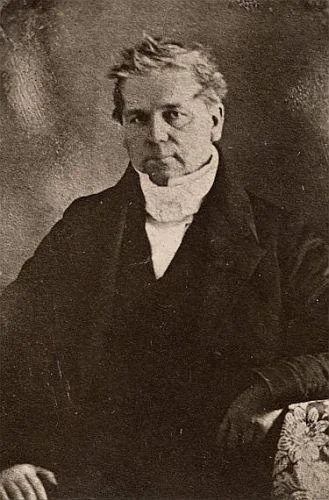
Joseph Légaré turned painting into a civic memory tool for nineteenth-century Quebec. Born in Quebec City in 1795, he worked in Lower Canada while local institutions, exhibition circuits, and collector networks were still forming. That timing matters: Légaré did not simply paint religious and historical subjects already validated in Europe. He helped define what could count as a public image in Quebec, especially when a community needed visual language for crisis, memory, and political stress.
Lower Canada, 1795-1855: training, commissions, and public function
Légaré moved across religious commissions, landscapes, and scenes of contemporary history because artists in Quebec could not rely on a stable national market. Patronage came through church networks, civic elites, and local institutions. This practical ecology shaped his method: clear spatial staging, readable crowd dynamics, and attention to architecture as a social actor. Rather than importing prestige formulas unchanged, he localized historical painting and made local events legible as shared public history.
That role also explains his long-term importance. He belongs to the first generation of French-Canadian painters who treated Quebec spaces and Quebec events as central subjects, not peripheral ones. In concrete terms, he helped build a civic visual archive before that archive had stable institutional language.
What Cholera Plague, Quebec actually stages
In Cholera Plague, Quebec, Légaré does more than illustrate disease. He turns urban space into a system of pressure points: frightened groups, constrained circulation, and institutions trying to hold order. The 1832 cholera wave reached Lower Canada through Atlantic routes and quarantine controls, and Légaré's image captures the civic atmosphere of that emergency rather than a single anecdotal scene. Streets and façades operate as political space, not as neutral background.
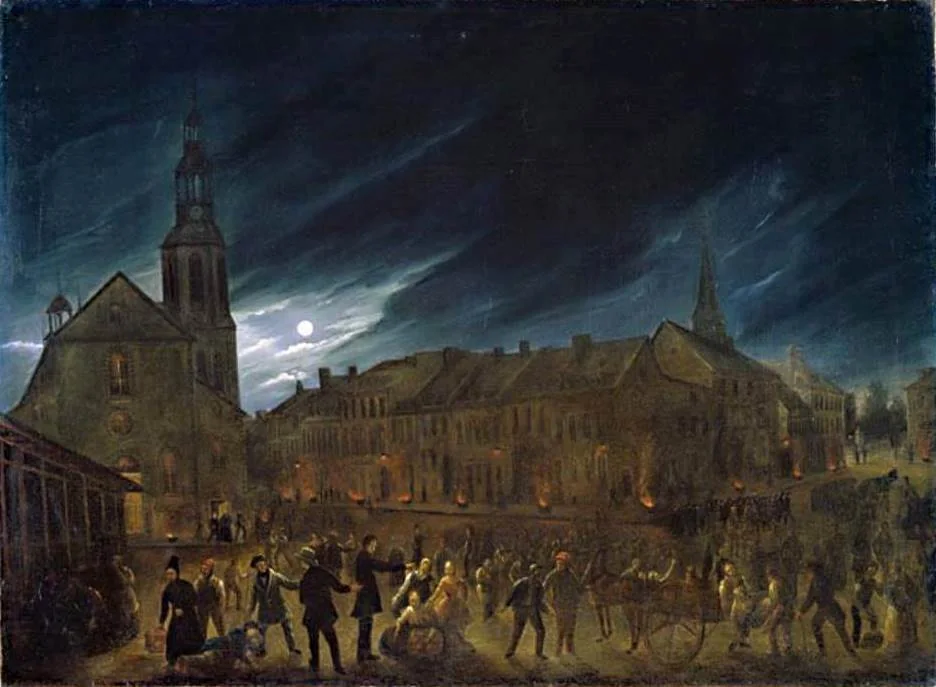
This is where Légaré separates himself from painters centered on portrait prestige or picturesque routine. He asks what a society looks like when normal hierarchies wobble. That question keeps his work historically precise and still methodologically useful today.
From Quebec crisis painting to a broader Canadian canon
Légaré remains less visible internationally than artists trained in Paris or London, mostly for structural reasons: language barriers, uneven circulation of Canadian collections, and survey histories built around a few European capitals. But that underexposure is exactly why he matters for a more accurate canon. His work shows how art develops in colonially entangled societies where local emergencies and institutional fragility shape form and subject together.
A strong internal comparison is Cornelius Krieghoff: Krieghoff often stages negotiated daily life, while Légaré foregrounds rupture and civic strain. Bringing in Clarence Gagnon and How Painting Shaped Quebec Identity helps map a longer arc from crisis memory to cultural continuity.
For close reading, it is useful to move between his crisis imagery and quieter works such as The Habitant Farm. That shift reveals a consistent method: even in calmer scenes, Légaré organizes land, architecture, and human presence as evidence of social order rather than pure scenic charm. Seen this way, his painting is less a sequence of isolated subjects than a sustained inquiry into how Quebec communities picture themselves through stability and breakdown.
Why Légaré still matters in 2026
Légaré's legacy is increasingly central in museum and scholarship contexts because his paintings link event, institution, and identity without simplifying their tension. They remind readers that collective memory is not built only through law and archives, but through images that define what a community considers publicly discussable. For Quebec history, that is not a marginal contribution; it is foundational.
Key works in Explainary
Associated movement
Continue with the art quiz to validate recognition, context, and comparison.
Primary sources
- The Canadian Encyclopedia: Joseph Légaré
- National Gallery of Canada: Cholera Plague, Quebec
- Art Canada Institute: Joseph Légaré
- The Canadian Encyclopedia: Cholera
- Britannica: Canadian art overview
- McCord Stewart Museum: Canadian social and urban history collections
- JSTOR: scholarship on Joseph Légaré and nineteenth-century Quebec painting