
Florentine Painter
Sandro Botticelli
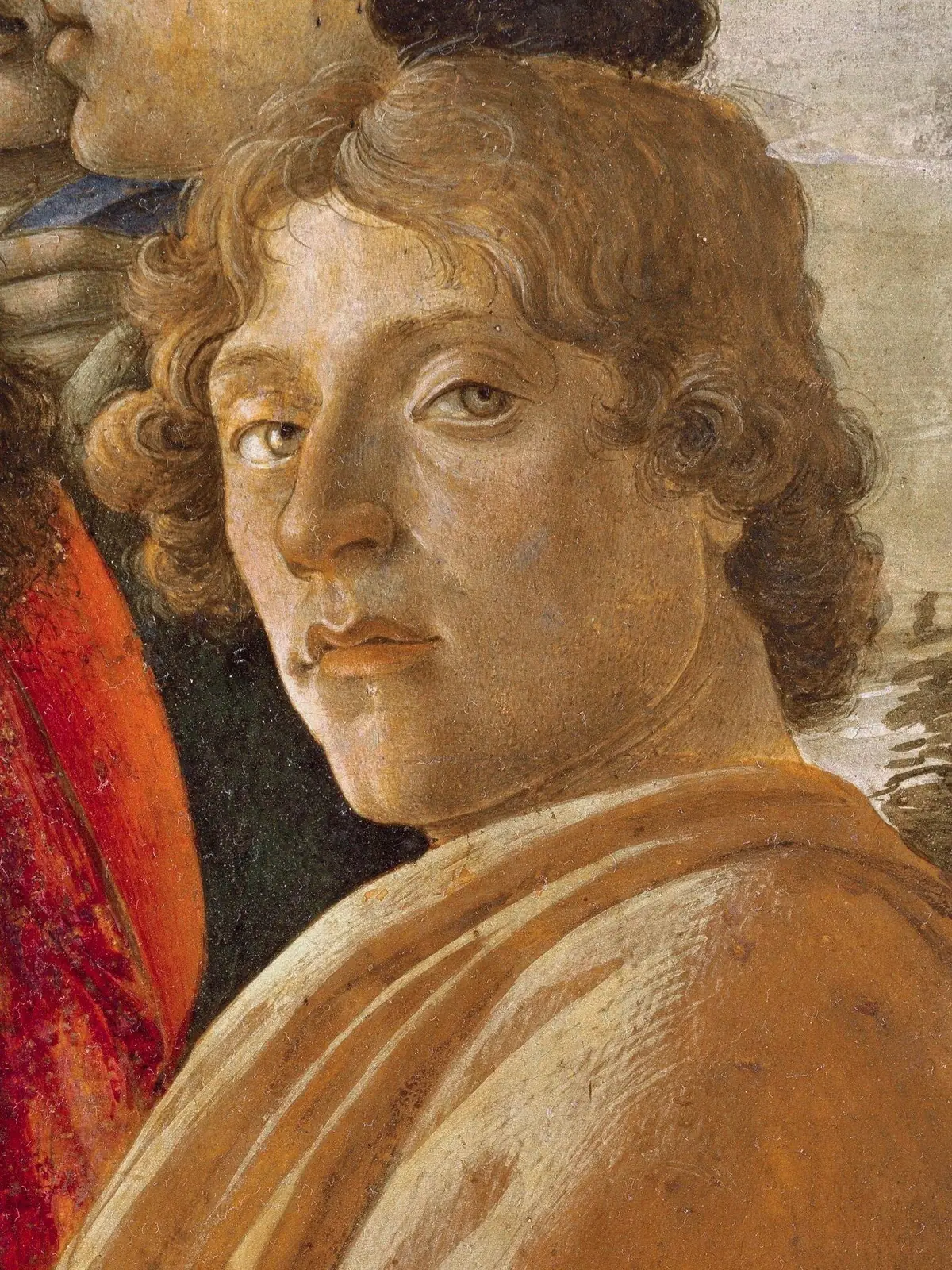
Botticelli's real medium is line. More than perspective, anatomy, or spatial illusion, contour does the work in his paintings. It carries grace, hierarchy, desire, and thought across the surface.
That is why Botticelli should not be reduced to beautiful mythological women. He matters because he gives Florentine painting a distinct language: rhythmic contour, controlled elegance, and images built for patrons who wanted beauty, learning, politics, and belief to meet in the same room.
Florence, workshop, and Medici patronage
Botticelli's career begins in Florence, probably with early training linked to goldsmith work before the decisive apprenticeship with Fra Filippo Lippi. That background matters. It helps explain why his paintings never forget drawing. Edges stay active, surfaces stay lucid, and ornament remains disciplined rather than diffuse.
By 1470 he had his own workshop. Not long after, he was working for Medici-connected patrons and, in 1481, was called to Rome to help decorate the Sistine Chapel. This is the first thing to remember about Botticelli: he was not a fragile eccentric on the edge of Florence. At the height of his career, he was a major professional painter trusted with elite secular and religious commissions.
What Botticelli does that Leonardo and Raphael do not
Botticelli does not build authority through mass in the way later Renaissance painting often does. He is less interested in bodily weight than in precise movement. Hair, drapery, and gesture all become parts of the same visual current.
That difference becomes clear once you compare him with Leonardo da Vinci or Raphael. Leonardo deepens form through tonal modeling; Raphael stabilizes it through classical balance. Botticelli does something sharper and less monumental. He makes line carry the image's emotional and intellectual pressure.
Why Venus and Primavera still dominate
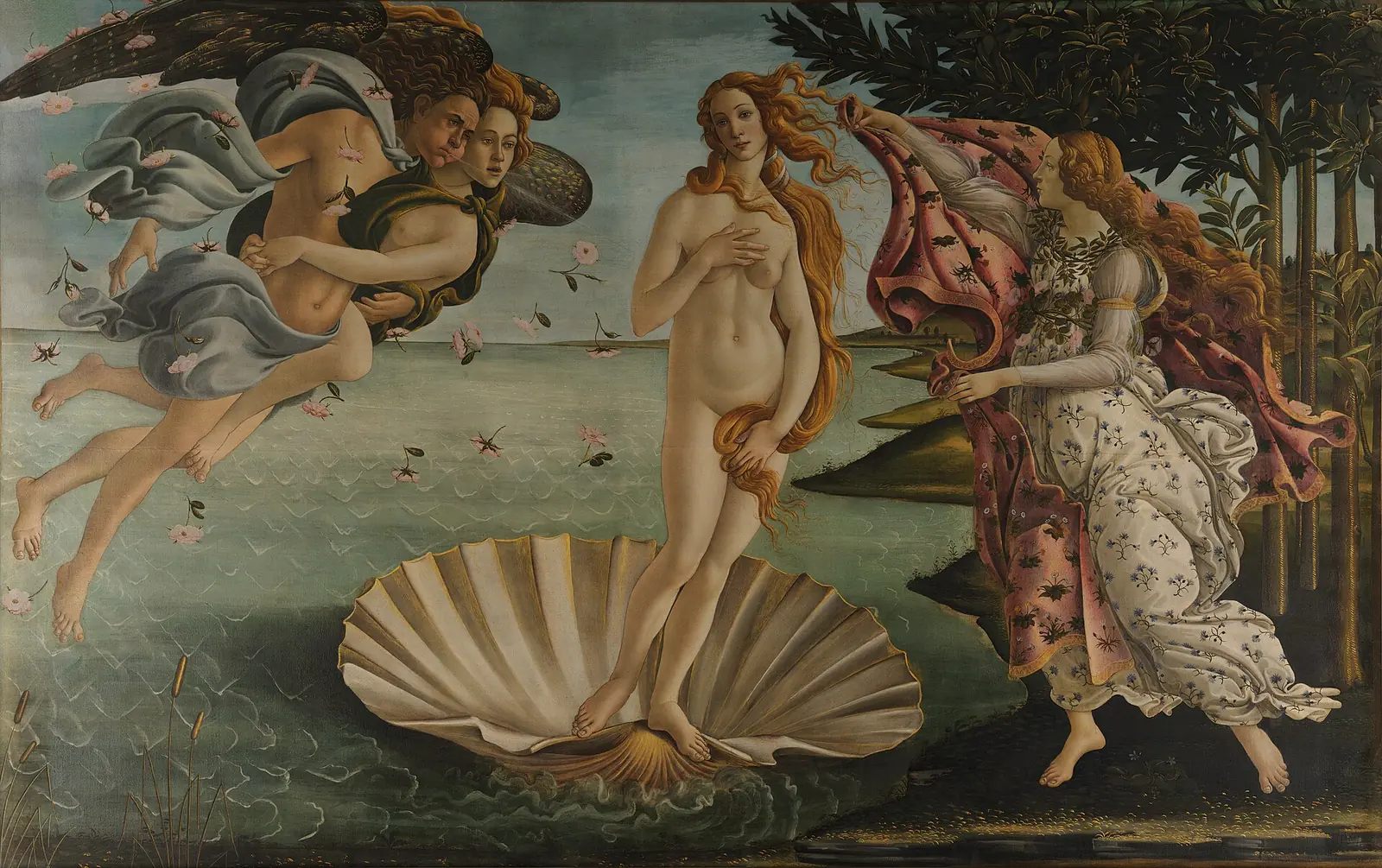
The Birth of Venus shows Botticelli's language in its clearest form. The shell, the wind, the hair, and the drapery are all legible at once, yet the surface never feels static. Myth becomes ceremonial movement.
Primavera shows the same intelligence in a denser register. Instead of one iconic arrival, the painting spreads meaning across a whole grove of figures. Botticelli is not simplifying mythology. He is distributing it carefully across the picture so that the eye has to move, compare, and return.
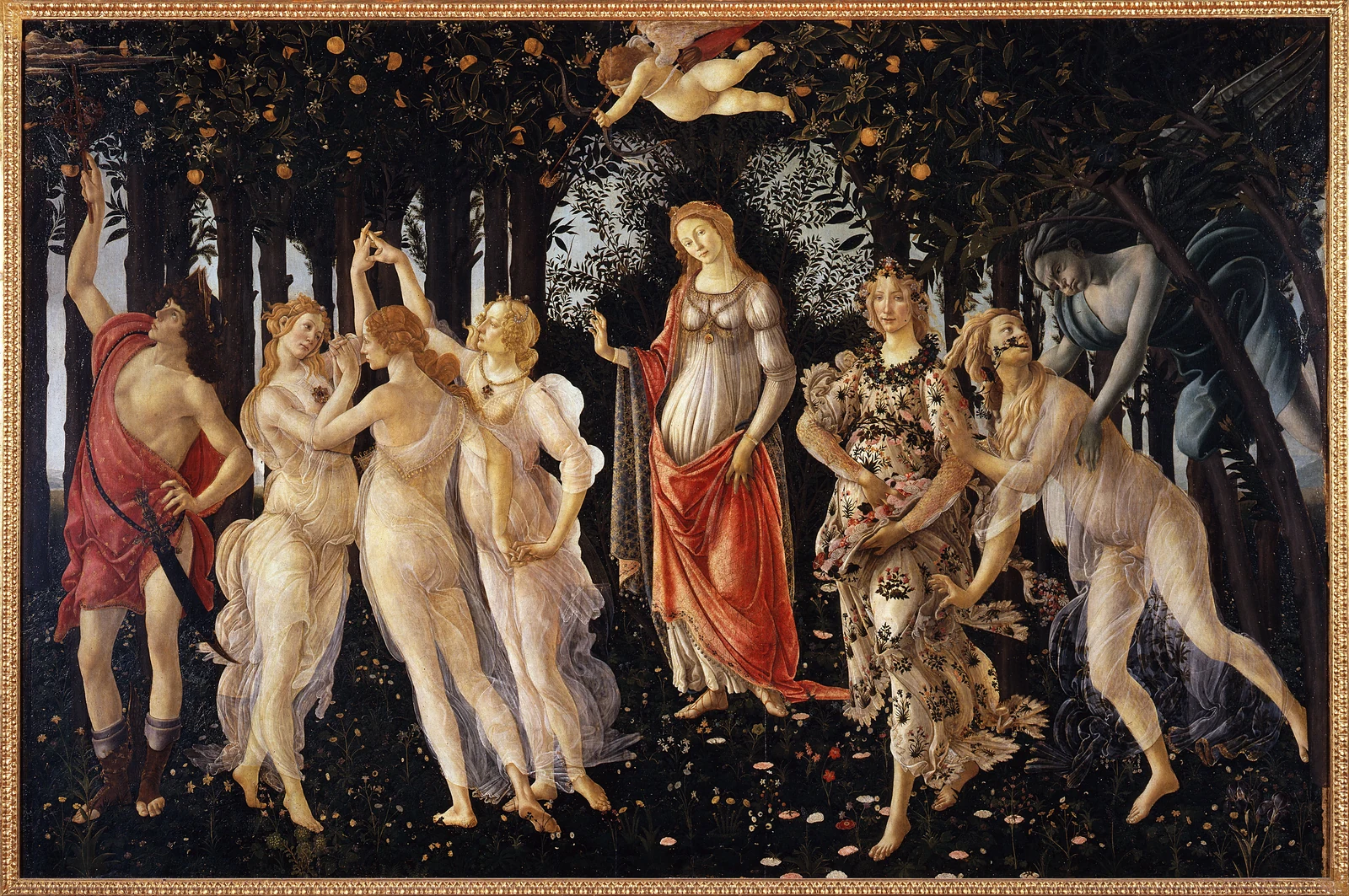
These two paintings dominate for a reason. They condense Medici-era Florence at its most self-conscious: classical revival, poetic allegory, domestic prestige, and a visual style that survives reproduction because its silhouettes remain unforgettable.
But Botticelli is not only a painter of myth
Botticelli also made Madonnas, devotional panels, portraits, and altarpieces. The same linear discipline that structures the mythologies also structures religious images. The difference lies in tempo and pressure. Devotional Botticelli often feels tighter, quieter, and more inward.
That matters because it prevents a common mistake. Botticelli is not the painter of one elegant mood. He can work with courtly mythology, civic ambition, and religious intensity without abandoning his basic language. The line remains recognizably his even when the spiritual climate changes.
Late Botticelli and the harder climate of Florence
The 1490s changed Florence. Medici rule broke, political instability sharpened, and religious pressure intensified. Botticelli's late work has often been read in relation to that harder atmosphere, including the moral severity associated with Savonarolan Florence. Whether every biographical detail can be pinned down or not, the paintings themselves do show a change in climate.
Late Botticelli can feel more severe, more compressed, and less interested in ornamental ease. That shift is important because it makes the career legible as a whole. The artist who once painted ideal beauty with extraordinary grace is still present, but the same hand can tighten under pressure rather than merely repeating an early formula.
Why Botticelli had to be rediscovered
After the High Renaissance, Botticelli's reputation dimmed. The very qualities that make him distinctive, linear grace, stylized movement, poetic ambiguity, were easier to underrate in an art history that increasingly prized monumentality and anatomical force.
His nineteenth-century revival changed that. Collectors, historians, and the Pre-Raphaelite Brotherhood found in Botticelli a different Renaissance model: less monumental than Michelangelo, less scientifically immersive than Leonardo, and often more emotionally delicate. That recovery did not just restore Botticelli. It changed what modern viewers thought the Renaissance could be.
Legacy after Botticelli
Botticelli's legacy is therefore unusual. He influenced later artists not only through fame, but through re-interpretation. His paintings became a testing ground for questions about myth, beauty, line, femininity, allegory, and the relation between elegance and seriousness.
He still matters because contour remains one of the fastest ways to organize meaning in an image. Botticelli shows just how much can be carried by line when a painter knows exactly how to pace a surface.
Reading paths from Botticelli
Move from The Birth of Venus to Primavera, then out to the Early Renaissance, and finally compare Botticelli with Raphael or Leonardo. That route shows his difference clearly: less sculptural mass, more linear intelligence, and a sharper dependence on the culture of Florence. Then try the art quiz.
Primary sources
Frequently asked questions
Line is crucial in Botticelli because contour carries far more than outline. It organizes movement, emotion, hierarchy, and grace across the whole surface, often more decisively than perspective or sculptural volume.
No. Botticelli painted mythological subjects, but he also produced Madonnas, altarpieces, portraits, devotional works, and major commissions for Florentine and papal patrons.
Those two paintings dominate because they condense Botticelli's most recognizable strengths: rhythmic contour, mythological invention, Medici-era court culture, and a visual language that survives reproduction unusually well.
He was rediscovered because nineteenth-century collectors, historians, and artists, especially the Pre-Raphaelites, prized the very qualities that later Renaissance classicism had overshadowed: contour, poetic ambiguity, and emotional delicacy.