
Artist Guide
Théodore Géricault
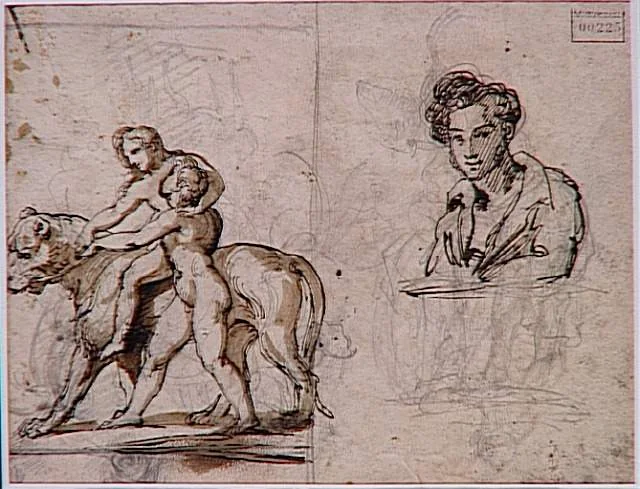
Theodore Gericault turned history painting into a test of public truth. Instead of glorifying rulers, he used monumental composition to expose political failure, bodily risk, and unequal visibility. His career was brief, but it changed what a major modern painting could be: not decoration, not state myth, but evidence arranged at full scale.
Formation in a France that no longer trusted official images
Born in Rouen in 1791 and active mainly in Paris, Gericault came of age in a France shaped by Revolution, Empire, and Restoration. He trained first with Carle Vernet, then in Pierre-Narcisse Guerin's studio, absorbing disciplined draftsmanship while resisting academic smoothness. That tension matters. He knew the system from the inside, which is why he could push against it so effectively.
His early horse paintings already show the pressure points that would define the rest of his work: unstable balance, bodies under strain, and movement built through diagonals rather than calm symmetry. Even before his most famous painting, Gericault was less interested in heroic certainty than in moments when control starts to fail.
From cavalry drama to public catastrophe
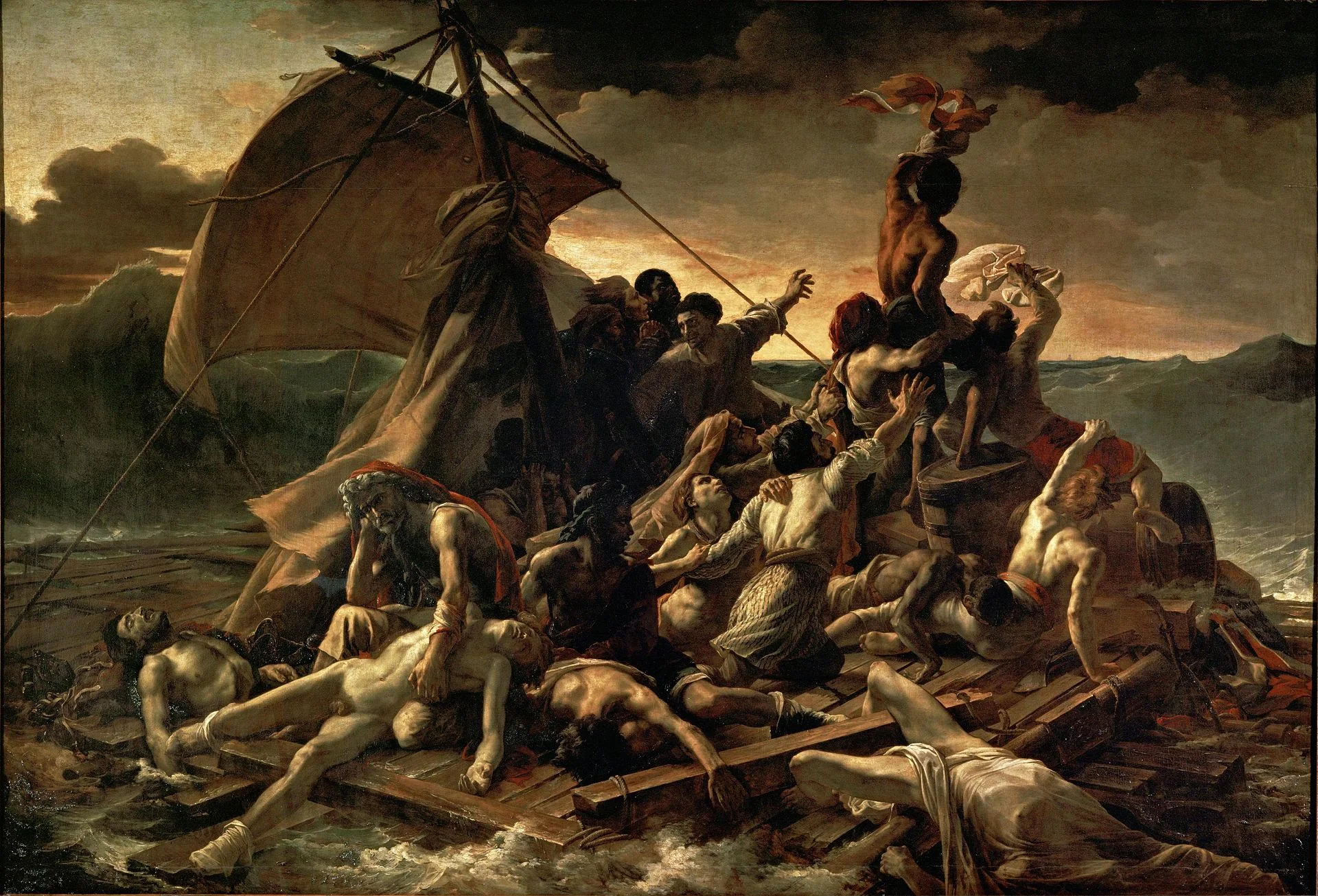
The decisive turn came when he moved from military energy to contemporary political disaster. In The Raft of the Medusa, he took a recent shipwreck caused by state incompetence and made it the subject of a monumental history painting. That decision alone was radical. A canvas on the scale once reserved for national glory became an indictment of abandonment.
What makes the painting so modern is not only its subject but its method. Gericault researched survivor accounts, studied bodies and corpses, built models, and reworked the composition until hope, exhaustion, and collapse all became legible inside one structure. The image does not simply tell you that a disaster happened. It makes you read how disaster is organized.
Bodies as evidence, not ornament
That is the core of Gericault's art. Muscular anatomy, directional force, and abrupt value contrasts are never there just to heighten drama. They are ways of making viewers feel weight, exposure, and bodily vulnerability. He paints flesh as something that suffers, strains, decays, and persists. In his hands, the body becomes political evidence.
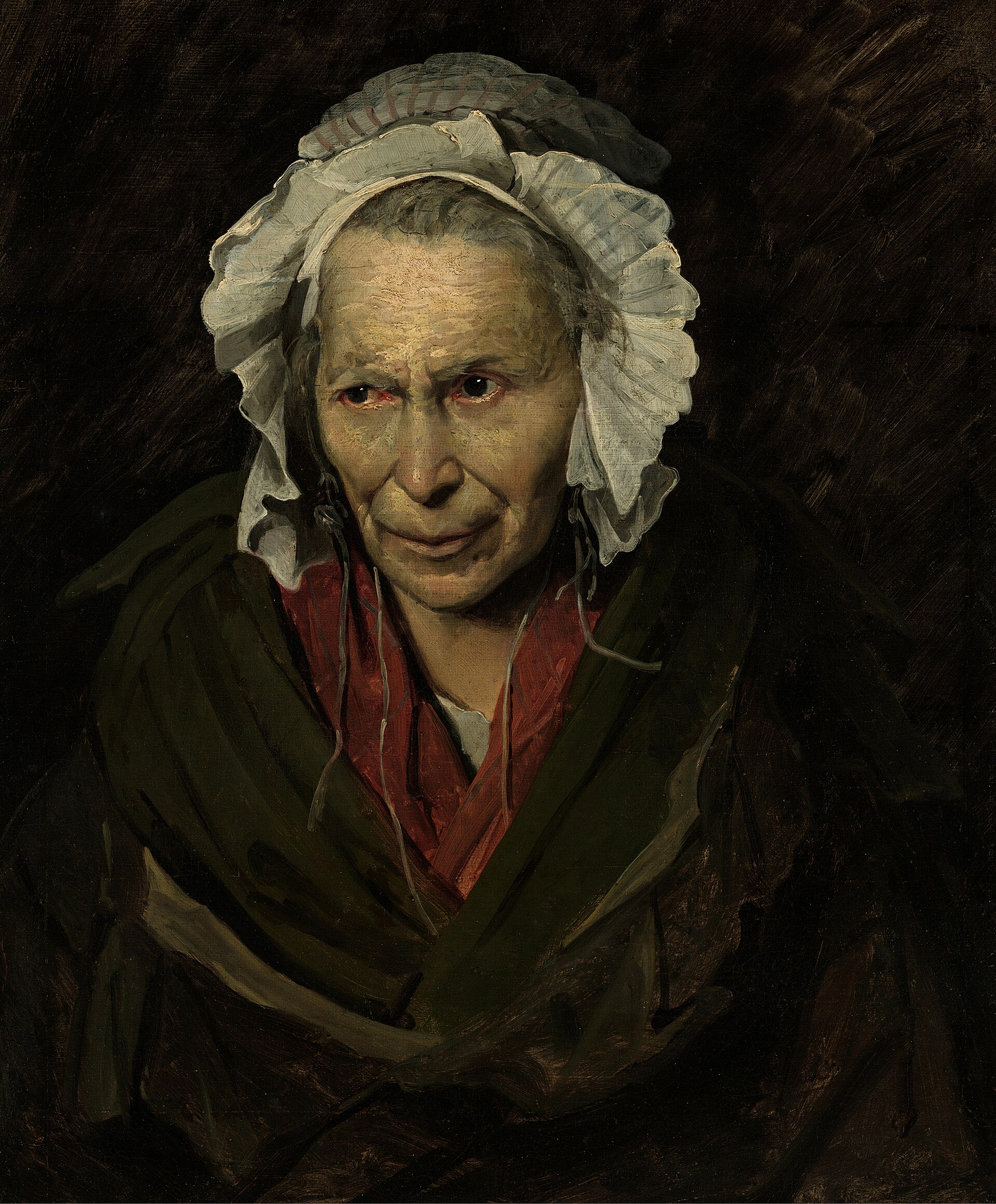
This is also why his later asylum portraits matter so much. They are smaller and quieter than the Medusa, but they keep the same seriousness of attention. Gericault does not treat mental illness as curiosity or spectacle. He gives these faces the density of real human situations, which extends his wider commitment to representing crisis without flattening it into theater.
The Monomaniac of Envy, now in the Musée des Beaux-Arts de Lyon, makes that quieter branch of his work especially clear. The portrait has no setting to decode and no dramatic action to follow. A face, a head covering, and a guarded sideways gaze are enough for Géricault to turn medical classification into a test of attention.
His stay in England sharpened that realism further. There he studied urban crowds, horses, print culture, and popular spectacle at close range, especially through lithography. The medium mattered because it trained him to think in pressure, contrast, and public circulation rather than in isolated salon finish alone. That practical shift helps explain why even his most ambitious paintings feel observed rather than merely invented.
Historical position and legacy
Gericault died in 1824 at only thirty-two, but his position in nineteenth-century art is unusually clear. He remains central to Romanticism, yet he also anticipates later Realism and even aspects of modern documentary ethics. Compared with Delacroix, the difference sharpens: Delacroix often heightens history through color and symbolic momentum, whereas Gericault anchors intensity in bodily and structural evidence.
That legacy is durable because he showed later artists that composition can carry public argument. The line from The Raft of the Medusa to The Third of May 1808 and then to Francisco Goya clarifies the stakes: modern painting does not only represent crisis, it organizes moral attention.
Key works in Explainary
Associated movements
Romanticism - movement guide and historical context.