
Museum guide
10 Artworks Not to Miss at the Musée des Beaux-Arts de Lyon
The Musée des Beaux-Arts de Lyon has one of France's strongest painting collections outside Paris. If you are preparing a visit, the easiest way in is to start with a small number of works that show the range of the museum clearly.
Here are 10 artworks to see first: each image comes with a short explanation and a link to the full Explainary analysis.
The 10 artworks to see first
1. Rubens, The Adoration of the Magi
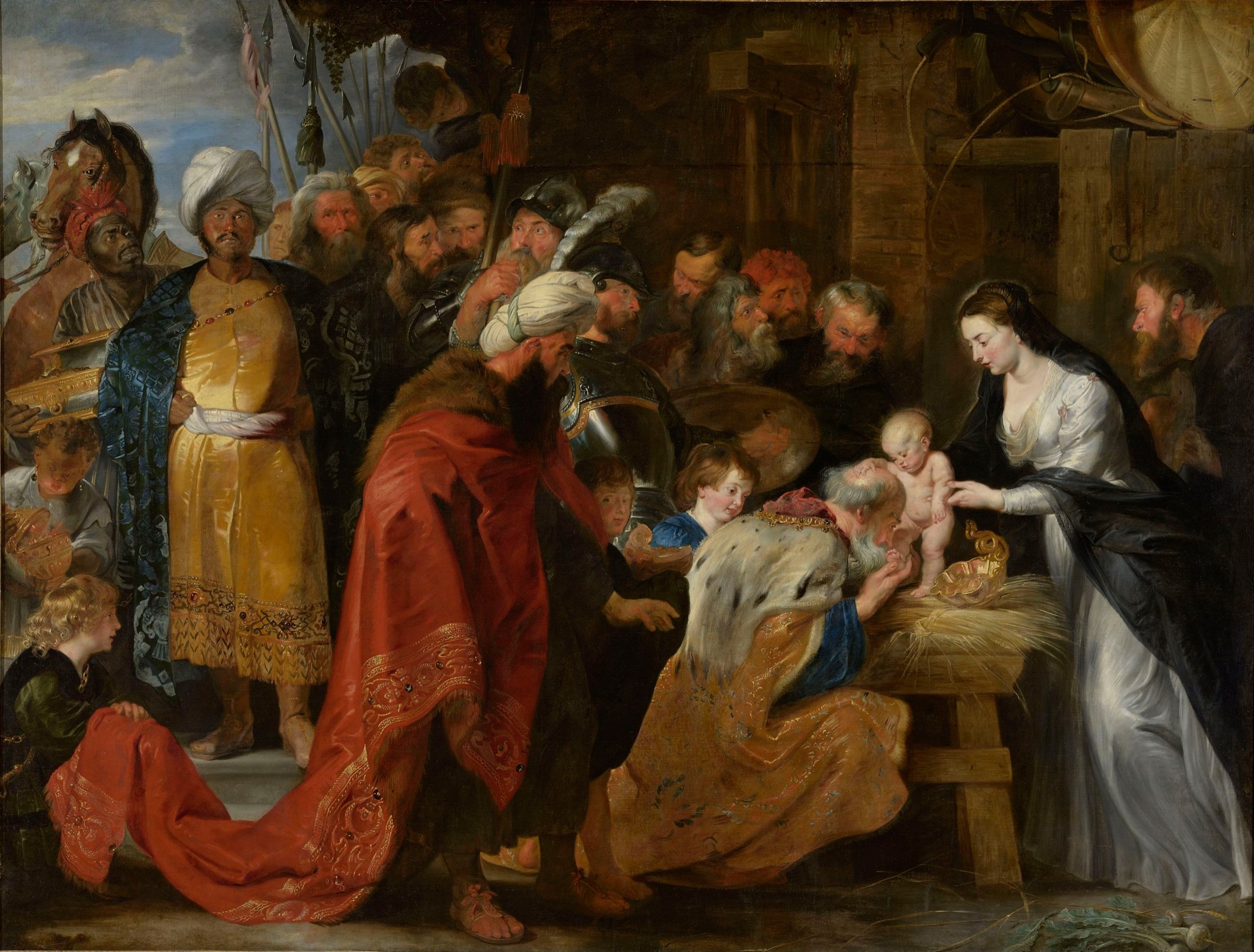
Start with the density of the scene: bright fabrics, servants, horses, gifts, and crossed gestures. The Christ Child is small, but hands, faces, and sightlines keep pulling the eye back to him. The painting quickly shows what Baroque composition can do: hold a crowd together without losing the center.
2. Rembrandt, The Stoning of Saint Stephen
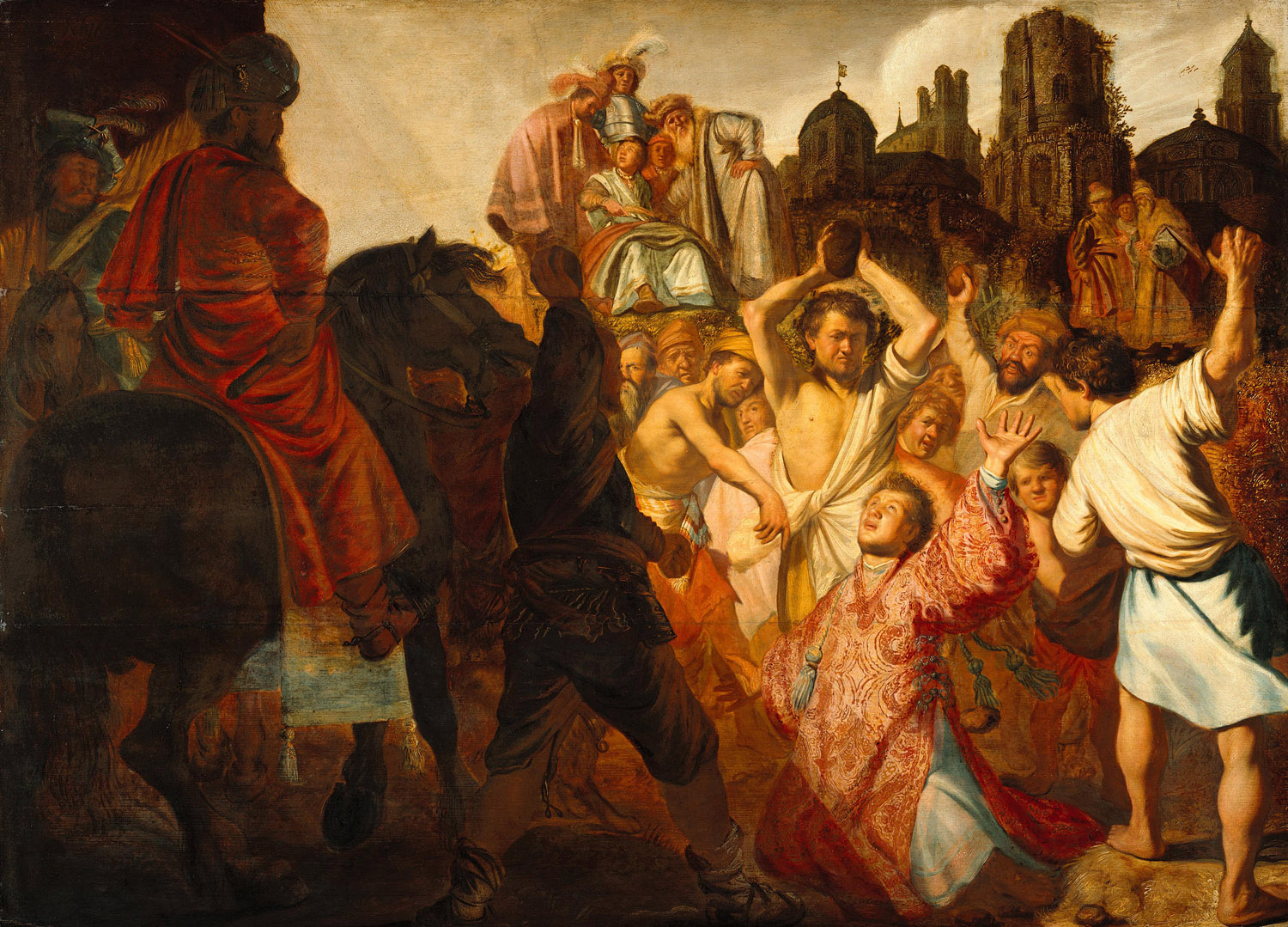
Rembrandt was about nineteen when he painted this collective execution. Stones, packed bodies, faces turned toward the victim, and a strongly organized light make the scene legible at once. The work already shows his lifelong concern with what people do when they witness violence.
3. Poussin, The Flight into Egypt
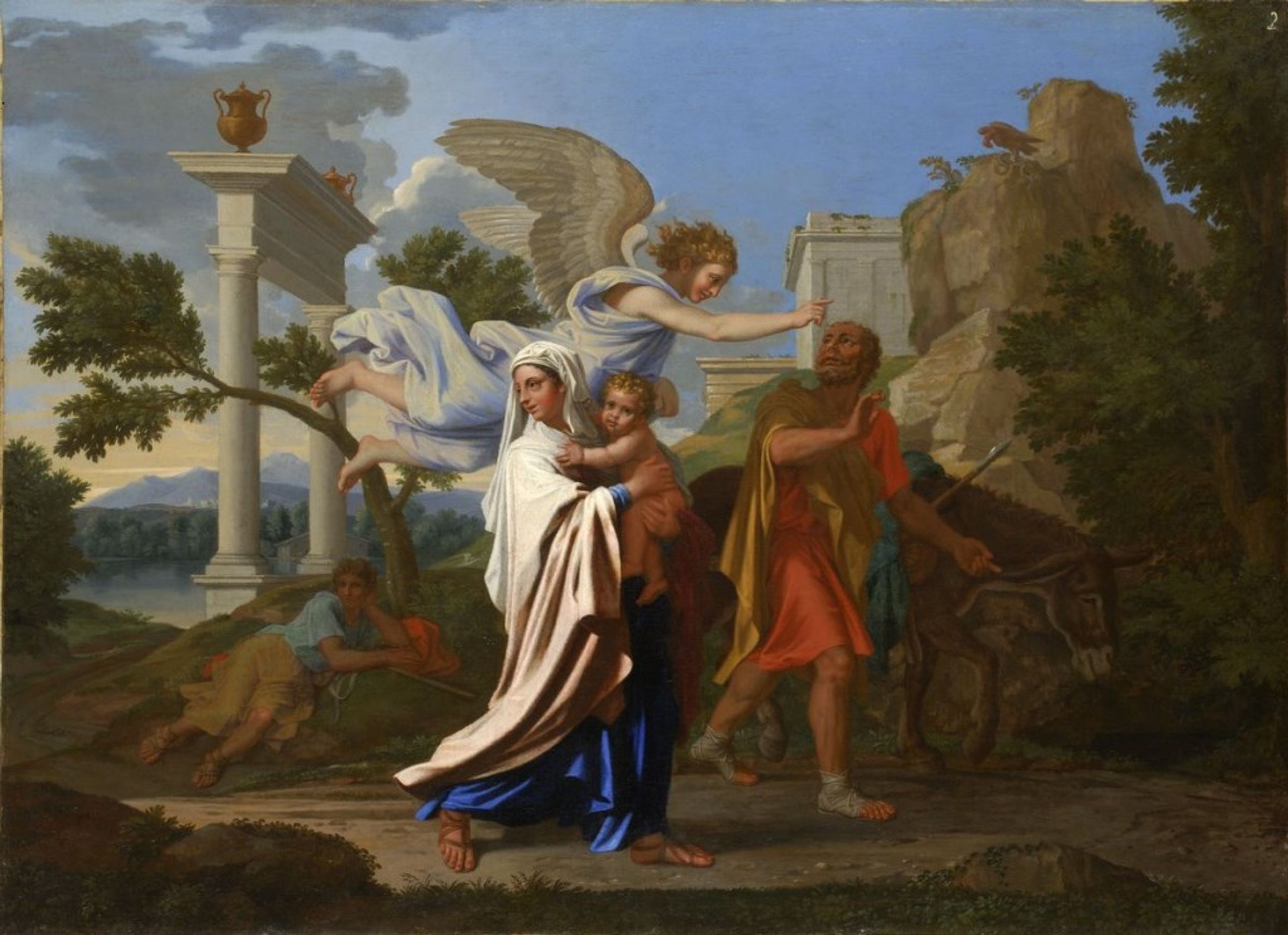
The story is a dangerous departure, but Poussin refuses panic. Path, trees, buildings, angel, and figures distribute the scene with exceptional clarity. The painting is worth pausing over because it turns urgency into order, measure, and silence.
4. Veronese, Bathsheba Bathing
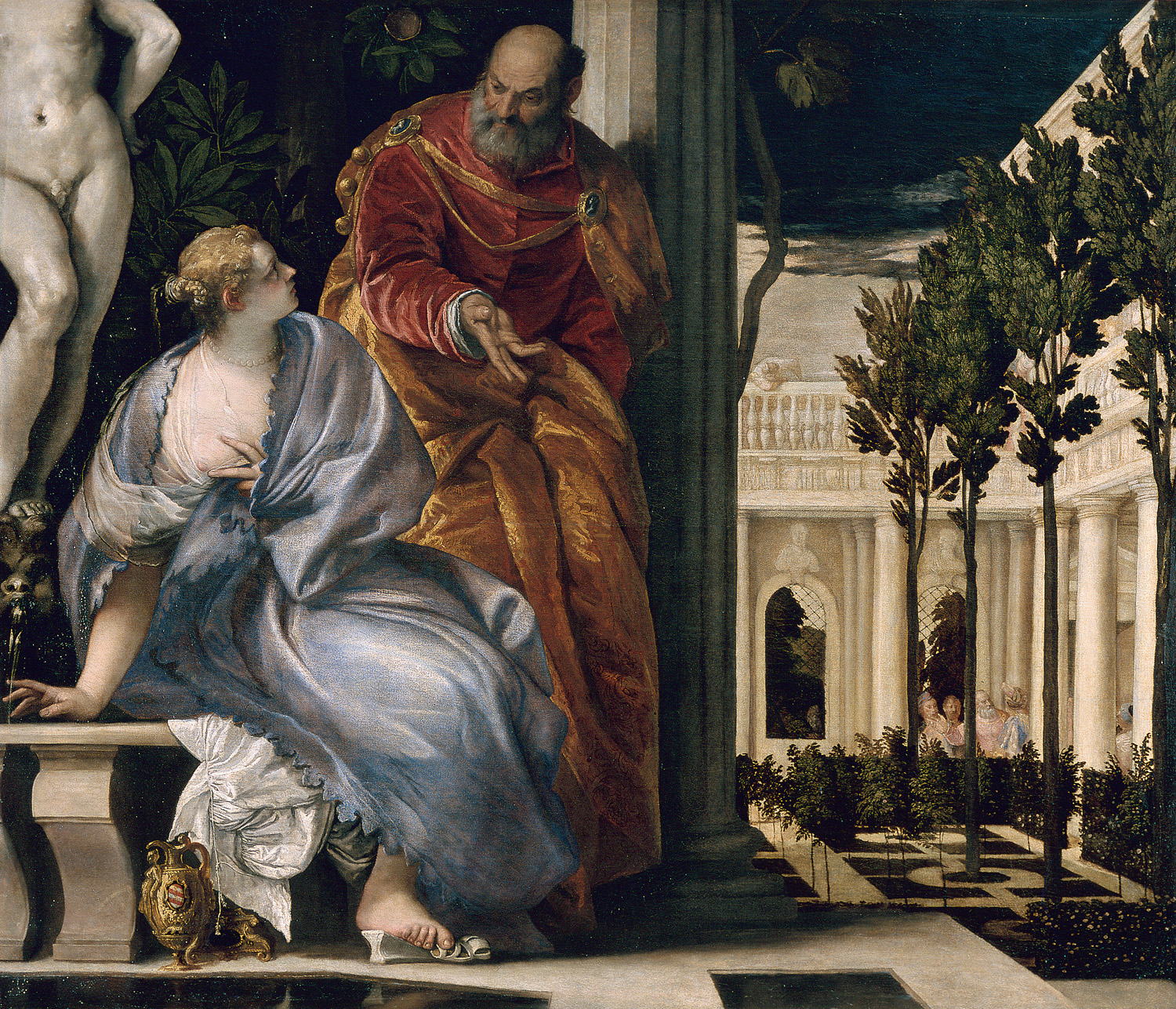
In the biblical story, David sees Bathsheba bathing, desires her, and later arranges the death of her husband Uriah. Veronese does not paint a decorative scene of luxury alone: the message reaching Bathsheba brings political power into a world of beauty. Fabrics, gestures, and color make the violence quieter, but more troubling.
5. Delacroix, Last Words of the Emperor Marcus Aurelius
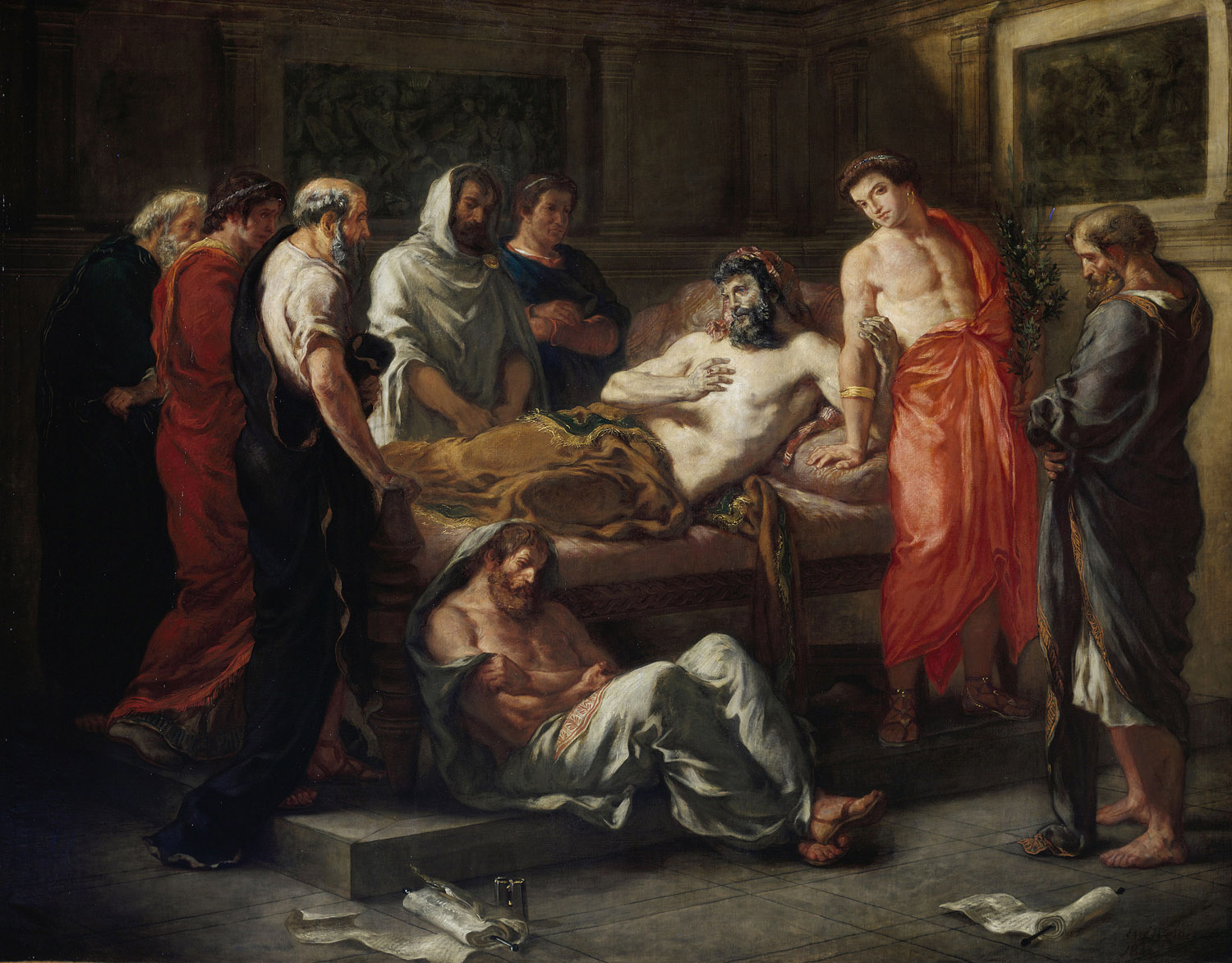
Marcus Aurelius, the philosopher-emperor, lies dying among advisers. Near him, Commodus wears red and announces an uneasy succession. Delacroix builds the painting around that contrast: exhausted wisdom on one side, unstable power arriving on the other.
6. Géricault, The Monomaniac of Envy
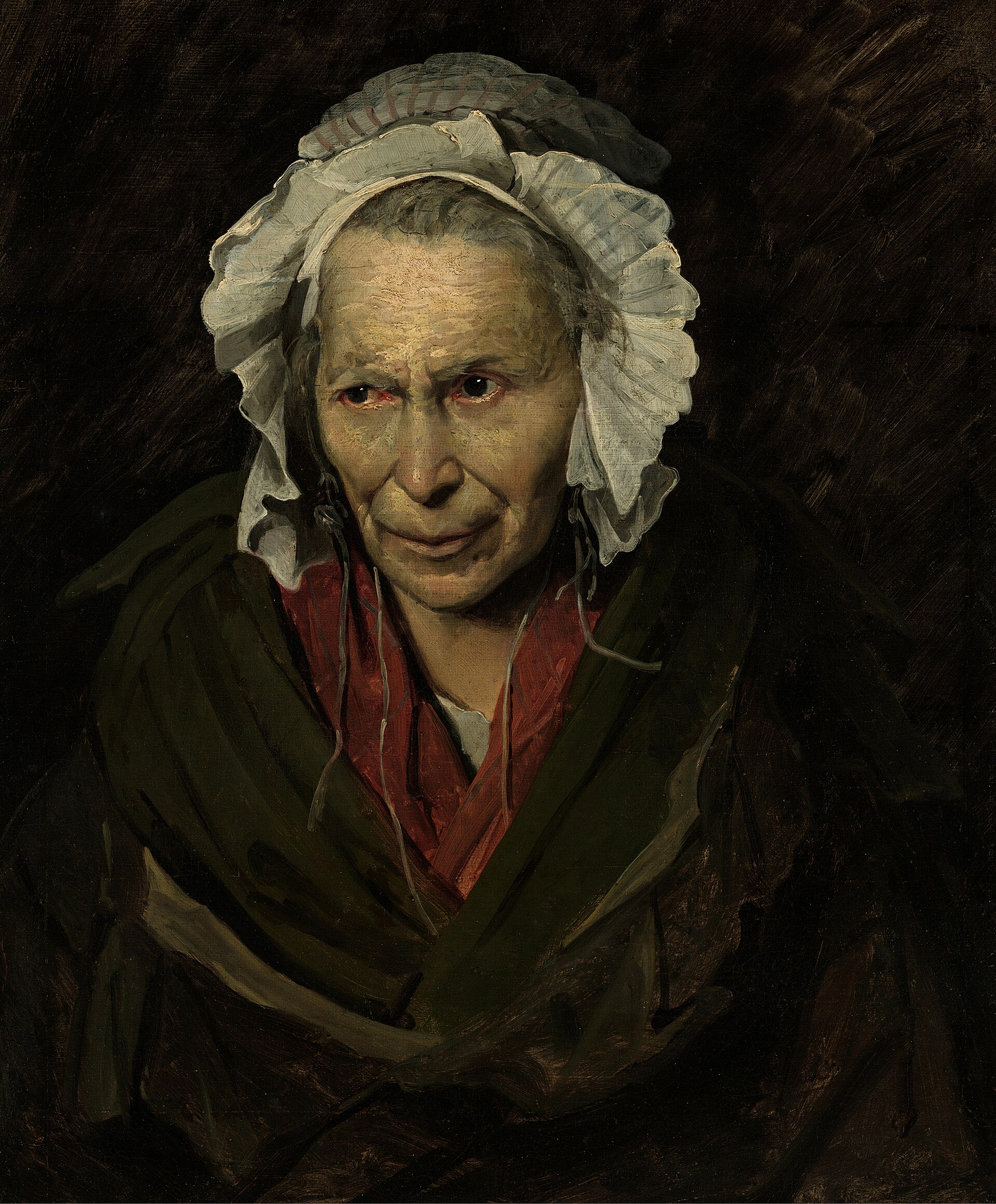
The painting belongs to Géricault's portraits of so-called monomaniacs, made in the context of nineteenth-century medical debates on mental illness. He does not caricature the sitter: everything is concentrated in the face, mouth, sideways gaze, and physical presence. The work is striking because it remains clinical, intimate, and deeply human at once.
7. Courbet, The Wave
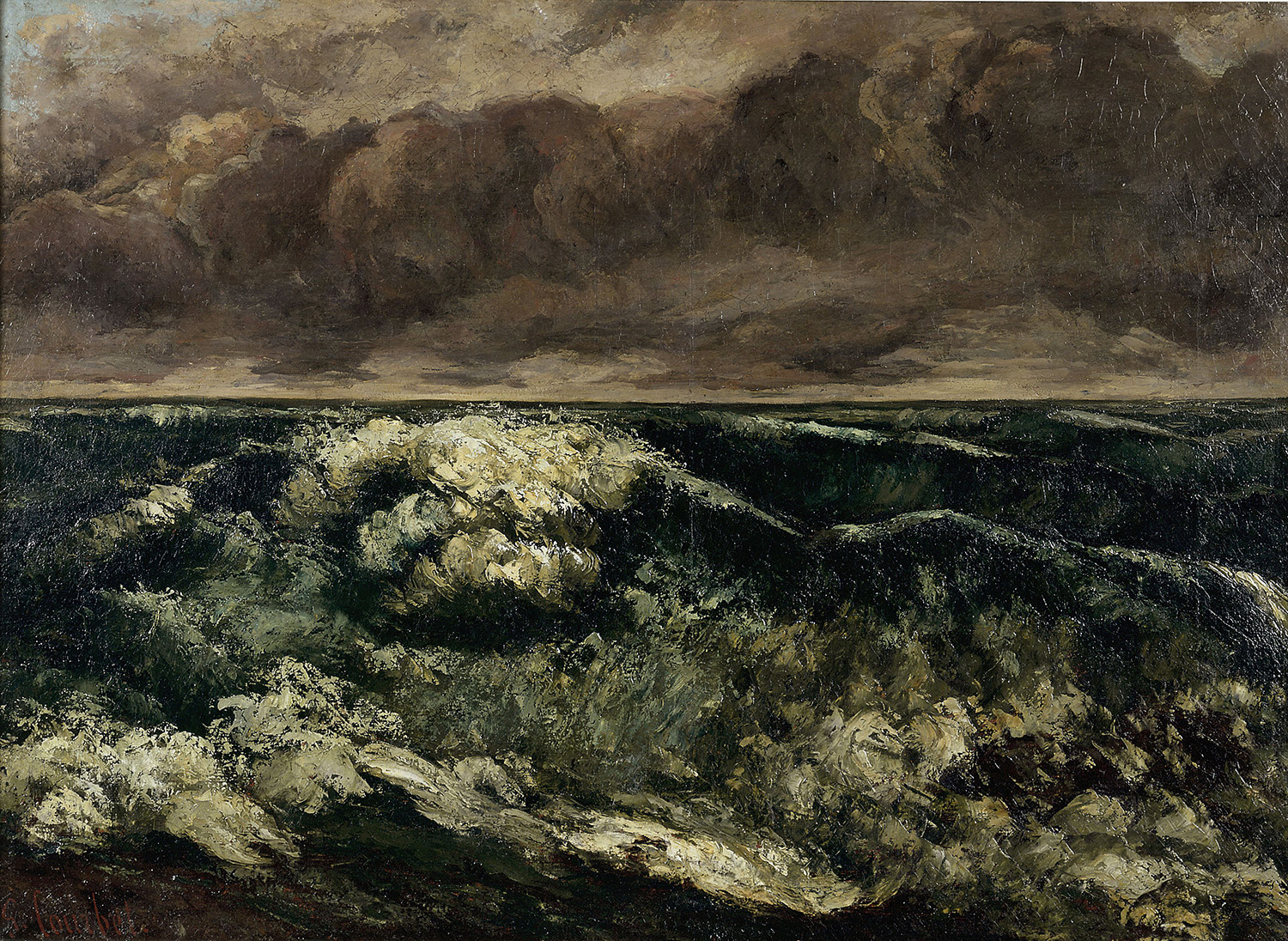
No boat, no figures, no picturesque coast: Courbet concentrates everything on the weight of water. The foam is thick, the sky low, and the wave almost mineral. This is a painting to see in person because much of its force comes from the physical surface of the paint.
8. Gauguin, Nave Nave Mahana
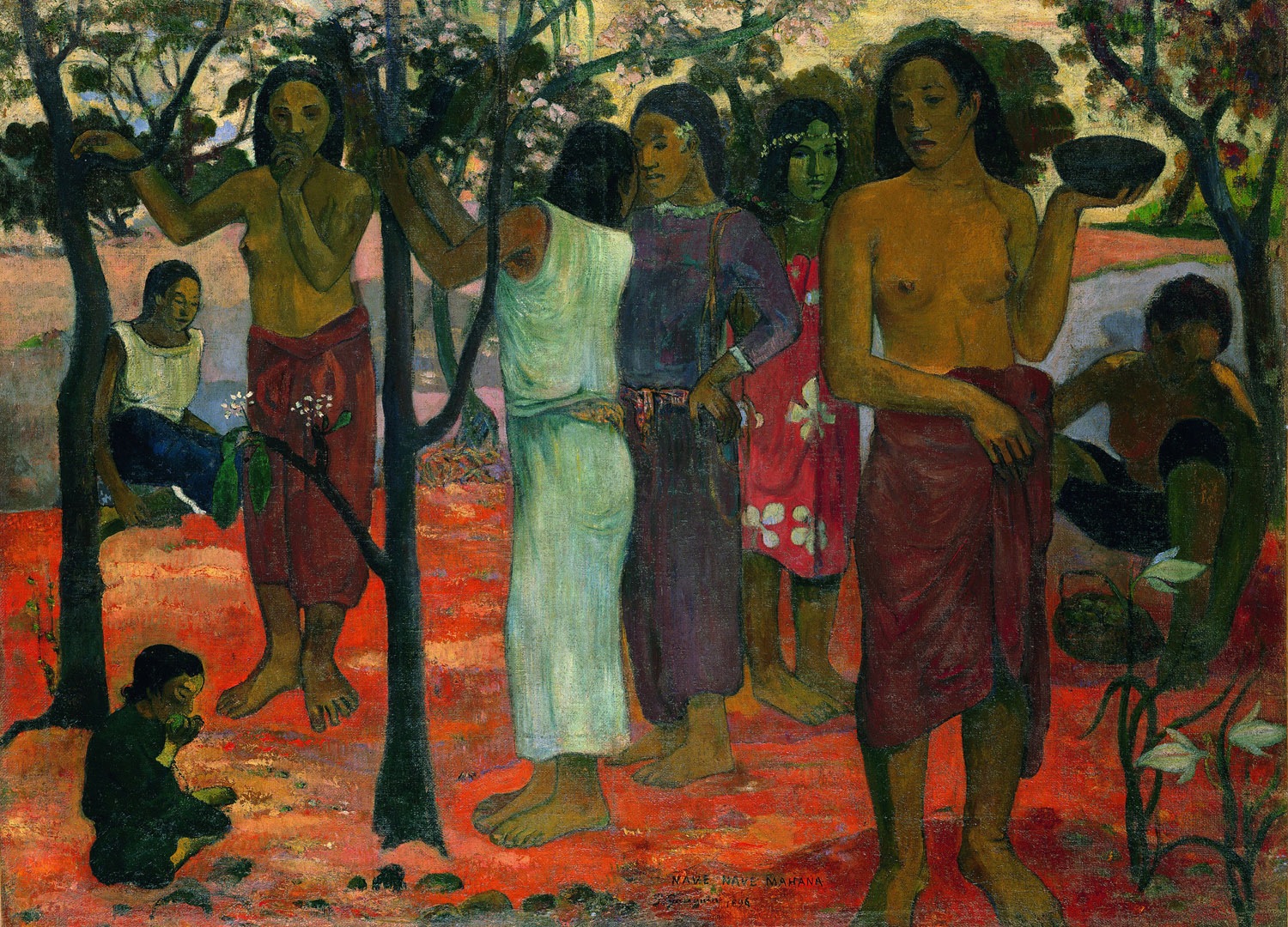
Painted in Tahiti in 1896, the work carries a title meaning "Delicious Days." Gauguin builds the scene through frieze-like figures, red ground, and very flat color rather than direct observation. The painting asks to be admired for its invention and questioned for the colonial fantasy it constructs.
9. Tintoretto, Danaë
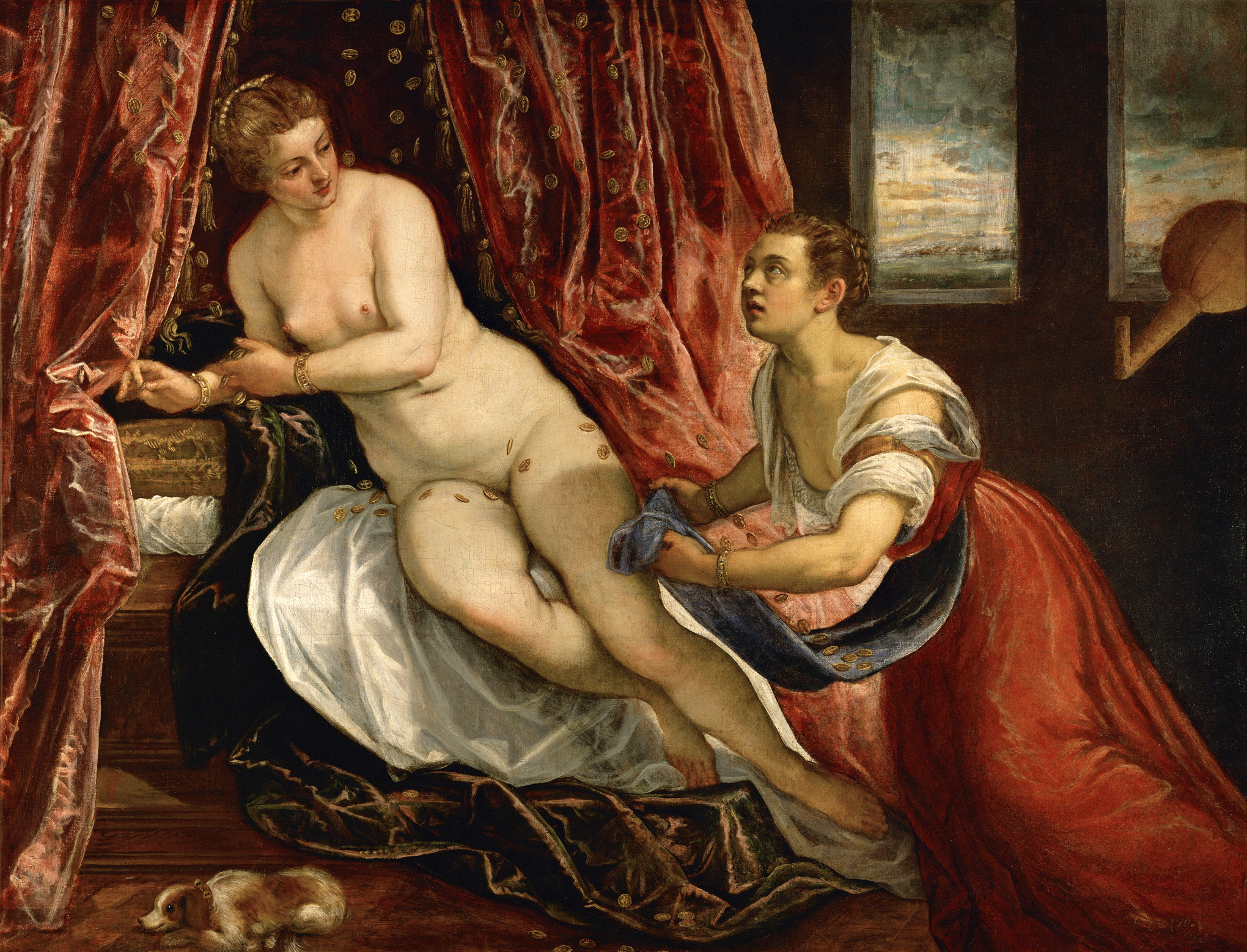
In the myth, Zeus reaches Danaë as a shower of gold. Tintoretto keeps the sensual episode, but he also stresses the coins, the servant, and the red curtains. The scene moves quickly, as his paintings often do, and turns myth into an image of desire, wealth, and irony.
10. Puvis de Chavannes, The Sacred Grove
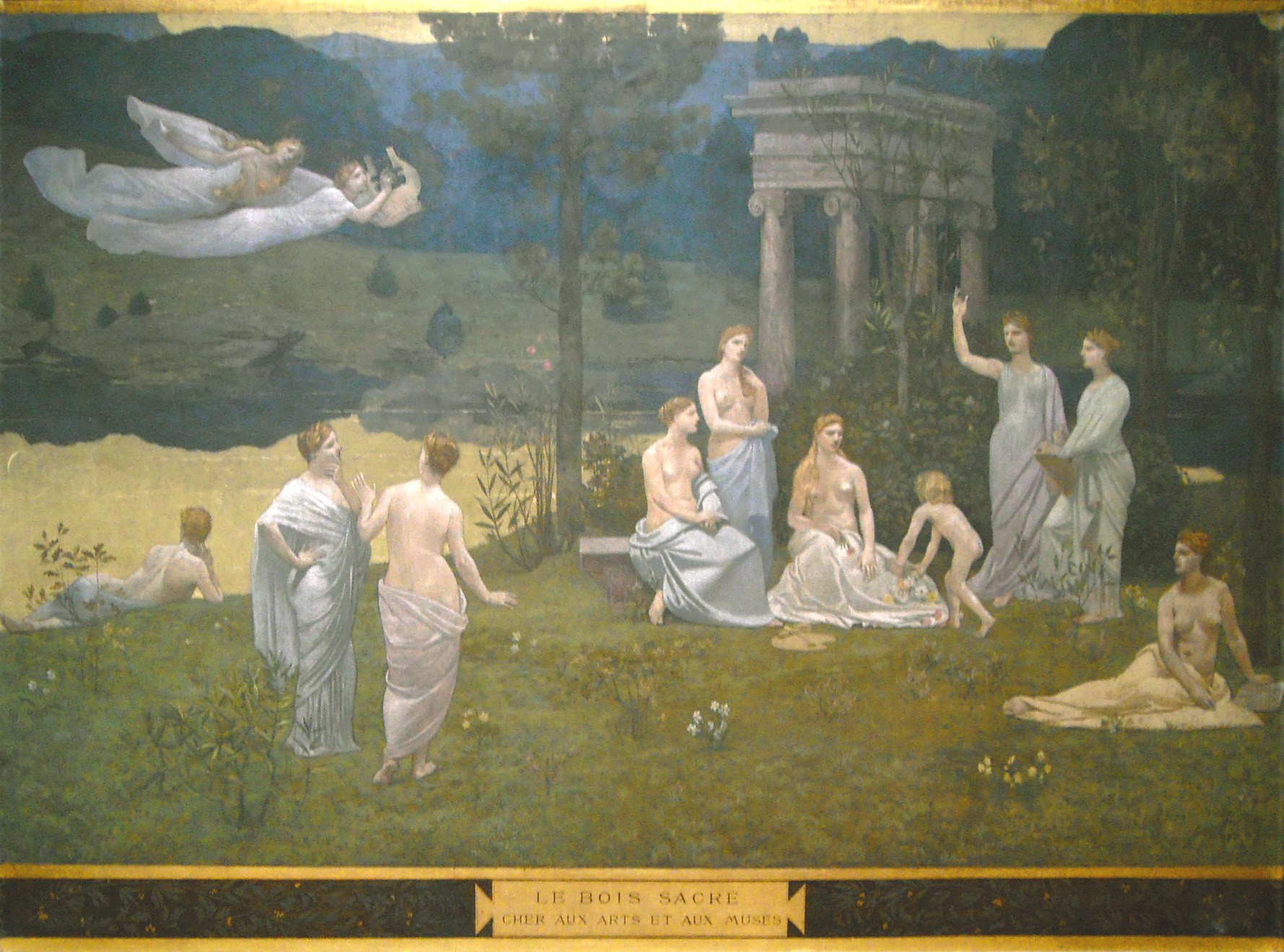
This work makes most sense in the museum space, not only as an isolated image. Puvis works at large scale, with muted color, calm figures, and an almost mural rhythm. It gives the visit a different tempo: less drama, more silence, distance, and symbolic atmosphere.
A simple way to visit
If you only remember one thing before visiting the Musée des Beaux-Arts de Lyon, remember the range: Rubens for Baroque abundance, Rembrandt for light and violence, Poussin for order, Veronese for Venetian beauty, Delacroix and Géricault for Romantic tension, Courbet for matter, Gauguin for symbolic color, Tintoretto for speed, and Puvis for the museum as a painted space.