
Romanesque
The Bayeux Tapestry (Scene Detail)
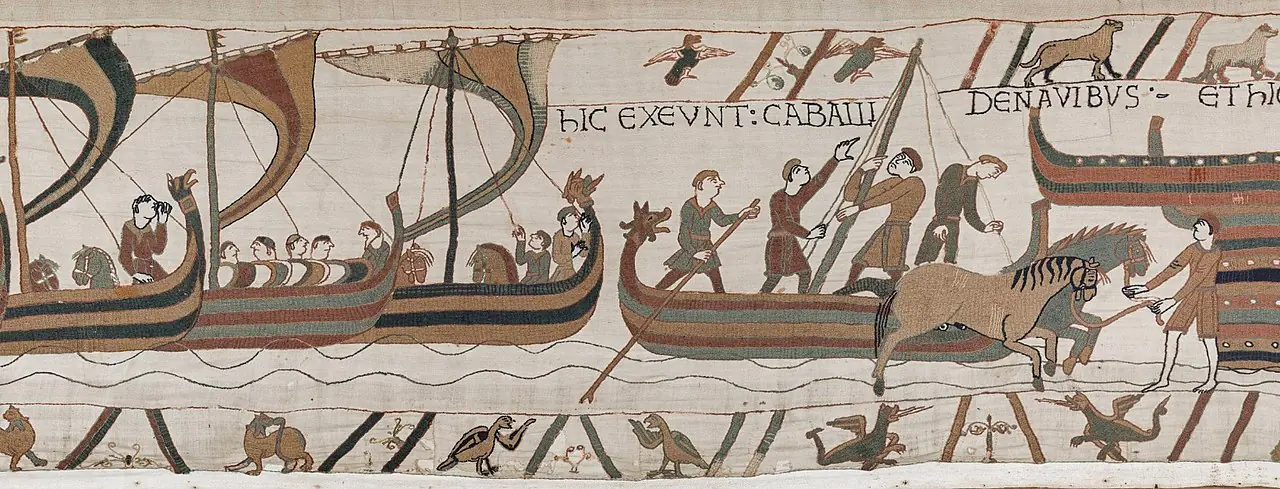
This is not a self-contained picture. It is a cut taken from a long public argument. A Bayeux detail only makes full sense as part of a much larger embroidery in which conquest is sequenced, clarified, and politically framed. The object does not simply show what happened. It decides how events should be remembered.
A detail from a 70-meter political narrative
This image shows only one fragment of the Bayeux Tapestry, not the entire embroidery. That matters for interpretation: a Bayeux scene is designed to borrow meaning from what precedes and follows it. The work was conceived as a long visual sequence in which preparation, oath, transport, battle, and aftermath are rhythmically connected. If you isolate one panel, you keep the style but lose part of the argument.
c. 1070s context: memory after conquest
Produced in the decades after 1066, the tapestry participates in post-conquest legitimation. It narrates events around William's claim to the English throne, but it does not behave like neutral chronicle. It selects, orders, and emphasizes episodes that support Norman authority. In that sense, it is both evidence and political rhetoric. The historical value lies precisely in this dual status: it tells us about events and about the power structures that wanted those events remembered in a particular way.
What this detail shows clearly
A Bayeux scene is built for rapid reading. The main action sits in a broad central band. Short inscriptions identify people or episodes. Figures are simplified enough to stay legible, but animated enough to keep the story moving. The borders are not passive decoration. They can echo the central action, add side commentary, or thicken the emotional tone of what you are seeing.
This is why the technical question matters. Bayeux is an embroidery, not a true tapestry. Wool is stitched onto linen rather than woven into it. That gives the makers a very direct way to outline, fill, and emphasize. Instead of illusionistic depth, the workshop chooses clarity: contour first, movement second, narrative continuity throughout.
A source, but not a neutral one
The detail matters historically because it preserves concrete visual information: ships, armor, helmets, horses, tools, gestures, and habits of display in the eleventh century. But none of that makes it neutral. Bayeux is organized from a Norman perspective. Some moments are enlarged, some shortened, some pushed to the front of memory. The object records events, but it also edits them.
That is what gives it enduring force. It is evidence and argument at the same time. Good reading starts when those two functions are held together rather than separated.
From this detail back to the workshop
A single scene also reveals the discipline behind the whole object. The consistency of outlines, repeated figure types, and stable pacing suggests coordinated planning rather than accidental accumulation. If you want to understand who may have designed and stitched that system, read this page with the profile of the Bayeux Tapestry Workshop. The object makes more sense once you see the labor behind it.
Why Bayeux outlived its original moment
The tapestry survived because it works on several levels at once: documentary trace, narrative craft, political instrument, and visual archive of everyday medieval details. Later media reused the same logic. Storyboards, historical illustration, comics, and timeline-based digital storytelling all depend on controlled succession: no single image carries everything; meaning accumulates through sequence.
Its format helped too. A long textile narrative can be displayed, stored, unfolded, and reread by different generations with different priorities. Bayeux is therefore not only a medieval artifact. It is a durable narrative device that kept its authority because it remained legible.
Bayeux is stitched history, but also stitched argument.
Use the art quiz as a quick check: can you connect The Bayeux Tapestry (Scene Detail) to Unknown (11th-century workshop) when the options are mixed?
Explore more
Related works
Primary sources
The best final check is simple: do not ask only what this detail shows. Ask how it has been made readable, memorable, and politically durable. That is where Bayeux becomes more than a medieval curiosity.
Once you start asking that question, even a single fragment becomes enough to reveal the logic of the whole embroidery.
Frequently asked questions
Sequential clarity. Figures, inscriptions, and borders are organized so the narrative stays readable over a long strip rather than as one isolated picture.
Because the medium helps explain the look. Wool stitched onto linen allows direct outlining and filling, which supports the work's unusual clarity and narrative speed.
It was made in the post-1066 context and helps legitimize Norman rule. The embroidery records events, but it also edits them into a persuasive political sequence.
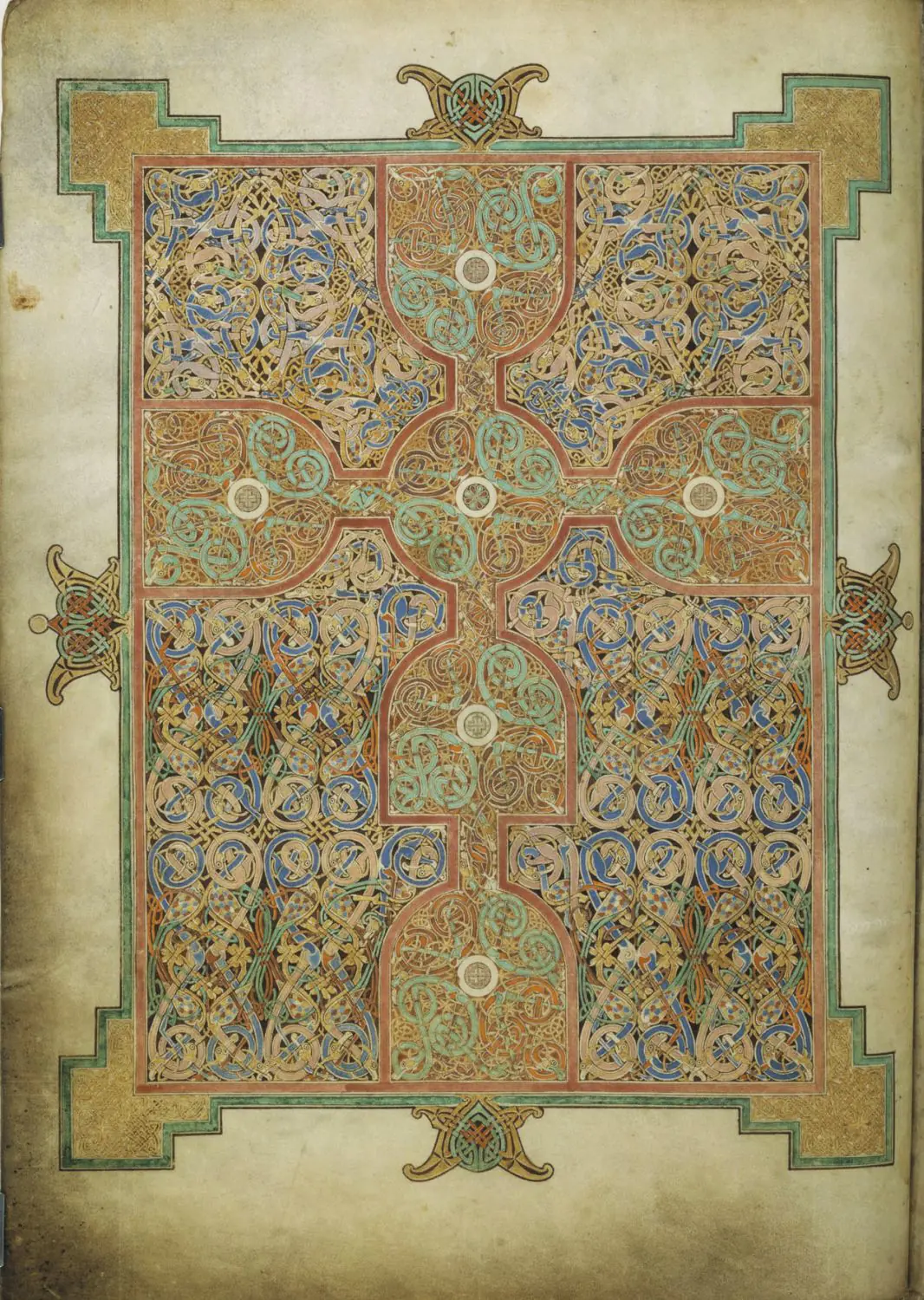
Compare it with the Bayeux Tapestry Workshop page for making and authorship, then with Lindisfarne for a very different medieval use of visual order.