
Late Pre-Raphaelite Painting
The Lady of Shalott
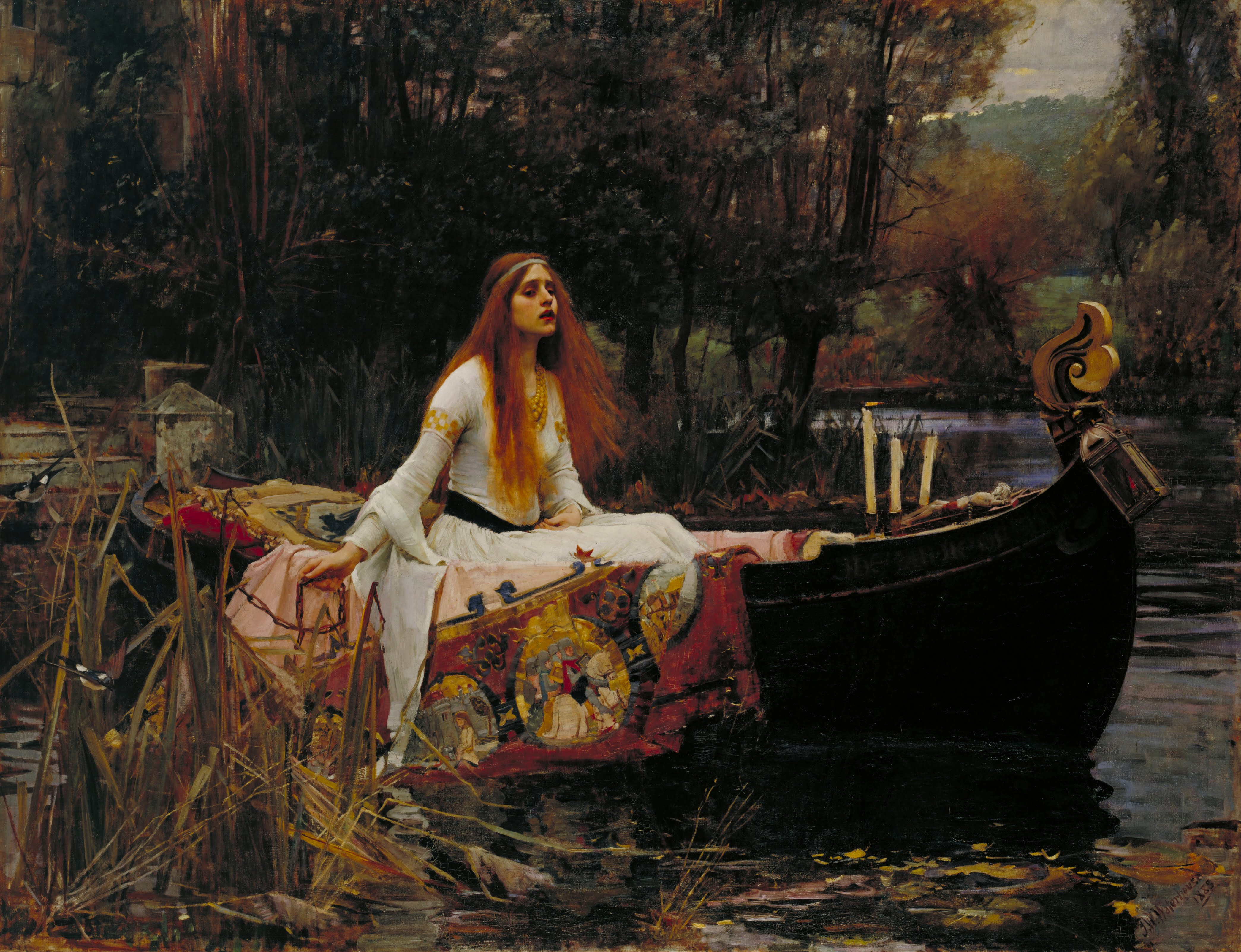
Waterhouse paints the instant a woman leaves the safety of the tower and enters the story that will kill her. The Lady of Shalott is powerful because it does not show the end of the tale. It shows the decision after the forbidden look, when Tennyson's isolated heroine has already broken the spell and sits in the boat that will carry her toward Camelot.
The story compressed into one departure
The painting comes from Alfred, Lord Tennyson's poem The Lady of Shalott, an Arthurian story of isolation, desire, image-making, and fatal contact with the world. The Lady lives under a curse in a tower near Camelot. She may not look directly outside. Instead she sees the world in a mirror and weaves those reflected scenes into a tapestry. Life reaches her as image before it reaches her as experience.
When Lancelot appears, the system breaks. She turns away from the mirror, sees him directly, and the curse falls. John William Waterhouse chooses the next threshold: the Lady has left the tower, entered the boat, and begun the river journey. The picture is not a passive death scene. It is an image of crossing from enclosure into consequence.
Waterhouse's method: make decision visible
Waterhouse's method is to make the invisible turn in the poem visible through objects and direction. The Lady has already chosen direct sight over reflected safety, but the painting cannot show the mirror cracking inside the tower. Instead, it gives that break a physical form: the forward pull of the boat, the loosened tapestry, the failing candles, and the body angled toward the river.
A boat loaded with signs
The boat is not a neutral prop. Its narrow black body presses the figure forward like a coffin already in motion, while its decorated prow, chain, candles, and draped textile turn the departure into a ritual. The candles near the prow read as a vanishing measure of time: one flame survives while the others have gone out. The small crucifix deepens the sense of passage, sacrifice, and finality without turning the scene into a simple religious illustration.
The tapestry is equally central. It spills from the boat in richly colored fragments, carrying the life of images the Lady has spent years weaving. Waterhouse lets the woven world leave the tower with her. She is not escaping art for life cleanly; she is dragging art into the fatal world she was forbidden to enter. The painting becomes sharper than a romantic fantasy of liberation.
The river controls the drama
Waterhouse gives the scene an unusually wide horizontal stretch. The river moves across the lower part of the canvas, the reeds crowd the foreground, and the dark mass of the bank presses behind her. The landscape does not simply set mood. It works like a corridor. The viewer can feel the boat caught between the shallow reeds and the open route downstream.
That structure gives the image its strange stillness. Nothing looks hurried, but the story has no real pause left. The Lady's white dress and loose red hair glow against the dark vegetation, making her visible as a figure who has stepped out of shadow and reflection into exposure. Her expression is not theatrical despair. It is shock, trance, and recognition held together.
Late Pre-Raphaelite, not original Brotherhood
The Lady of Shalott is often described as Pre-Raphaelite, but the chronology needs care. Waterhouse was not one of the young artists who founded the Brotherhood in 1848. He belongs to its later Victorian afterlife, when the movement's literary intensity, jewel-like color, medieval atmosphere, and attention to emotionally charged women had entered a broader visual culture.
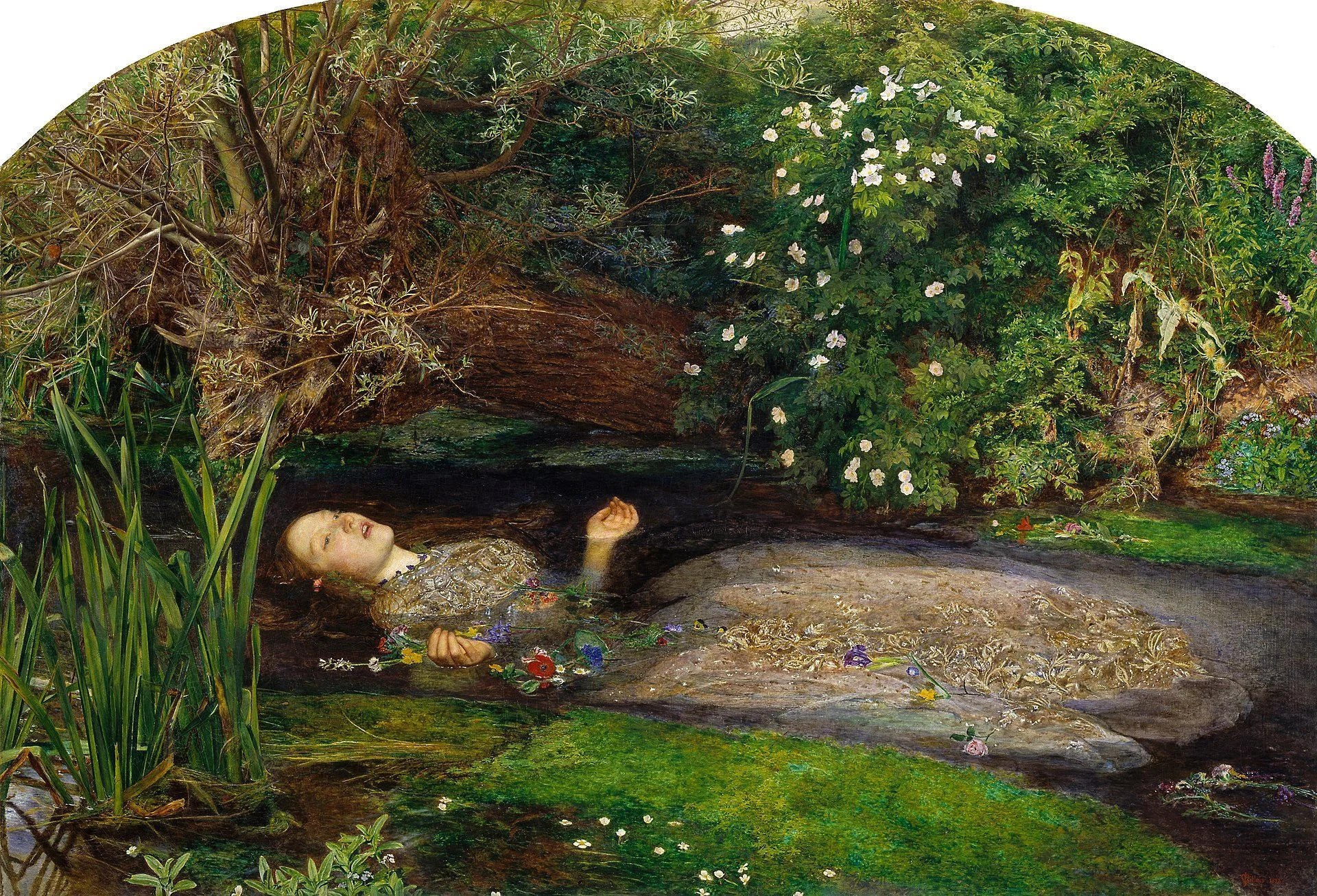
That late position gives the painting its accessibility. Waterhouse does not make the surface as hard and botanical as John Everett Millais does in Ophelia. He keeps detail, costume, and literary source, but softens them into a more atmospheric theatrical image. The scene reads instantly, then holds attention through objects, river, and mood.
Waterhouse beside Millais: two women and two rivers
The comparison with Ophelia is direct and revealing. Millais paints Shakespeare's heroine already absorbed by the stream. The surrounding flowers are exact, almost forensic, and the tragedy unfolds through a terrifying calm. Waterhouse's river is different. It is not where the body dissolves; it is the route that carries decision into destiny.
The two works also treat the viewer differently. Ophelia keeps the viewer looking at a dead or dying figure whose beauty cannot be separated from discomfort. The Lady of Shalott makes the viewer witness an irreversible departure. The heroine is not gone yet. She has crossed the line that makes return impossible.
Why the image became so memorable
The painting endures because its narrative is clear without becoming shallow. Even without knowing Tennyson's poem, a viewer can read the essentials: a woman alone, a boat, a dark riverbank, ritual objects, a journey that feels chosen and doomed at once. Knowledge of the poem adds the mirror, the curse, the loom, and Camelot; the visual structure already carries the emotional logic.
Waterhouse's art often works at this boundary between illustration and symbol. The literary source is specific, but the scene opens onto broader questions: what happens when looking replaces living, what art can protect, what it cannot protect, and how desire enters an image built around distance. The painting sits naturally near both late Pre-Raphaelitism and Symbolism.
How to read it in person
Begin with the boat before the face. Its black length, gold prow, chain, candles, crucifix, and trailing tapestry tell the story before the heroine's expression does. Then move to the figure: the white dress, red hair, open mouth, and lowered hands show a body caught between ritual and panic. Only after that should the landscape come forward. The reeds, leaves, water, and dark bank do not decorate the scene; they narrow the route.
That order keeps the painting from collapsing into a pretty medieval mood. The Lady of Shalott is a picture of a threshold. The tower is absent, Camelot is still distant, and the river has become the whole narrative machine.
Explore more
Then try the art quiz.
Primary sources
Frequently asked questions
The Lady of Shalott is a doomed figure from Alfred, Lord Tennyson's Arthurian poem. She lives under a curse near Camelot, sees the world through a mirror, and weaves reflected scenes until she turns directly toward Lancelot and breaks the spell.
Waterhouse shows the departure after the forbidden look. The Lady has left the tower and sits in the boat that will carry her downriver toward Camelot and death.
The boat makes the scene a crossing from isolation into fate. The candles act like time markers: their failing light gives the journey a ritual, funerary pressure before the heroine has actually died.
Waterhouse was not part of the original Pre-Raphaelite Brotherhood founded in 1848. He is usually read as a later Pre-Raphaelite or late Victorian painter who inherits the movement's literary subjects, intense color, and medieval atmosphere.