
Baroque
The Night Watch
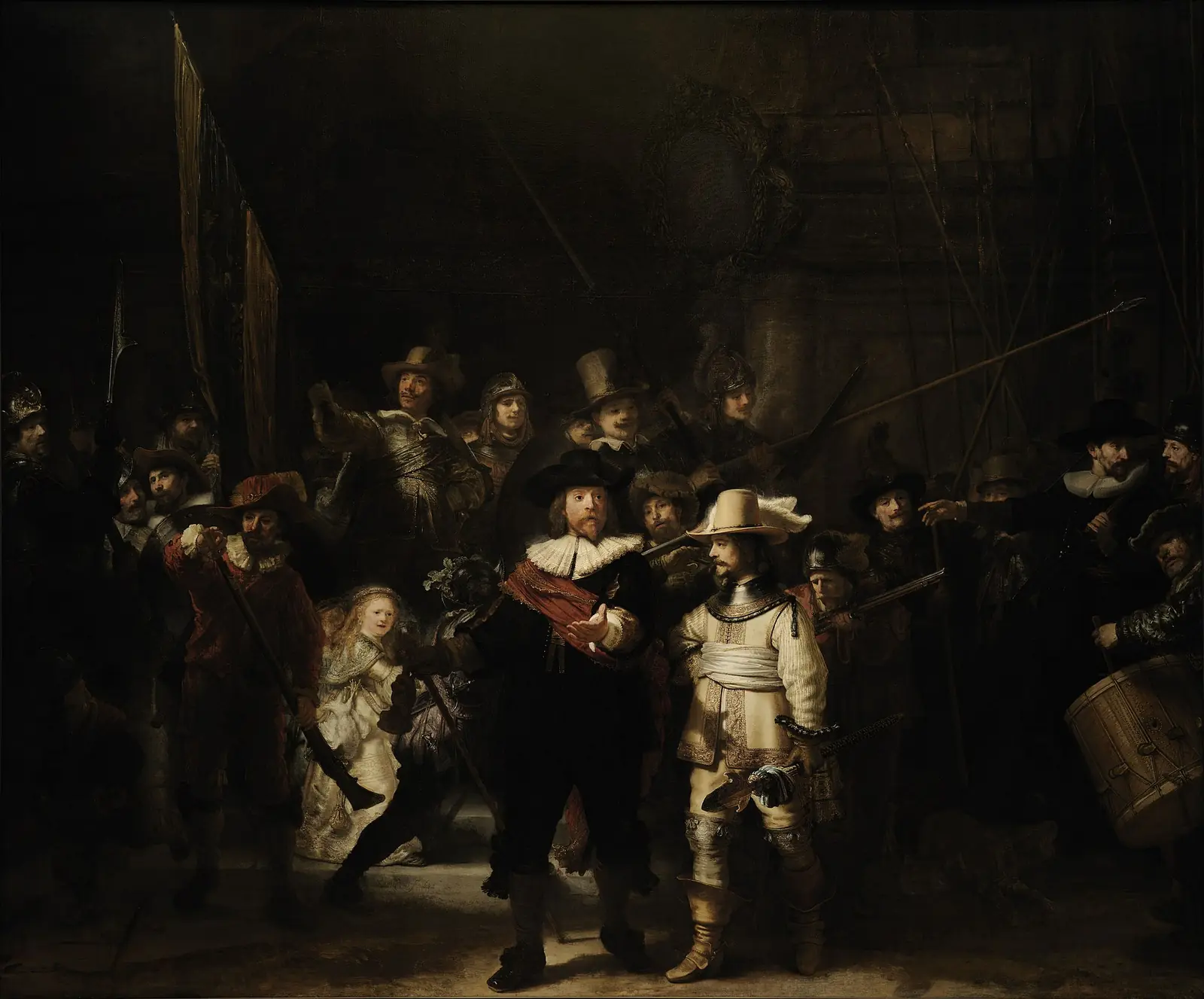
Rembrandt takes a formal militia commission and turns it into a moving civic drama. In The Night Watch, Rembrandt van Rijn rejects static lineup logic and builds a scene of coordinated action, hierarchy, and symbolic identity. The painting belongs to the Baroque, but its pacing anticipates modern narrative staging.
Amsterdam context: civic portraiture in the Dutch Republic
Painted in 1642, the work comes from a long Dutch tradition where militia companies commissioned group portraits to display prestige and solidarity. Most comparable paintings are orderly, front-facing, and socially legible at a glance.
Rembrandt keeps the commission type but rewrites its grammar. Instead of documenting rank in a static arrangement, he orchestrates a public body in motion. The format becomes less archival and more theatrical.
What the painting actually shows
Captain Frans Banninck Cocq in black and Lieutenant Willem van Ruytenburch in yellow occupy the brightest foreground axis. Around them, musketeers prepare weapons, a drummer activates tempo, a standard rises, and secondary figures appear and dissolve through shadow.
The composition is driven by diagonals, not rows. Lances, pikes, and arm gestures pull the eye across depth planes, so viewers experience sequence rather than inventory. You read movement first, identity second.
Rembrandt's intention: light as civic hierarchy
Chiaroscuro here is not only atmosphere. It is a social tool that allocates visibility. Key actors receive concentrated light; others remain partially legible, as in real public events where attention never distributes equally.
One crucial sign is the illuminated girl with chicken claws at her belt, linked to militia symbolism. She is less a portrait sitter than an emblematic node: a compact visual statement about company identity and ritual display.
This is not a "group photo" before photography; it is a choreography of power.
Why "night" is a restoration story, not the original scene
The famous title is historically misleading. Darkened varnish made the image look nocturnal for generations. Cleaning campaigns revealed a daylight setting and restored chromatic range, changing how the picture is interpreted in relation to civic ceremony and urban spectacle.
Material history therefore shaped reputation. Part of Rembrandt's modernity lies in this double life: one painting, two centuries of different visibility conditions.
A useful comparison for reading crowd logic
Set this canvas against Las Meninas. Velázquez constructs court power through optical instability and reflected authority; Rembrandt constructs civic power through kinetic density and directional light. The contrast clarifies that seventeenth-century group painting had multiple political logics, not one model.
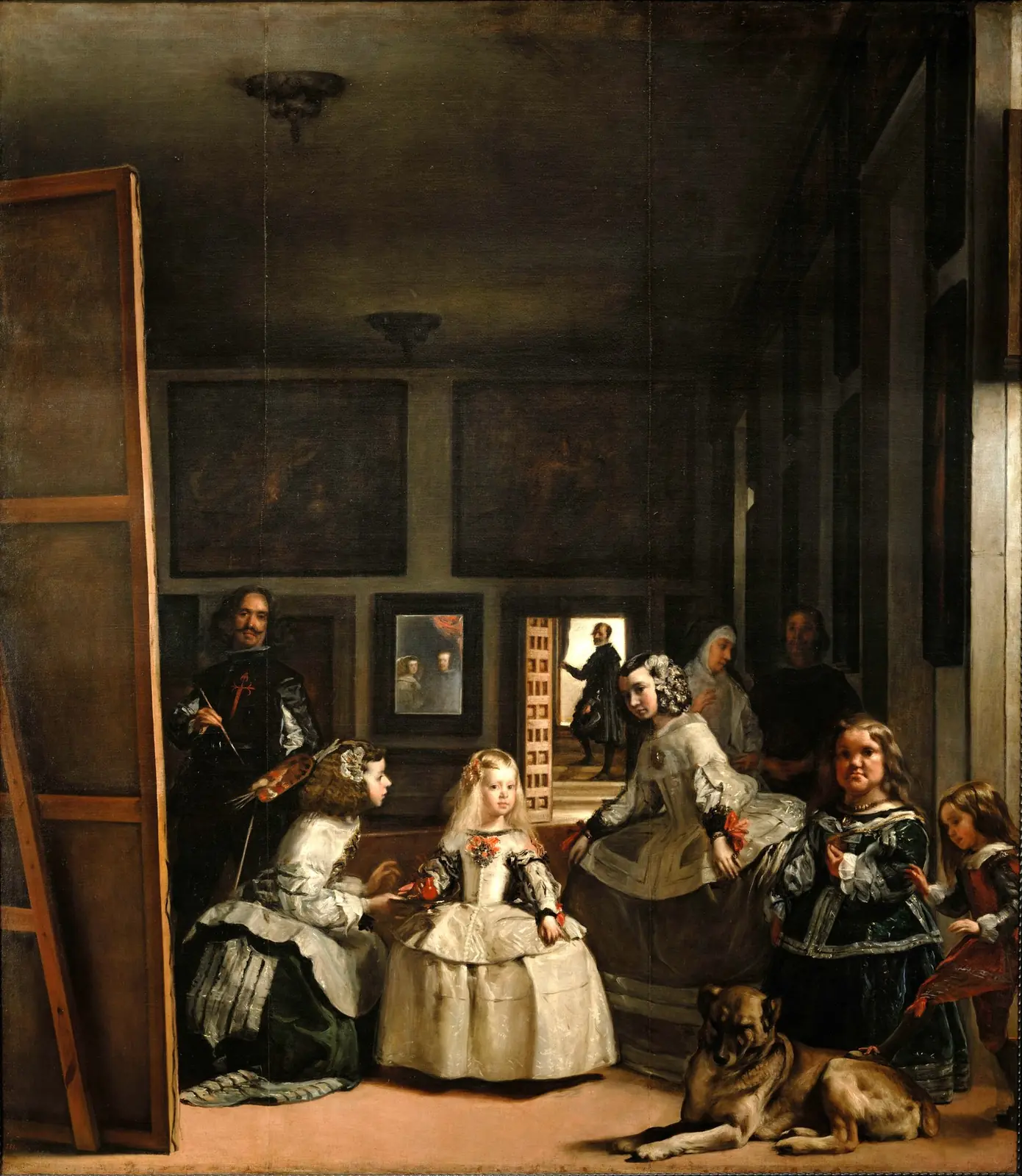
You can then reconnect to Dutch Golden Age context and compare with quieter Dutch strategies in The Milkmaid.
Why the painting still compels viewers
The work endures because it combines scale, legibility, and interpretive depth. From across a room, it reads as collective momentum. Up close, it reveals coded symbols, individual responses, and painterly decisions about who gets seen.
If this structure is clearer now, use the art quiz to test whether you can identify Rembrandt quickly among nearby visual languages.
Explore more
Related works
Primary sources
Frequently asked questions
The name came later, after aged varnish darkened the canvas and made it seem nocturnal. Cleaning and restoration revealed that Rembrandt painted a daylight scene.
She is often read as a symbolic figure linked to the militia company, especially through the chicken claws on her belt. She functions more as emblematic signal than as a documented portrait subject.