
Venetian Mannerist Artist
Jacopo Tintoretto
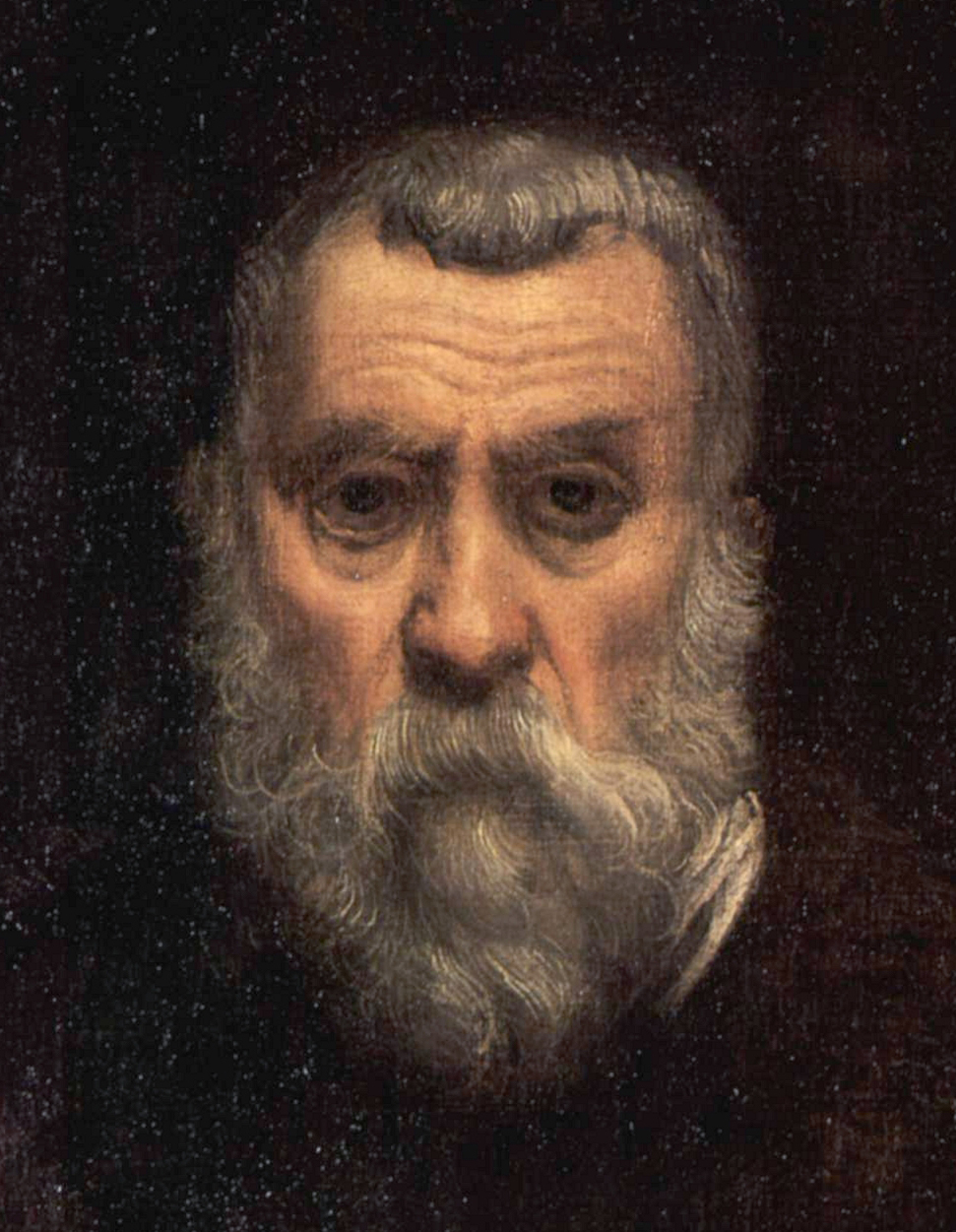
Tintoretto is the Venetian painter who makes Renaissance color feel as if it has been thrown into motion. His paintings keep the sensuous surfaces of Venice, but he drives them through diagonals, dark interiors, sudden light, compressed space, and figures caught in unstable action. He belongs to the late Renaissance, but his work already points toward the urgency of Baroque drama.
Venice after Titian
Jacopo Robusti, called Tintoretto, worked in Venice in the sixteenth century, in the long shadow of Titian. Venetian painting was already famous for color, atmosphere, flesh, and fabric. Tintoretto did not abandon that inheritance. He made it more restless. Where Titian often lets color deepen into authority, Tintoretto pushes color through speed and strain.
His training and career belong to the competitive workshop world of Venice. The nickname Tintoretto, linked to his father's trade as a dyer, fits a painter whose studio practice turns cloth, pigment, and light into engines of drama. He built his reputation through religious cycles, civic commissions, and mythological paintings in which speed never means carelessness.
Cloth, light, and color matter constantly, but Tintoretto is not simply a painter of rich surfaces. He uses those surfaces to make bodies tilt, rooms compress, and sacred or mythological scenes feel physically unsettled.
Speed as a visual method
Tintoretto's reputation for speed is not only a biographical anecdote. The paintings themselves look accelerated. Gestures cut across the canvas, bodies are foreshortened, architectural spaces plunge sharply, and light often seems to arrive before the eye is ready. His work sits naturally near Mannerism: Renaissance mastery is still present, but it is stretched into tension.
That tension does not mean disorder. Tintoretto can be extremely controlled. His scenes often use strong diagonals and dramatic contrasts to keep the eye moving through a complicated field. He builds instability so that the viewer feels the subject rather than merely recognizes it.
Danaë in Lyon: myth, money, and irony
Danaë, now in the Musée des Beaux-Arts de Lyon, shows a more private side of that method. The myth of Zeus entering Danaë's chamber as a shower of gold becomes a room full of red curtains, flesh, coins, a servant, and a small dog. The divine story is present, but Tintoretto makes the gold materially unavoidable.
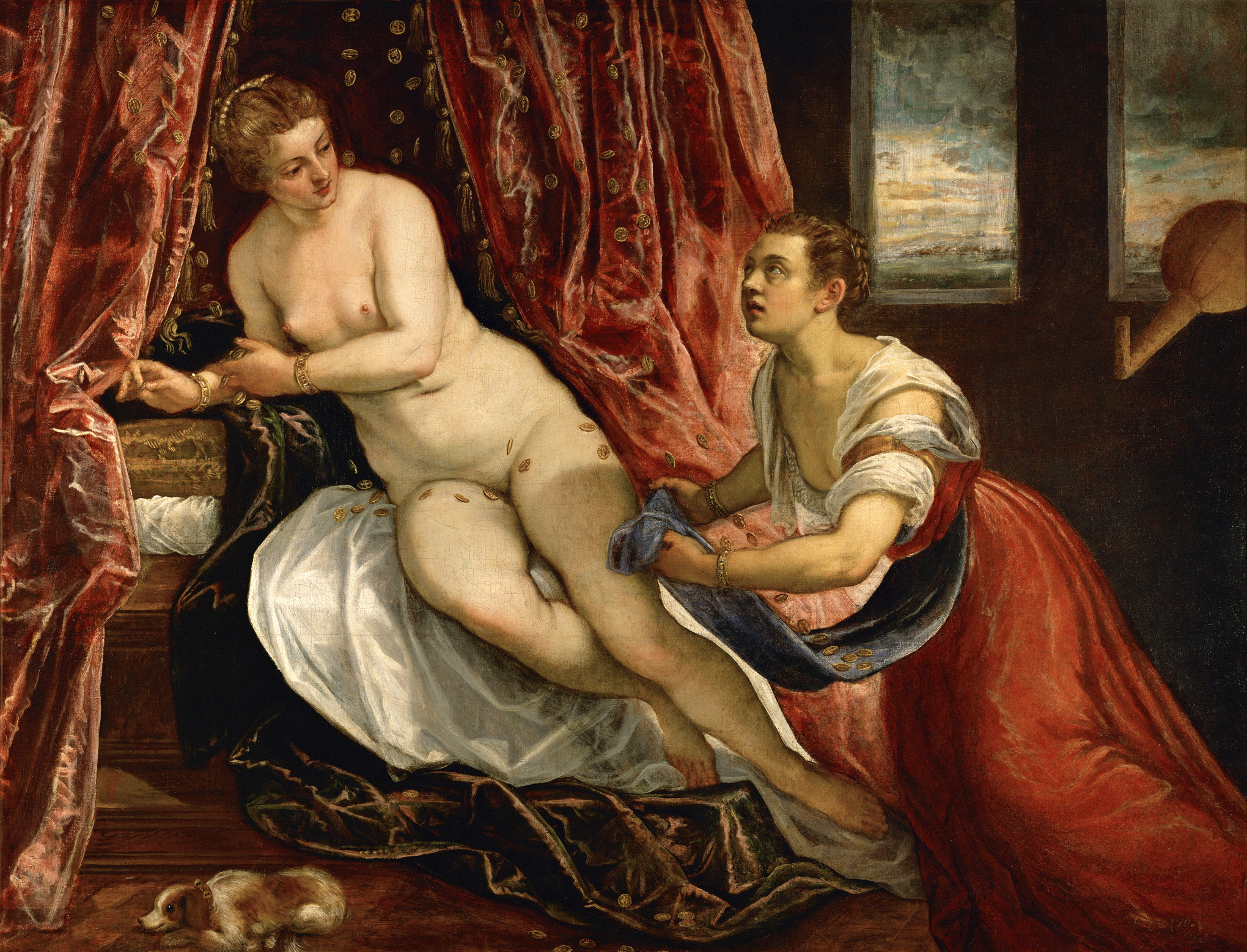
The painting clarifies his intelligence. He does not simply eroticize the myth. He lets the scene become witty, worldly, and slightly uncomfortable. The servant collecting the coins matters as much as Danaë's body. The red curtains matter as much as the divine episode. Myth has entered the practical, commercial, theatrical world of Venice.
Between Veronese and the Baroque
Tintoretto becomes clearer beside Veronese. Veronese often makes Venetian grandeur spacious, polished, and ceremonious. Tintoretto compresses it. He prefers sharp movement, darker pressure, and theatrical shifts of scale. Both painters belong to the Venetian world of color and spectacle, but they organize attention differently.
His legacy lies in that acceleration of Venetian painting. Tintoretto shows how Renaissance color can become dramatic propulsion. His work helps bridge the gap between Venetian sensuality, Mannerist tension, and the more forceful theatrical language that seventeenth-century painters will develop.
How to read Tintoretto
Do not read Tintoretto by searching first for perfect balance. Follow motion. Look for the strongest diagonal, the brightest interruption of light, the most unstable body, and the place where fabric or architecture drives the scene forward. Then ask how the subject changes when it is made to move this quickly.
A useful route through Explainary is Danaë, Veronese's Bathsheba Bathing, and the guide to Mannerism. From there, compare Tintoretto's pressure with the more public drama of Baroque art.
Primary sources
- The National Gallery: Jacopo Tintoretto
- Britannica: Tintoretto
- Louvre collections: Danaë
- Musée des Beaux-Arts de Lyon: focus sheet on Tintoretto's Danaë
- Wikimedia Commons: self-portrait image record