
Dutch Golden Age Artist
Johannes Vermeer
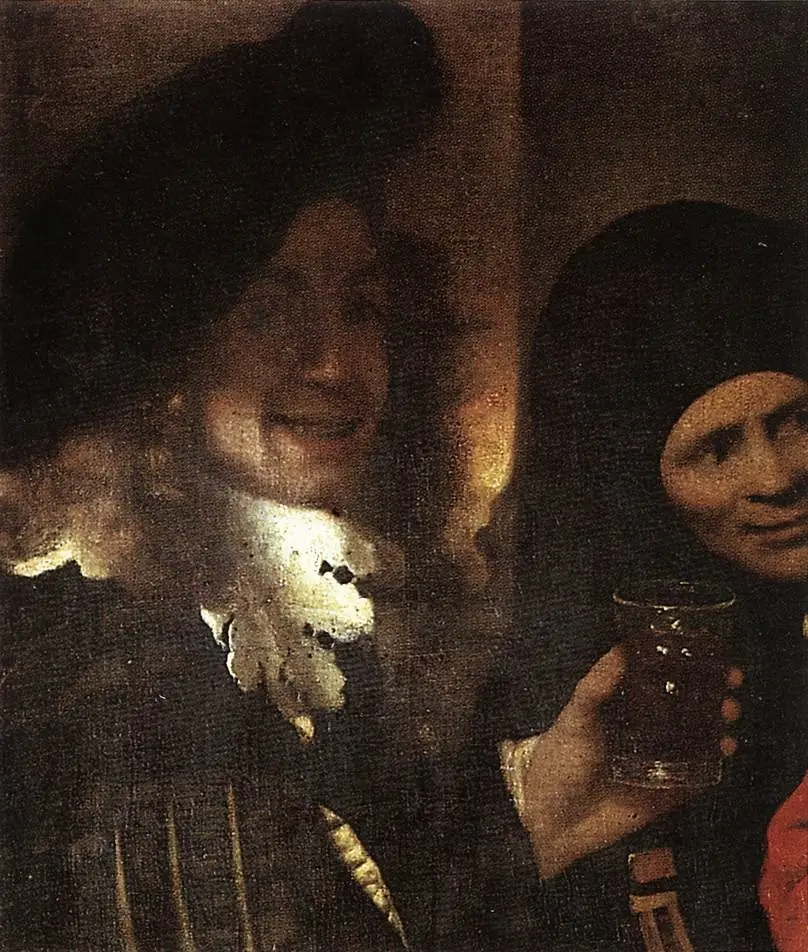
Johannes Vermeer is the Dutch painter of quiet rooms, turning faces, and light entering from the side. He reduces the scene until a wall, a jug, a pearl, or a strip of sky can carry almost the whole picture. That economy is what gives his images their unusual calm and precision.
Delft, faith, and a deliberately narrow career
Vermeer was born in Delft in 1632, entered the Guild of Saint Luke in 1653, and worked in a city whose art market rewarded speed and quantity. He chose the opposite. His marriage to Catharina Bolnes, and likely conversion to Catholicism in that context, placed him between different social and religious networks while he kept output unusually small. A key historical anecdote clarifies the pressure: after the 1672 "Rampjaar" crisis, the Dutch art market contracted sharply, and Vermeer's household debt deepened before his death in 1675. His slowness was therefore not romantic isolation, but a risky method inside the Dutch Golden Age.
That method depended on specific patronage. Pieter van Ruijven and his household acquired multiple Vermeer paintings, giving him a degree of continuity rare in Delft's volatile market. But continuity did not mean comfort: a large family, credit pressures, and sudden market contraction kept production precarious. This biographical tension helps explain why his interiors feel simultaneously calm and economically charged.
Three paintings, three systems of attention
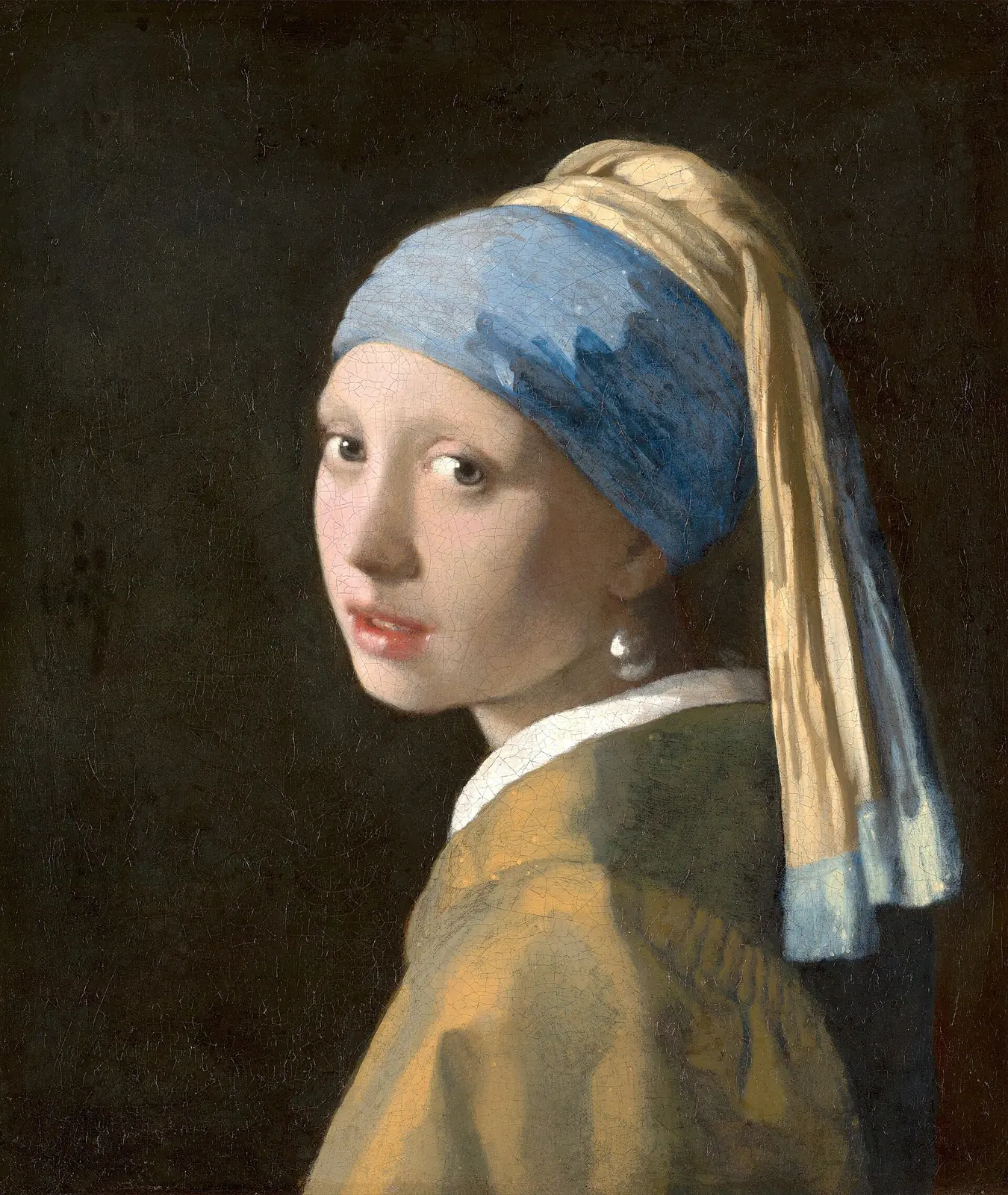
In Girl with a Pearl Earring, Vermeer strips away setting so turning, glance, and suspended speech become the event. The image feels close yet narratively unresolved, which is exactly the point: he maximizes perceptual contact while preserving psychological distance.
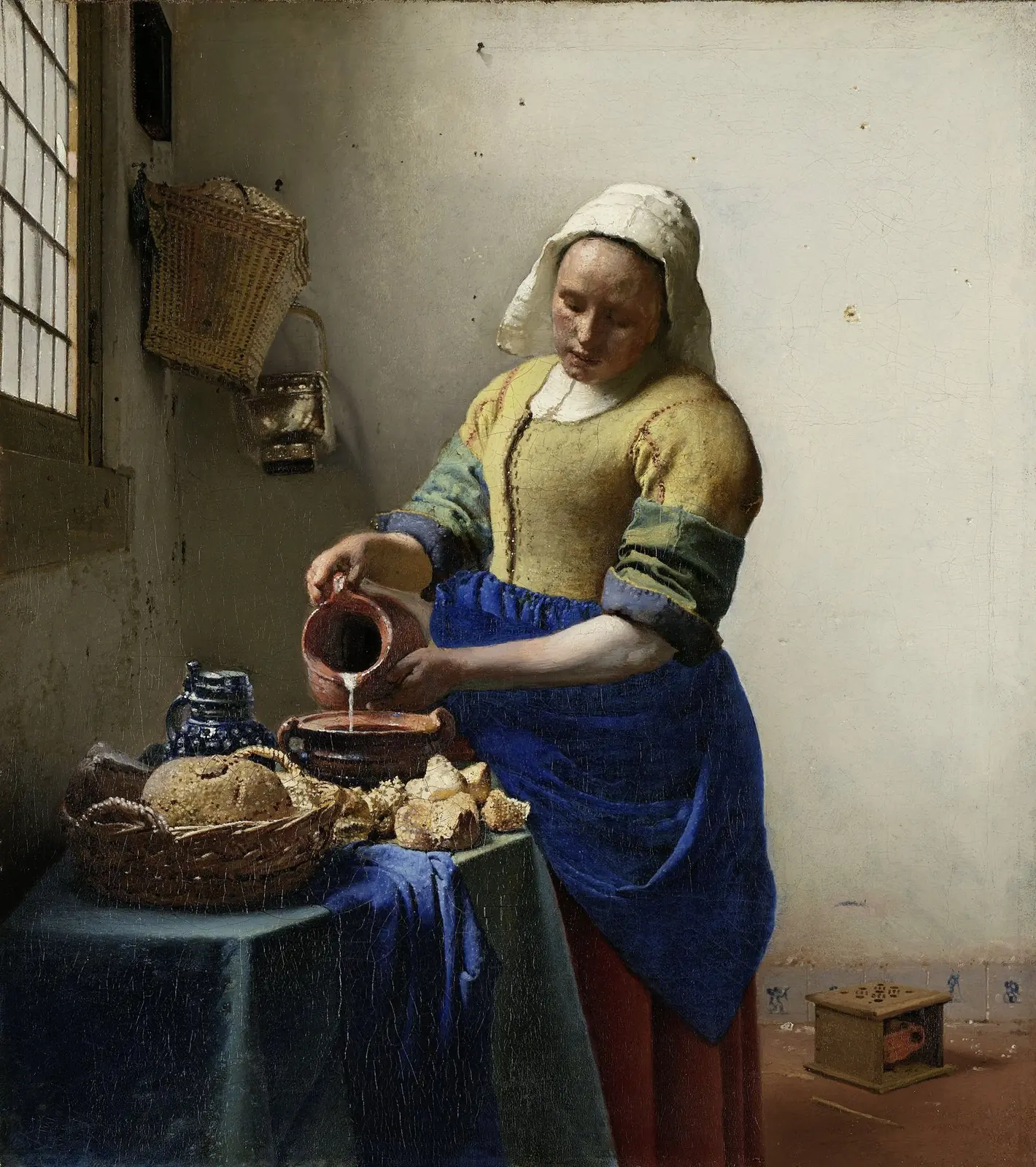
In The Milkmaid, the structure shifts: labor, bread crust, ceramic glaze, and wall texture carry the painting's argument. Window light does not prettify the room; it organizes value, rhythm, and social attention. Together these two works show Vermeer treating domestic space as a disciplined cognitive field rather than a neutral genre scene.
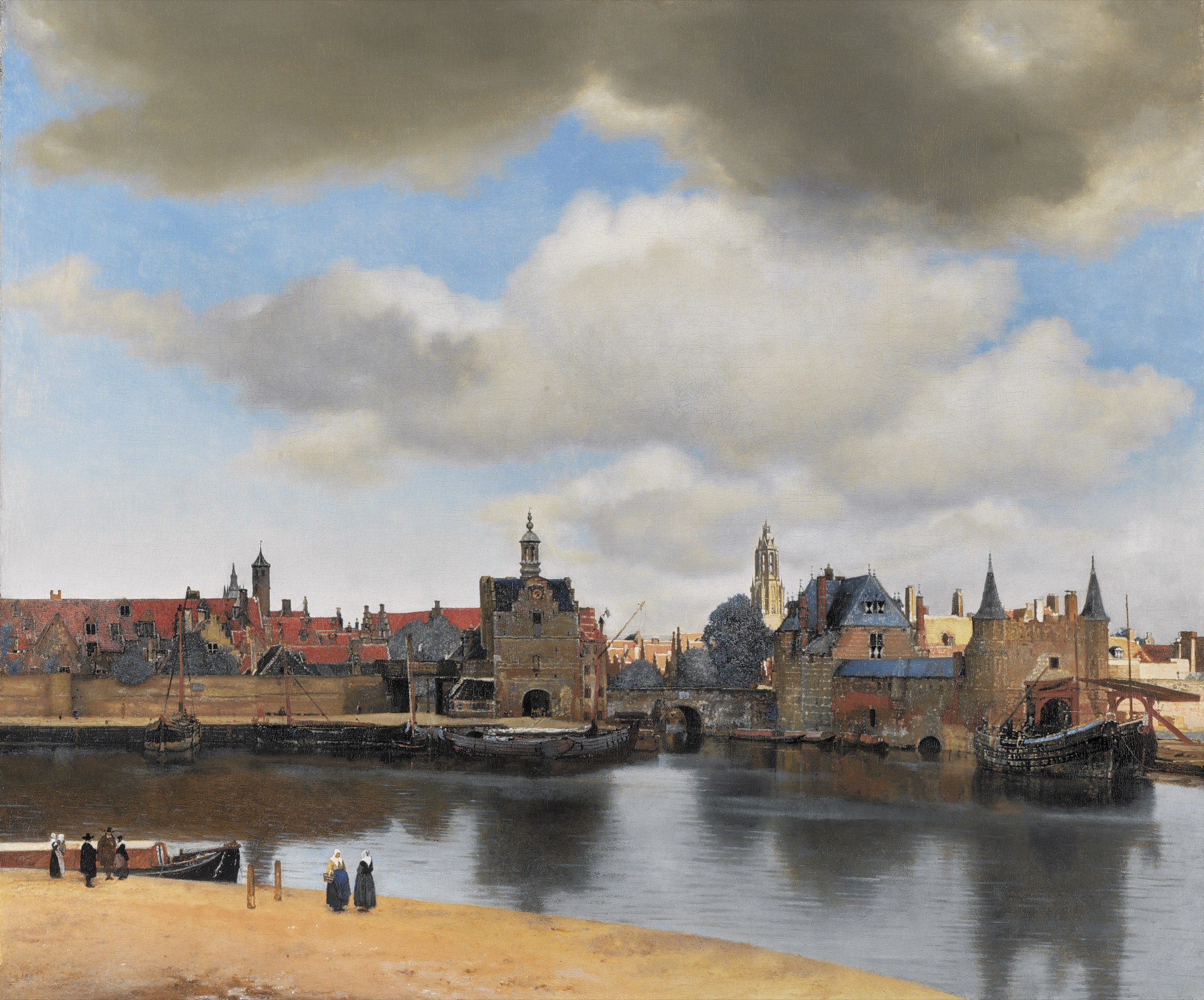
View of Delft proves that this control is not confined to interiors. Vermeer takes quay walls, gates, clouds, and harbor reflections and gives them the same measured attention he gives bread crust or skin tone. The city is not a backdrop. It becomes a structure of weather, civic presence, and slowed attention.
Across all three, Vermeer works by narrowing the field. He holds the viewpoint steady, measures intervals carefully, and arranges surfaces so that small shifts in light do the main work. The result is simple to describe and hard to imitate: very little happens, yet every change in edge, gesture, or reflection matters.
Materials, method, and lasting influence
The camera obscura debate is useful, but Vermeer's achievement is painterly, not mechanical. He translates optical effects into decisions about edge, color temperature, and focal rhythm, often using costly pigments such as natural ultramarine to stabilize luminous depth. Compared with Velázquez, he suppresses court spectacle; compared with Rembrandt, he keeps conflict low and concentration high. That combination defines his legacy across painting, photography, and contemporary image theory.
His long-term reception confirms that this was not minor genre painting. After relative neglect, nineteenth-century critics such as Théophile Thoré-Bürger helped re-establish Vermeer as a central figure, precisely because his works reward slow looking rather than rhetorical drama. That rediscovery still shapes museum practice today: Vermeer exhibitions are built around duration, proximity, and controlled viewing conditions, which matches the logic of the paintings themselves.
Another reason his legacy remains unusually strong is methodological economy. Fewer than forty paintings are securely attributed to Vermeer, yet each one tests similar problems at high precision: how much narrative can be removed without losing human presence, and how much optical information can be simplified without flattening experience. This compact corpus made attribution debates intense, but it also gave later scholars and artists a rare laboratory of repeatable visual decisions. In that sense, Vermeer is not "small scale"; he is experimentally dense.
Key works in Explainary
Associated movements
Then try the art quiz.