
Movement Guide
Dutch Golden Age
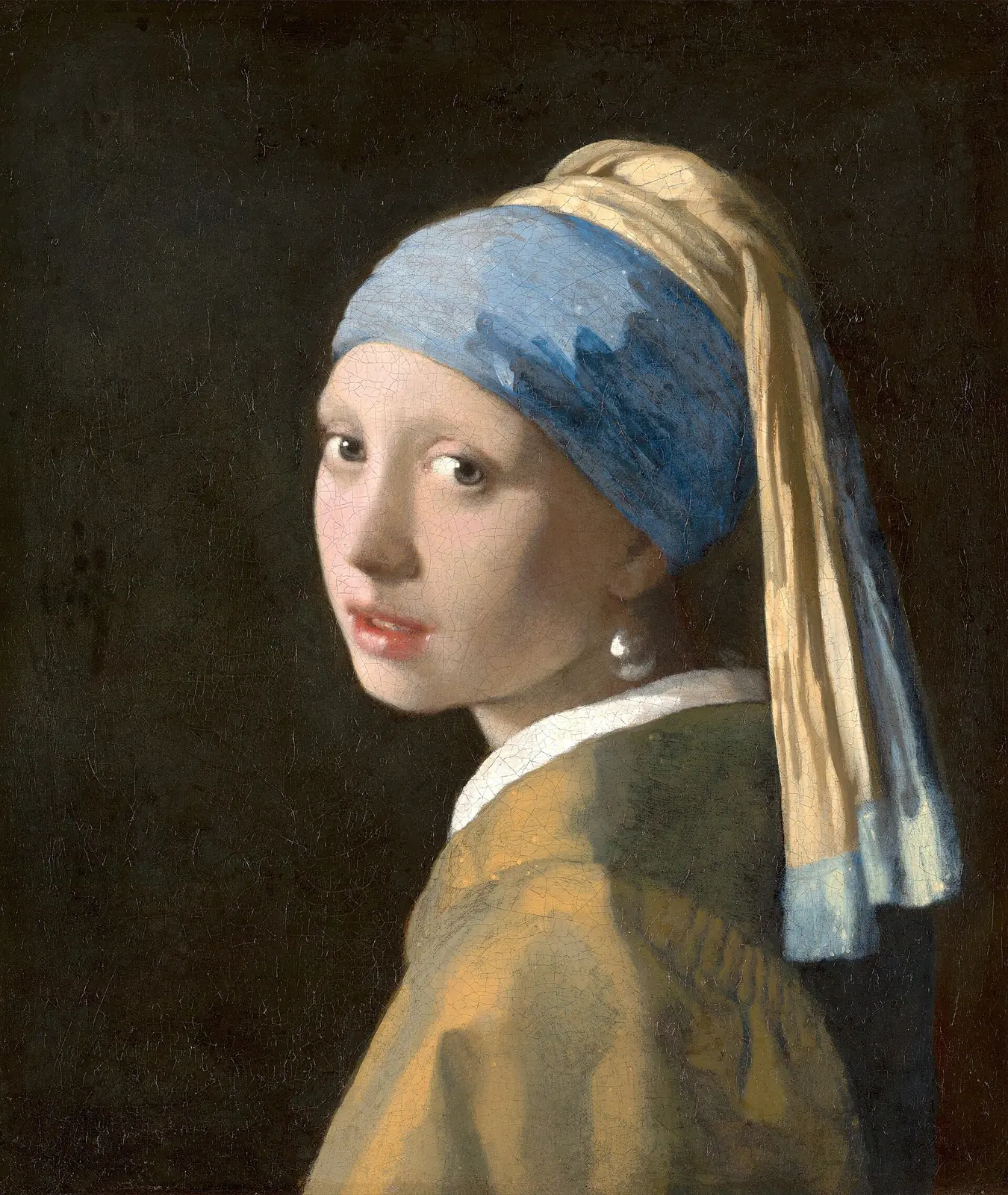
In seventeenth-century Dutch painting, a peeled lemon, an open letter, or a shaft of window light can matter as much as a king.
That is the first thing to grasp about the Dutch Golden Age. Its ambition does not depend on grand myth or court spectacle. It depends on a market culture in which painters address private buyers, civic institutions, and highly differentiated tastes, then make ordinary rooms, objects, and gestures carry unusual intellectual pressure.
This is why the movement is better understood as a visual economy than as a single look. Technical precision, object intelligence, and social reading develop together. The result is not modest art at domestic scale, but a remarkably flexible system for turning everyday life into argument.
What Dutch painters treat as serious
- Intimate interiors and portraits where small gestures and objects carry social and moral meaning.
- Exceptional control of light and material texture, from metal and fabric to skin and bread crust.
- Attention to ordinary life and civic culture, treating domestic space as intellectually serious subject matter.
- A market-driven diversity of formats, from cabinet paintings to monumental group portraits and etched prints.
The visual tools behind that ambition
- Refined oil methods and glazing used to build subtle tonal transitions, atmospheric depth, and tactile surfaces.
- Printmaking as a major art form, enabling experimentation and wider circulation of visual ideas.
- Optical discipline: careful control of viewpoint, perspective, reflection, and micro-contrast to stabilize believability.
Commerce, morality, and looking
Dutch Golden Age painting often appears calm at first glance, then reveals tension on second reading. A polished silver cup, a half-peeled lemon, or an open letter can signal prosperity, desire, transience, or risk. Artists stage social intelligence through objects, not speeches.
That is also why these pictures still feel sharp. They train you to infer class, labor, gendered expectation, and economic pressure from surfaces that first seem quiet. By comparison with Realism and with civic staging in The Night Watch, Dutch interiors turn private space into public meaning. In The Milkmaid, labor is rendered with gravity but without idealization. In Girl with a Pearl Earring, intimacy is constructed with the precision of theater.
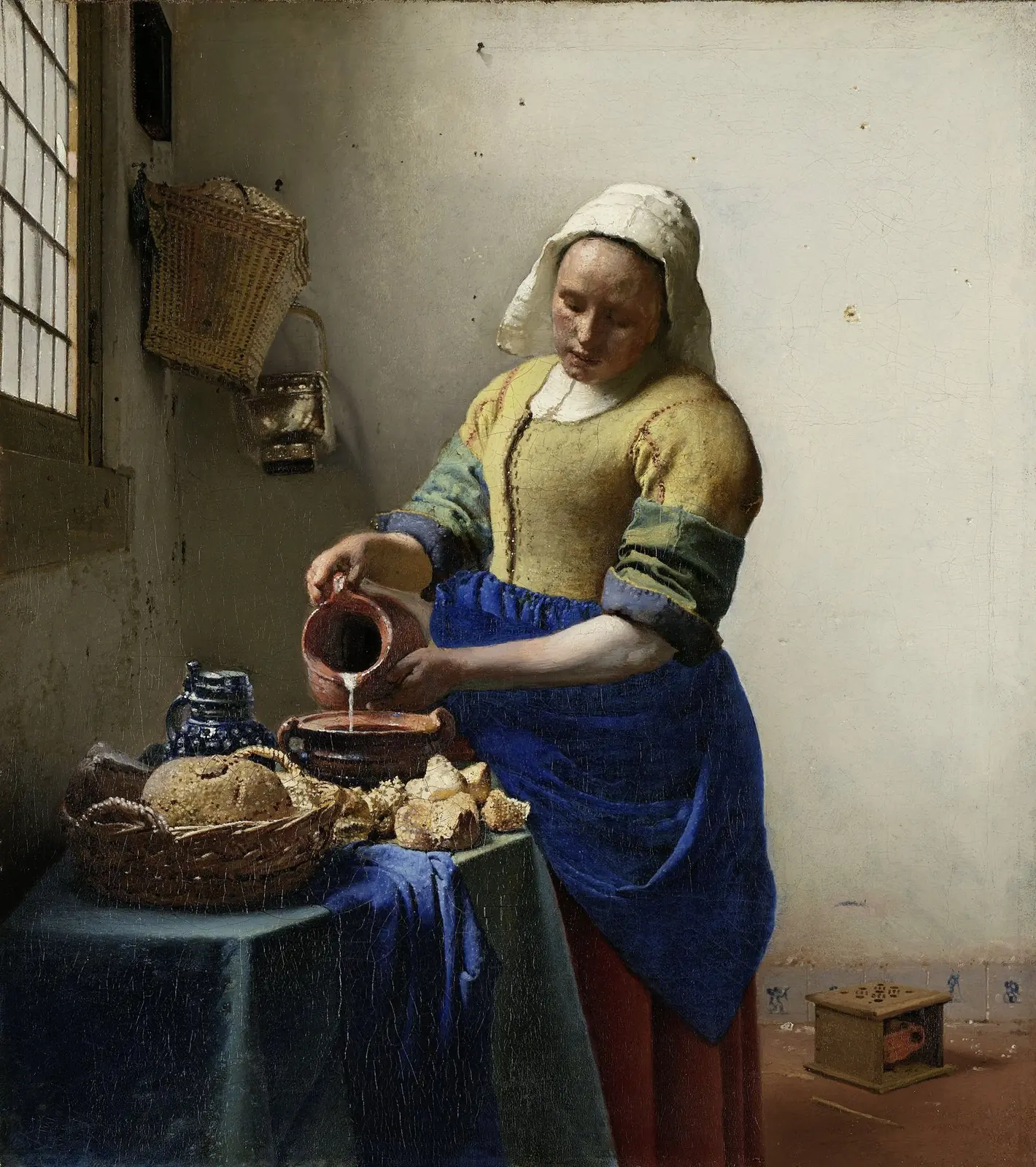
A republic can picture itself through brick and water
Dutch painting does not stay inside the room. In View of Delft, Vermeer shows that a city itself can be staged with the same restraint and intelligence. Quays, gates, clouds, and reflections carry civic identity without needing royal ceremony or mythological spectacle.
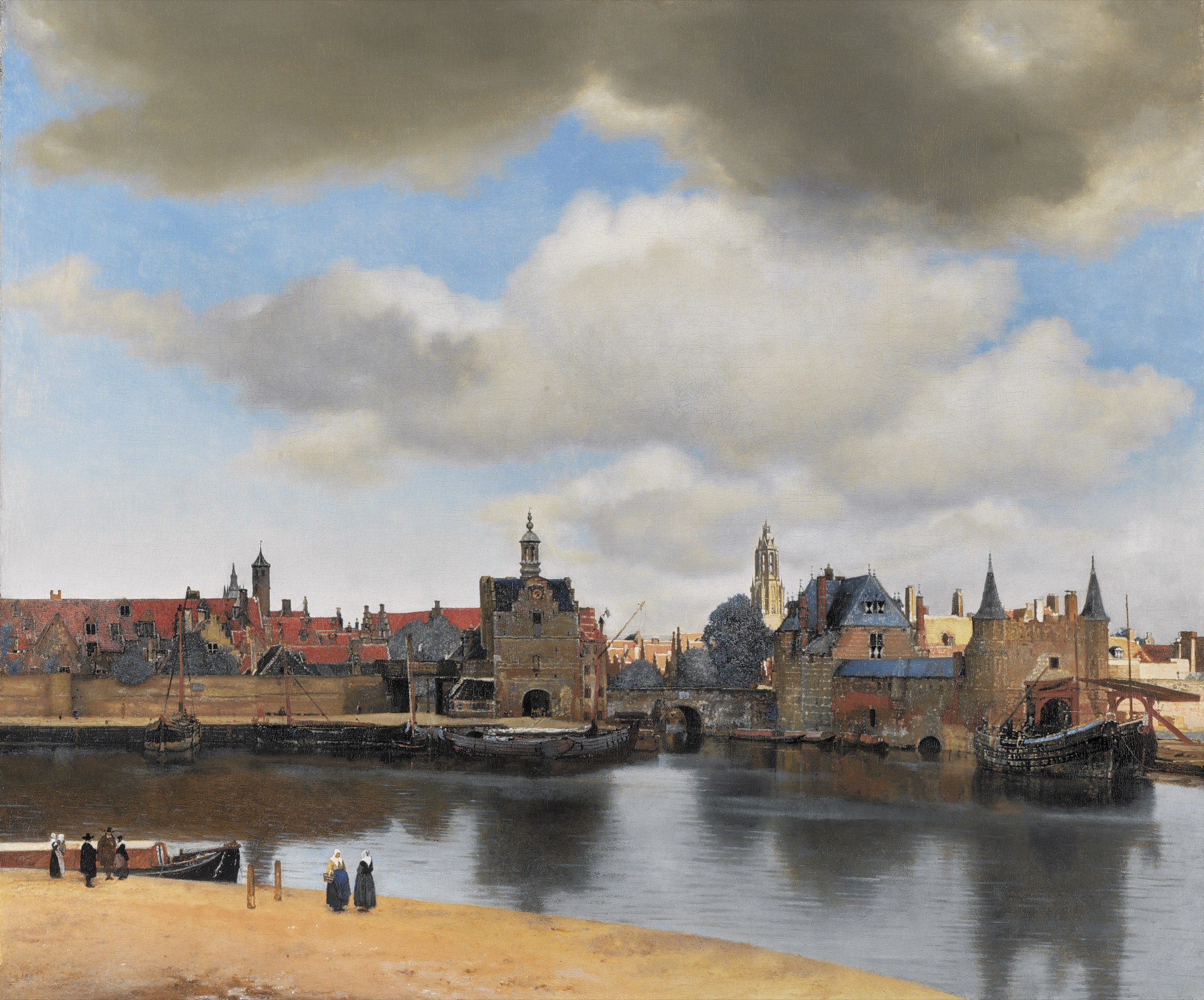
This expands the movement. Dutch art can move from a kitchen interior to a city edge without giving up its trust in observed fact, patient surfaces, and socially legible space. It is not only intimate. It is also civic in quieter, less theatrical ways.
How to read Dutch pictures without shrinking them
The common mistake is to treat domestic scale as diminished ambition. Dutch painters do the opposite. They use surfaces, reflections, maps, tables, bread, fabric, and wall space to stage questions about prosperity, ethics, trust, and time. A kitchen or music room can carry as much ideological charge as a battlefield.
A strong reading order is simple. Start with the light: where does it come from, and what does it make believable? Then move to the objects: are they merely functional, or are they quietly judging the scene? Then step back and ask whether the composition stabilizes social order or lets unease leak into it. The best Dutch works do both at once.
- Read objects as both practical tools and symbolic signals.
- Watch how light authenticates texture and social status.
- Track where domestic order turns into social pressure.
- Compare painting and print to understand different audience scales.
Prosperity and blind spots
The movement's realism is inseparable from the prosperity that funded it, and that prosperity depended on global trade networks that included coercive and colonial systems. Many paintings do not picture those structures directly, yet they rest on them: imported pigments, maritime wealth, circulating commodities, and expanding financial instruments. To read Dutch realism seriously is to keep technical brilliance and economic violence in the same frame.
That critical double vision also clarifies why these works remain relevant. They are not only records of \"daily life.\" They are visual contracts about who gets represented as stable, respectable, productive, or desirable inside a market society.
One clear way to read the movement
The clearest method is to compare one interior, one city view, one print, and one civic portrait from roughly the same decade. Ask how each medium constructs trust. Interiors do it through detail density, city views through atmosphere and urban recognizability, prints through line and circulation, civic portraits through managed group presence. The comparison makes the Dutch Golden Age visible as a coordinated system rather than a shelf of isolated masterpieces.
Set that route beside the longer technical inheritance of the Northern Renaissance, and the movement becomes clearer still: acute observation, object intelligence, and image circulation are working together, not separately.
Key artists
Key works in Explainary
The art quiz is a useful pressure test here: can you recognize this world by its objects, light, and social tension, not only by a few famous titles?