
Artist Guide
Mikalojus Konstantinas Čiurlionis
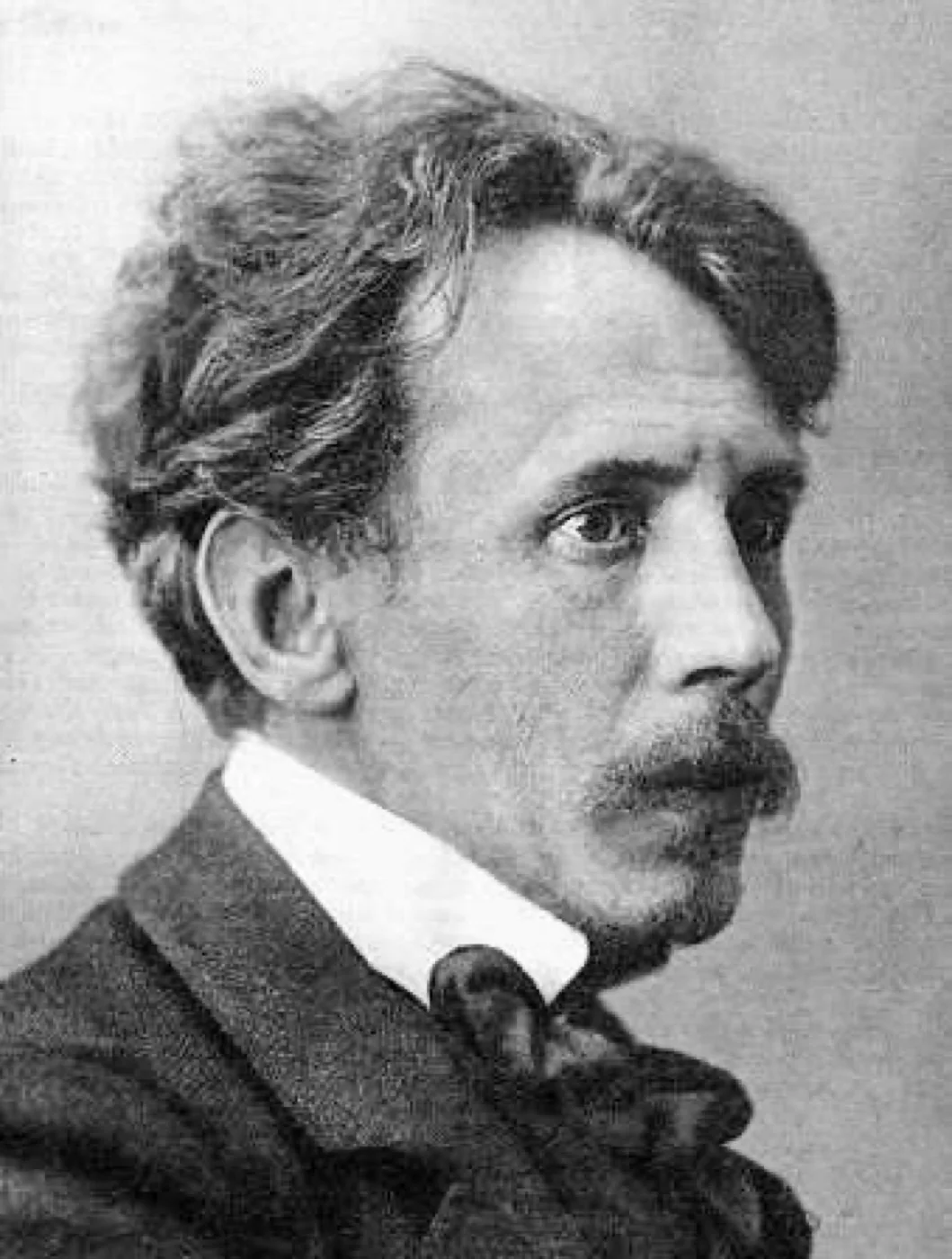
Mikalojus Konstantinas Čiurlionis treated painting as a scored temporal experience. He did not paint landscapes as static views; he built sequences, tonal climates, and pictorial structures named after forms such as sonata, prelude, and fugue. His canvases ask to be read in time, not only in space.
From Senoji Varena to Warsaw: building a double formation
Unlike artists who used music only as metaphor, Ciurlionis built serious credentials in both fields. Born in 1875 in Senoji Varena and raised in Druskininkai, he studied music in Warsaw before entering the Warsaw School of Fine Arts. This sequence matters: he learned compositional discipline in score-writing, then translated that discipline into image-making. Even his titles - sonata, prelude, fugue - function as structural instructions, not decorative symbolism.
A concrete anecdote reveals how deliberate that method was: he organized painting cycles as if they were musical movements, with internal tempo shifts and thematic returns. In practical terms, he asks the viewer to read duration on a still surface.
His career also unfolded within a national-cultural awakening. Around the first Lithuanian art exhibitions in the late 1900s, Ciurlionis became a visible contributor to debates about what a modern Lithuanian visual language could be. That civic context matters because his hybrid method was not only formal experimentation; it was also a way to connect local identity, spiritual imagery, and European modernist research.
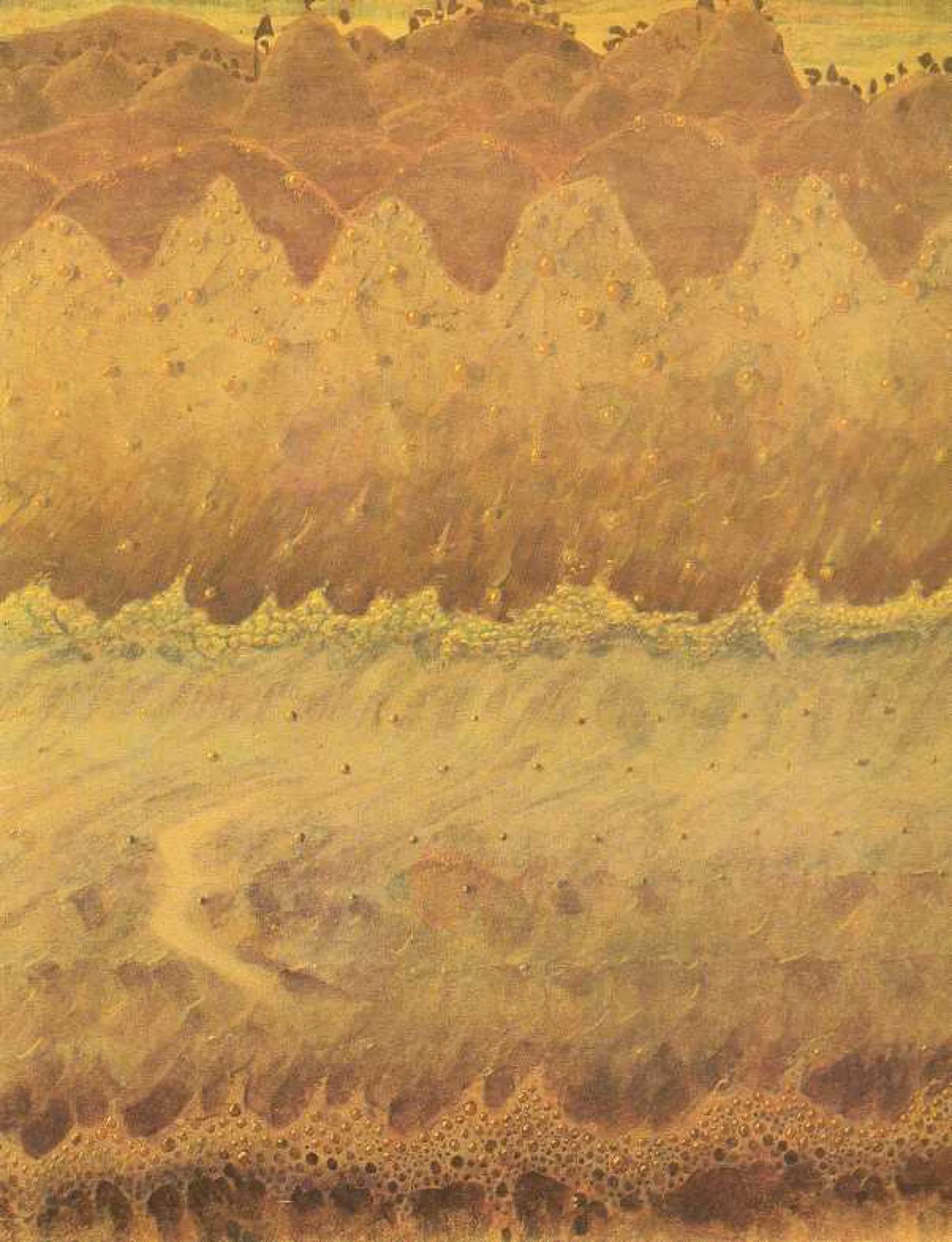
How Sonata of the Sea. Allegro turns rhythm into image
In Sonata of the Sea. Allegro, repeated wave-like forms behave like a musical motif: each return is comparable, but never identical. Color does not imitate local reality; it acts like harmonic value, setting tension and release across the surface. The painting therefore works less as marine illustration than as a temporal score rendered in pigment.
Symbolist inheritance, proto-abstract method
Ciurlionis remains linked to late Symbolism through recurring motifs - cosmos, genesis, ascent, sea, mythic time - but he handles them with unusual economy. Instead of anecdotal narrative, he builds layered depth bands where relation carries meaning. This is why he matters for the transition to Abstract Art: content migrates from depicted object to compositional organization.
Read him next to Wassily Kandinsky in Composition VII and Yellow-Red-Blue. Kandinsky radicalizes non-objective painting, but Ciurlionis had already tested the premise that visual rhythm can hold philosophical argument without relying on descriptive realism.
A useful reading method is to track recurrence before iconography: what shape returns, what interval changes, where visual tempo slows or accelerates. This keeps interpretation concrete and avoids vague mysticism. Ciurlionis can look esoteric at first glance, but his paintings become clearer when treated as systems with calibrated repetition and modulation.
A short life, a durable legacy in modernism
Ciurlionis died in 1911 at thirty-five, which limited circulation during his lifetime, yet his posthumous influence grew as museums and scholarship reconsidered modernism beyond Paris-Munich-Moscow narratives. He now appears as a bridge figure between Symbolism, spiritual modernism, and early abstraction. That legacy is especially visible in cross-media art today, where artists move between sound, painting, and notation systems with the same fluid logic he explored a century earlier.
The institutional afterlife is equally important. The M.K. Ciurlionis National Museum of Art in Kaunas and digitized Lithuanian collections made his oeuvre easier to study internationally, which changed his position in modernist timelines. In other words, his influence did not rise only because the work was rediscovered; it rose because archives, curators, and scholarship finally made that work legible to wider audiences.
Key works in Explainary
Associated movement context
Continue with the art quiz to validate recognition, context, and comparison.