
Impressionism
The Manneporte (Étretat)
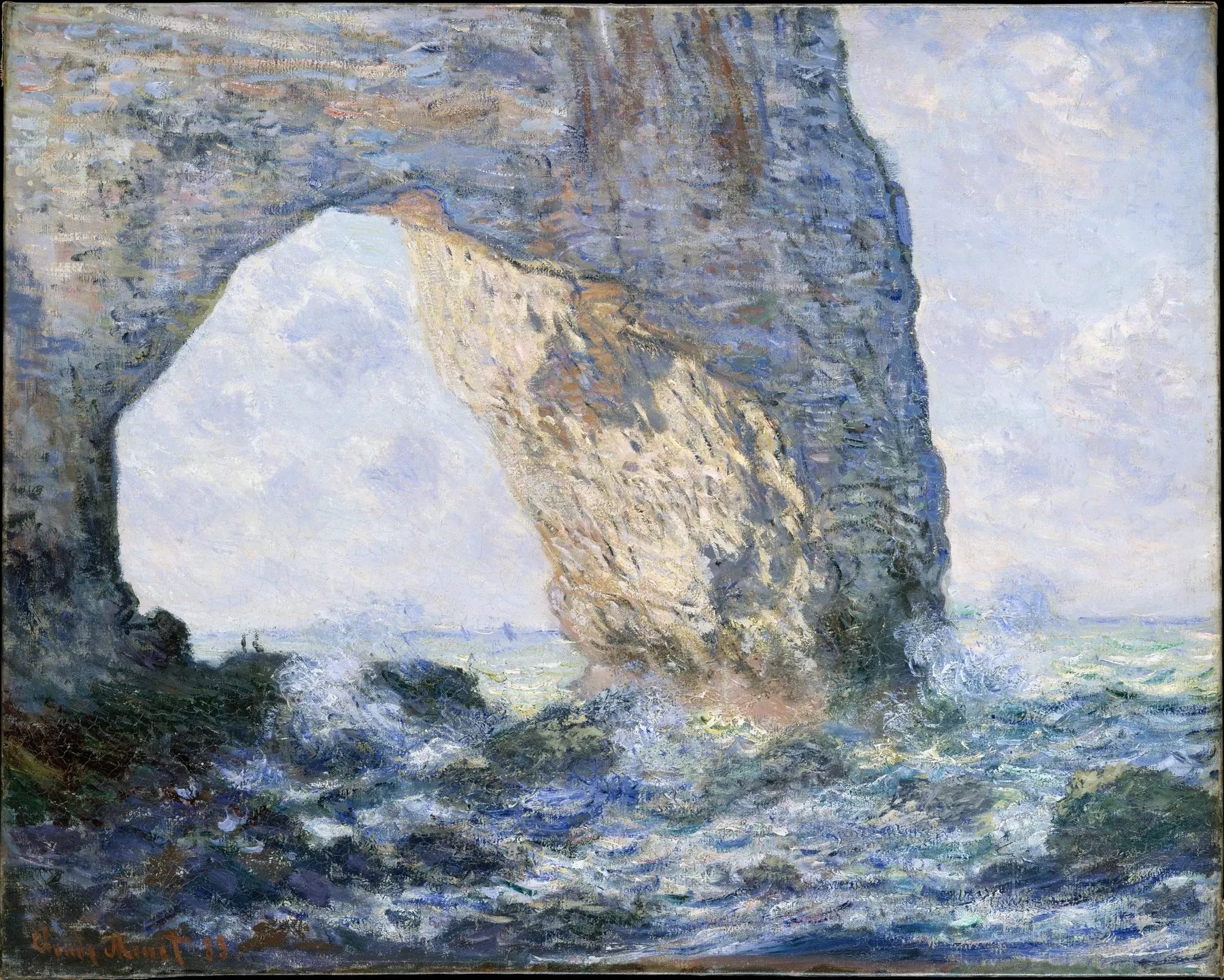
A powerful Étretat painting where the Manneporte arch becomes a structural anchor for sea movement and shifting weather. Monet uses that fixed rock form to test how changing light and wave pressure reorganize the same scene.
Reading the arch before reading the weather
Monet treats the Manneporte as a structural instrument, not as a picturesque souvenir. The arch gives the eye a fixed mass, then everything around it can fluctuate: surf direction, cloud density, moisture in the air, and edge sharpness. In practical terms, the painting answers a concrete question: how do you keep a coastal scene legible when nearly every visible element is unstable except the geology itself? The composition feels immediate because the weather is active, and controlled because the stone holds the scene.
Étretat in 1883: repetition as field method
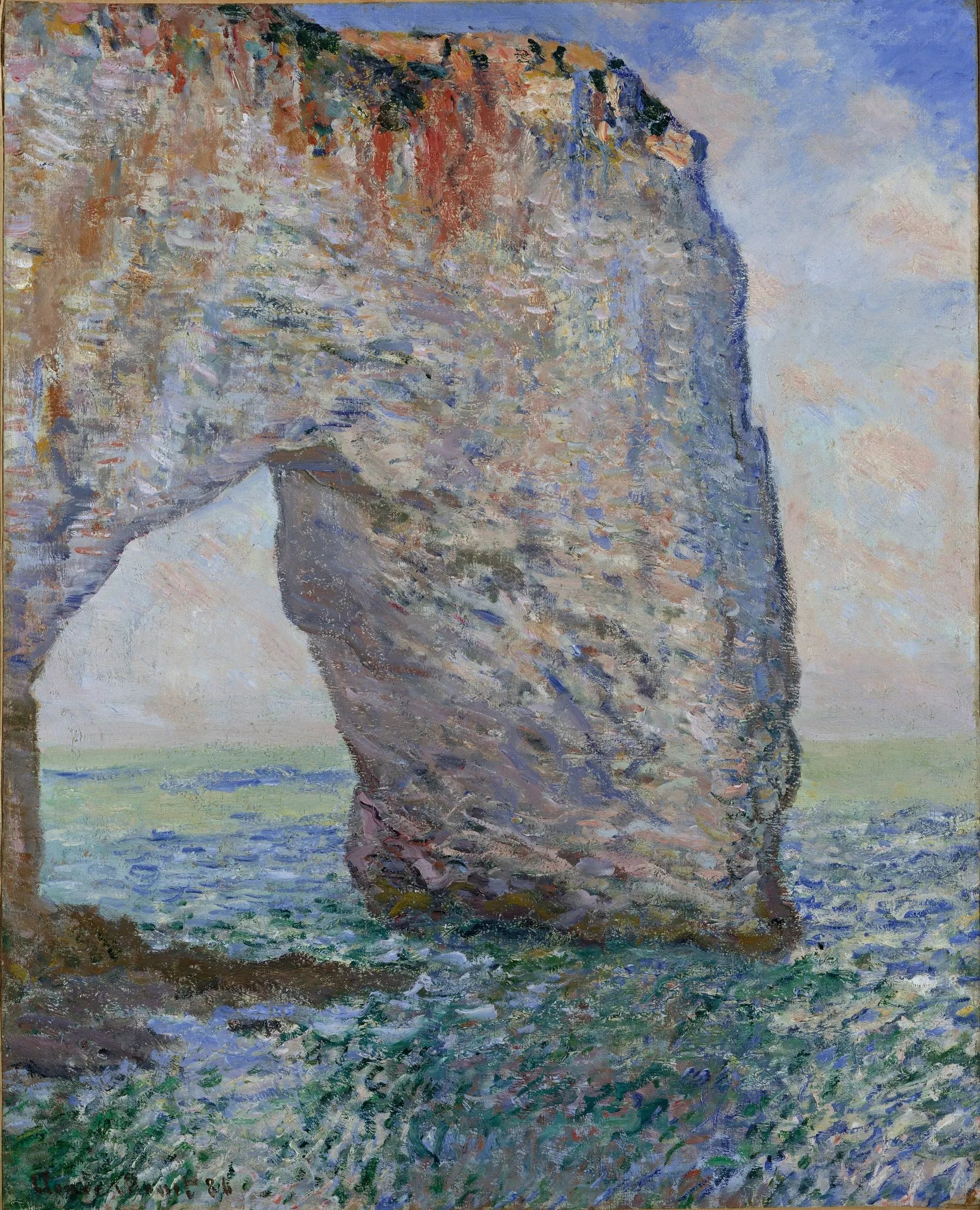
By 1883, Claude Monet is repeatedly returning to Étretat and treating the coast as a long-form investigation. Instead of producing one definitive "view," he varies hour, distance, humidity, and wave state across related canvases such as The Manneporte near Étretat, Étretat: The Beach and the Falaise d'Amont, and Étretat, Coucher de Soleil. The site is constant, but the visual problem changes each time. This is serial thinking before the term became fashionable.
Force without theatrical shipwreck
Unlike Romantic marine drama, Monet avoids narrative catastrophe. He builds force through painterly mechanics: angled brush trajectories in the water, compression of dark and light bands near the rocks, and calibrated tension between the horizontal sea and the vertical stone mass. The result is physically convincing without anecdote. You do not need a wreck, a hero, or a storm narrative to feel pressure; the pressure is already encoded in structure and rhythm.
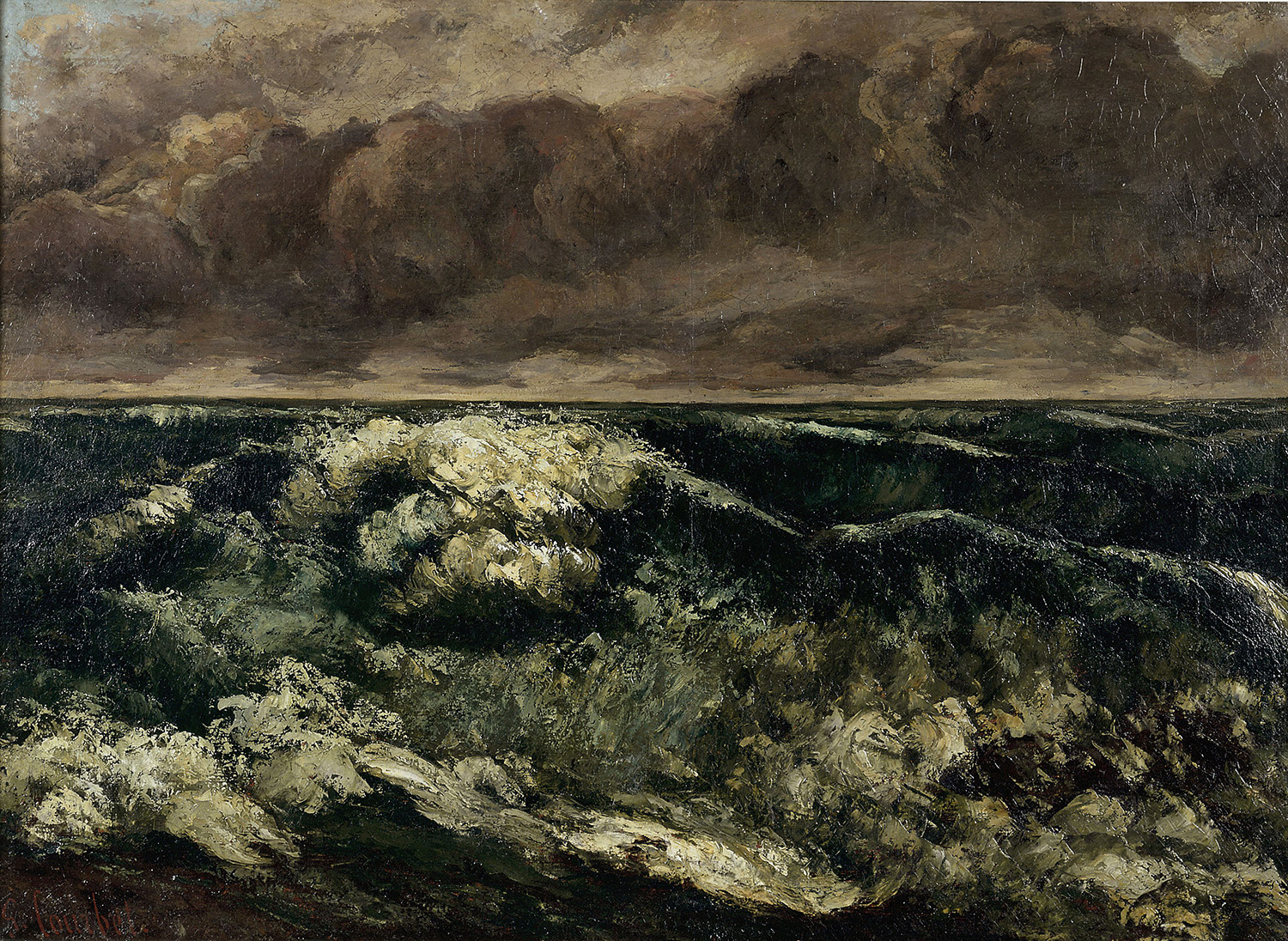
Courbet's The Wave, painted after his own Étretat stay, makes that contrast sharper. Courbet compresses the coast until the wave becomes almost stone; Monet keeps the rock as a fixed instrument and lets light, air, and tide change around it. Both painters understand Étretat as a repeated problem, but Courbet pushes mass while Monet pushes variation.
What this canvas clarifies about Monet
Monet's intention here is not to "capture a pretty cliff" but to make unstable perception analyzable. His method is strict: lock a durable scaffold, then test optical variation inside it. Read with Impression, Sunrise, this canvas shows the same core logic in another setting: a stable compositional armature supporting changing light behavior. The Étretat subset becomes a clear demonstration of Monet's process discipline.
It also helps explain why Étretat kept attracting painters and writers in the late nineteenth century. The site combines instantly readable geological form with fast atmospheric turnover, which makes it ideal for comparative observation. Monet exploits that duality better than most: stone supplies continuity, weather supplies difference, and returning viewers can test both directly across canvases.
The Manneporte lets Monet measure weather against stone, and method against spectacle.
If The Manneporte (Étretat) is clearer now, try the art quiz and see whether you can spot works by Claude Monet in seconds.
Explore more
For broader context, read How to Understand a Painting and Why Art Goes Viral.
Related works
Primary sources
Frequently asked questions
Because the rock shape is stable and instantly recognizable, making it ideal for serial comparison. With the motif fixed, Monet can test tide, light, and visibility as controlled variables.
The foreground wave vectors and the heavy cliff mass create bodily scale. You read the image as weather and stone, but also as pressure and distance.