
Movement Guide
American Regionalism
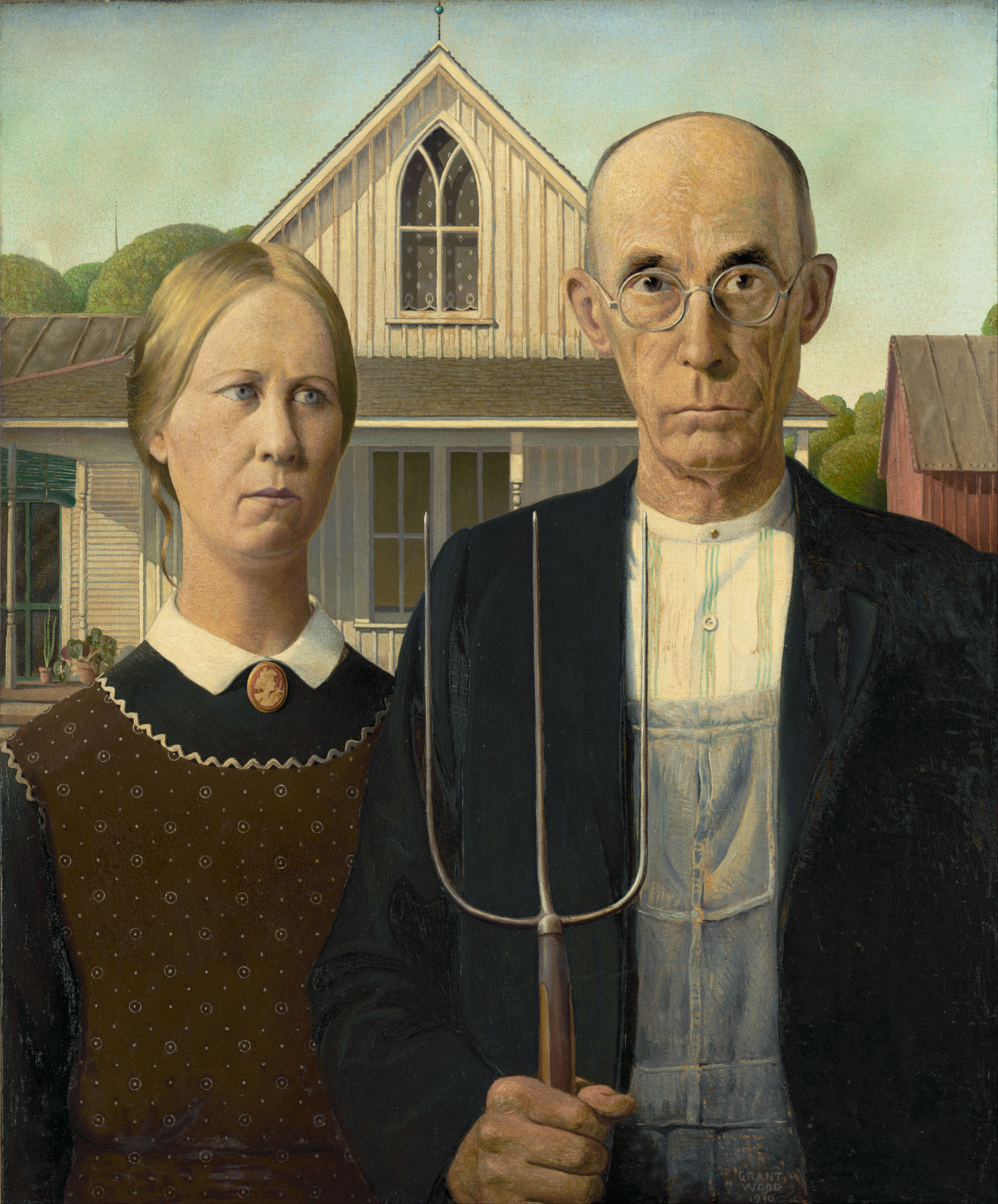
American Regionalism turns local America into a public style. Farm belts, small towns, front porches, churchgoing faces, and Midwestern weather are not treated as minor local color. They are painted as if the nation itself might be legible there. The movement is therefore not just about rural scenery. It is about who gets to stand for America, and in what visual language, during the unsettled years of the 1930s.
This makes the movement easy to misunderstand. Regionalism is often flattened into nostalgia or anti-modern conservatism. In reality, it is a sharper and more strategic response than that. Its painters wanted recognizable subjects, but they also wanted them to carry public force. The local is not treated as accidental background. It becomes the stage on which national identity is negotiated.
Local subjects, public force
- Subjects come from recognizable American places rather than myth or European history.
- Forms stay legible: clear silhouettes, readable structures, strong directional emphasis.
- Ordinary people are not treated as anecdotal filler but as carriers of public meaning.
- The movement argues with abstraction by insisting that local life can still bear modern seriousness.
American Gothic in one image
American Gothic condenses the movement into one image. A house in Iowa, a pitchfork, striped overalls, a pointed window, and two rigidly posed figures are enough to create something far larger than a local portrait. In Grant Wood's hands, an Iowa subject becomes a claim about the country.
It also shows why Regionalism is not simply "realistic" in the loose sense. The image is highly stylized. Wood does not leave the figures in casual life. He straightens, sharpens, and compresses them. The result is a local America that feels both near and strangely emblematic.
Regionalism was larger than Grant Wood
Wood is the stillest and most controlled face of the movement, but he was not alone. Thomas Hart Benton pushed Regionalism toward rolling rhythms, crowded bodies, and a more muscular sense of national movement. John Steuart Curry brought in Kansas weather, rural labor, and a harsher drama of land, storm, and public tension. The movement therefore spans more than one local world. Iowa, Missouri, and Kansas do not look the same, and Regionalism matters partly because it turns those differences into competing pictures of the nation.
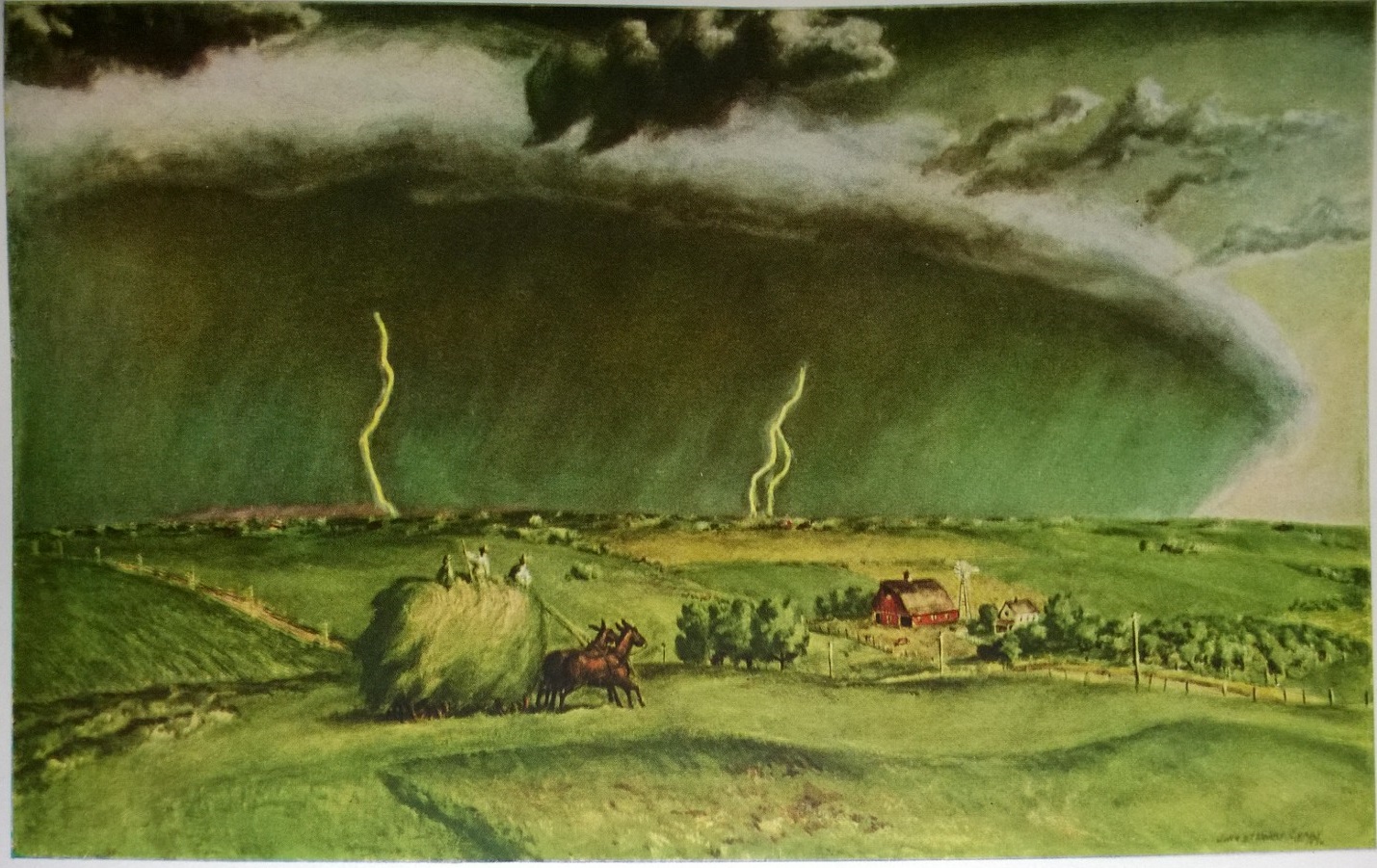
That broader field also explains why the movement often spills beyond easel painting. Regionalist artists worked on murals, state buildings, and public commissions because they wanted their images to circulate where civic life actually happened. The ambition was not only to paint local subjects. It was to give local America enough scale and clarity to occupy public space.
Regionalism is not documentary photography
Set the movement beside a different American image of the same decade, Migrant Mother, and the difference is immediate. Dorothea Lange shows crisis through documentary contact, fast circulation, and public urgency. Regionalist painting works differently. It is slower, more designed, and more symbolic from the start.
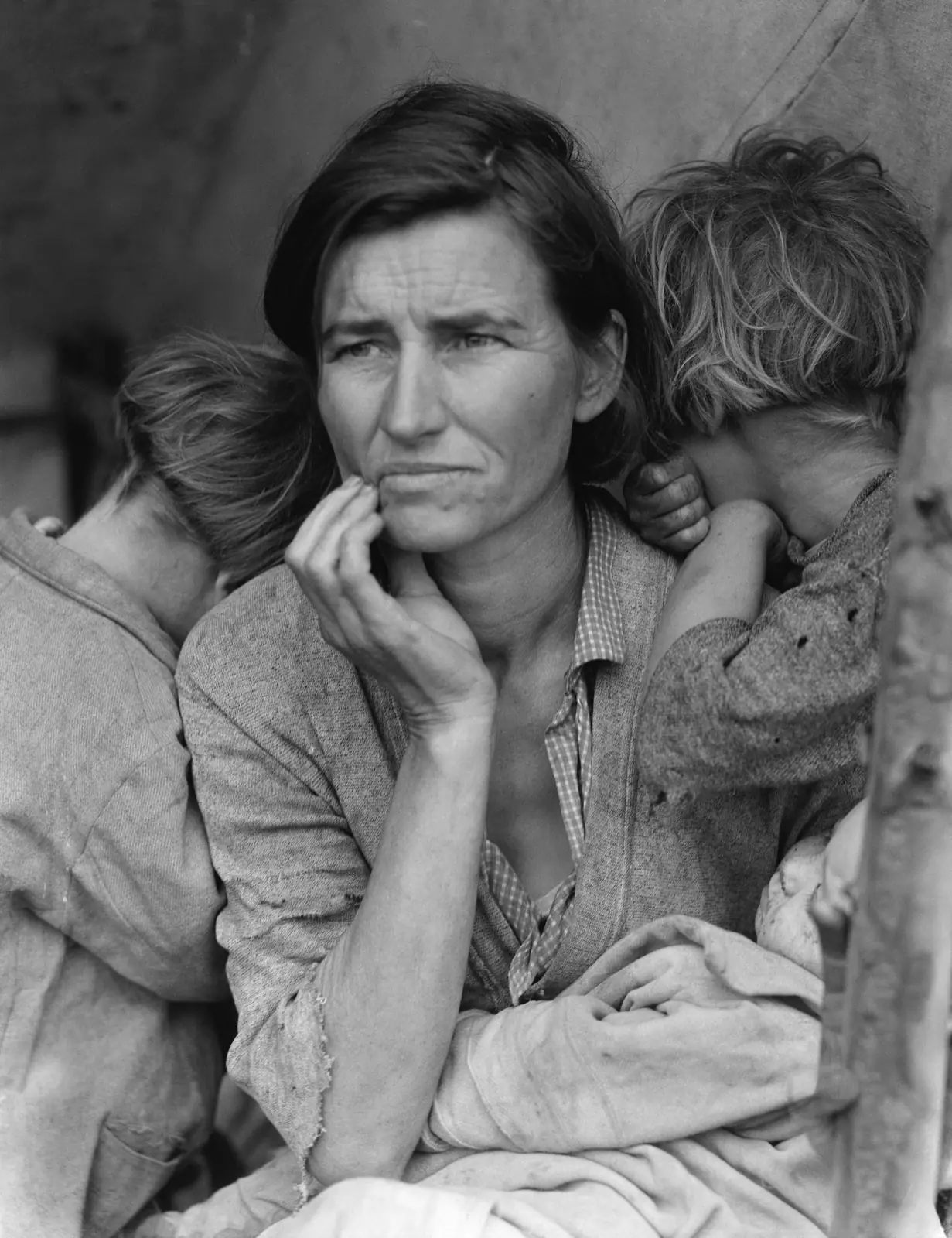
The difference matters. Regionalism does not simply report what America looks like. It decides what kind of America should become visually central. That is why its pictures often feel composed into stable types even when the country itself was economically unstable.
Against abstraction, still modern
Regionalist artists argued, implicitly and sometimes explicitly, against the idea that serious modern art had to move toward European-style abstraction. That is one reason the movement sits productively beside Abstract Art. The disagreement is not between modern and unmodern. It is between different answers to the problem of modernity.
Abstraction asks whether a painting can build a new order through form alone. Regionalism asks whether a recognizably American world can still carry formal pressure, public meaning, and national ambition. In the 1930s, both claims were modern, even if they pointed in opposite directions.
Continue through the Regionalists
Then try the art quiz.
Primary sources
Frequently asked questions
American Regionalism is a 1930s movement that turns local American places, rural subjects, and ordinary people into a highly legible public style.
Not simply. Regionalist painters resisted some forms of European abstraction, but they were still making a modern argument about national identity, style, and who could stand for America.
Yes. Grant Wood's American Gothic is one of the clearest and most famous Regionalist paintings because it turns local Iowa detail into a broader American emblem.