
Artist Analysis
Albrecht Dürer
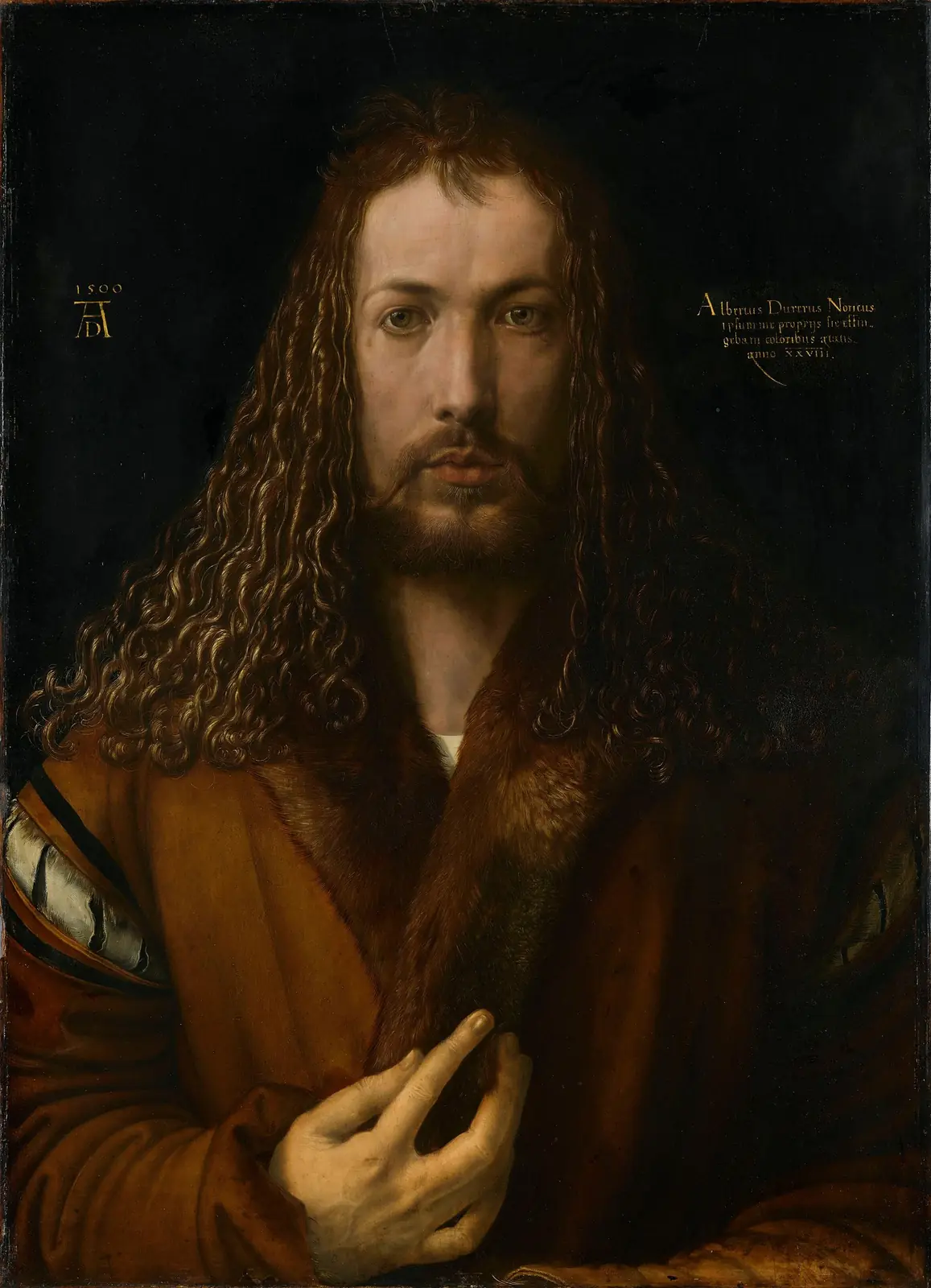
Before oil painting dominated museum prestige, Albrecht Dürer made Europe think through prints. Working within the rapid expansion of print culture, he treated reproducible images as public arguments. His engravings are precise, but they are also tests about knowledge, faith, and what an image can prove.
Nuremberg, trade routes, and the circulation of ideas
Born in 1471 in Nuremberg, Dürer grew up in a city connected to finance, scholarship, and long-distance commerce. That mattered as much as talent. Paper, books, scientific instruments, and theological debate moved through the same urban networks, and Dürer positioned himself at that intersection. He understood early that prints could travel farther and faster than paintings, reaching readers and collectors across Europe.
His travels to Venice and contact with Italian humanist circles sharpened this strategy. He absorbed proportion theory, perspective debates, and antique models, then brought them back into a Northern visual culture grounded in microscopic observation. Dürer does not simply import Italy into Germany; he engineers a hybrid language between Northern Renaissance empiricism and broader Renaissance theory, closer in ambition to Leonardo da Vinci yet visually tougher in line.
Printmaking as a high intellectual medium
Before Dürer, woodcuts and engravings were often treated as secondary or purely devotional. Dürer changed the hierarchy. He gave prints monumental ambition and technical authority, proving that reproducible media could carry the same gravity as large panel painting. In practical terms, he turned editions into a pan-European conversation that reshaped how visual ideas circulated across regions.
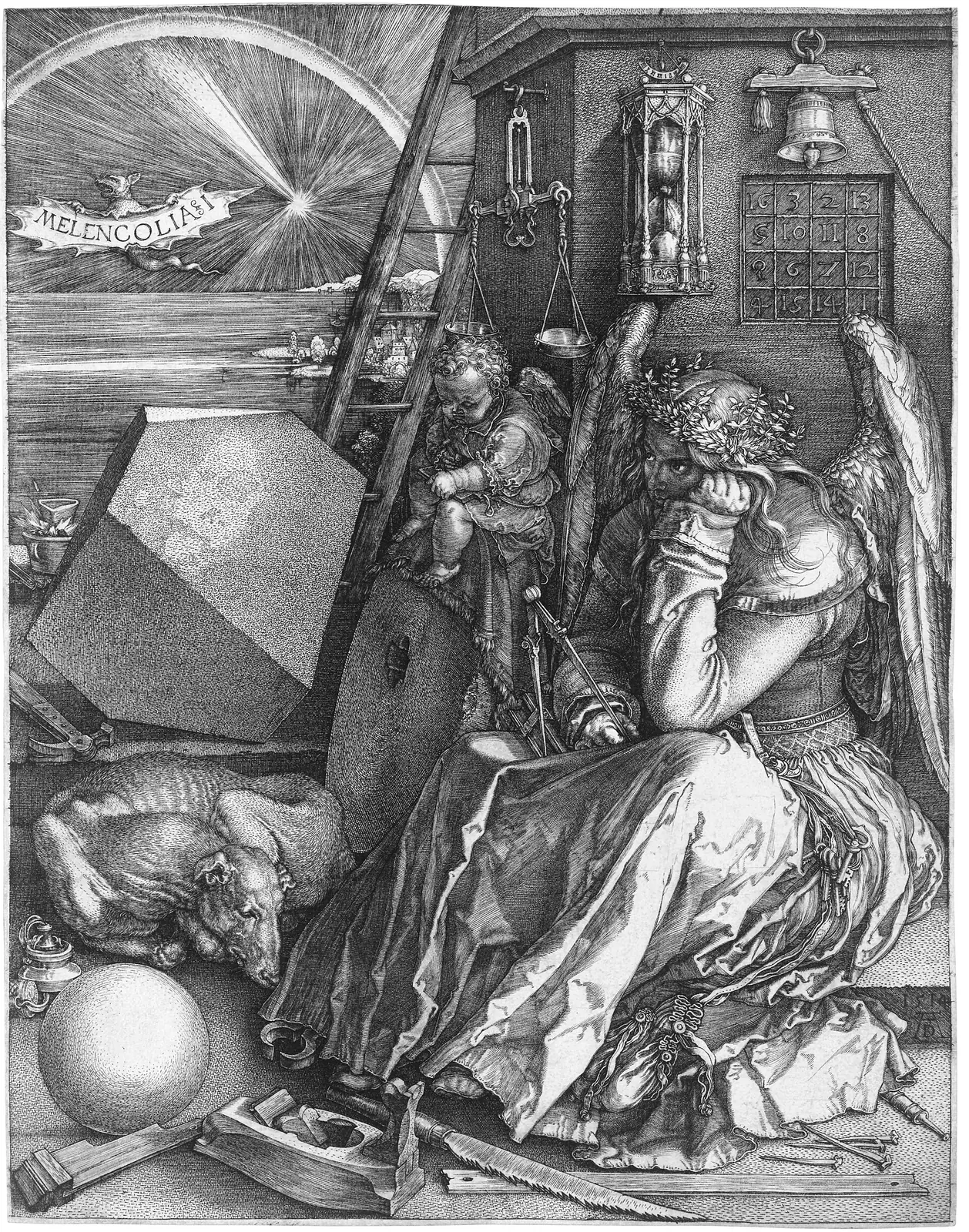
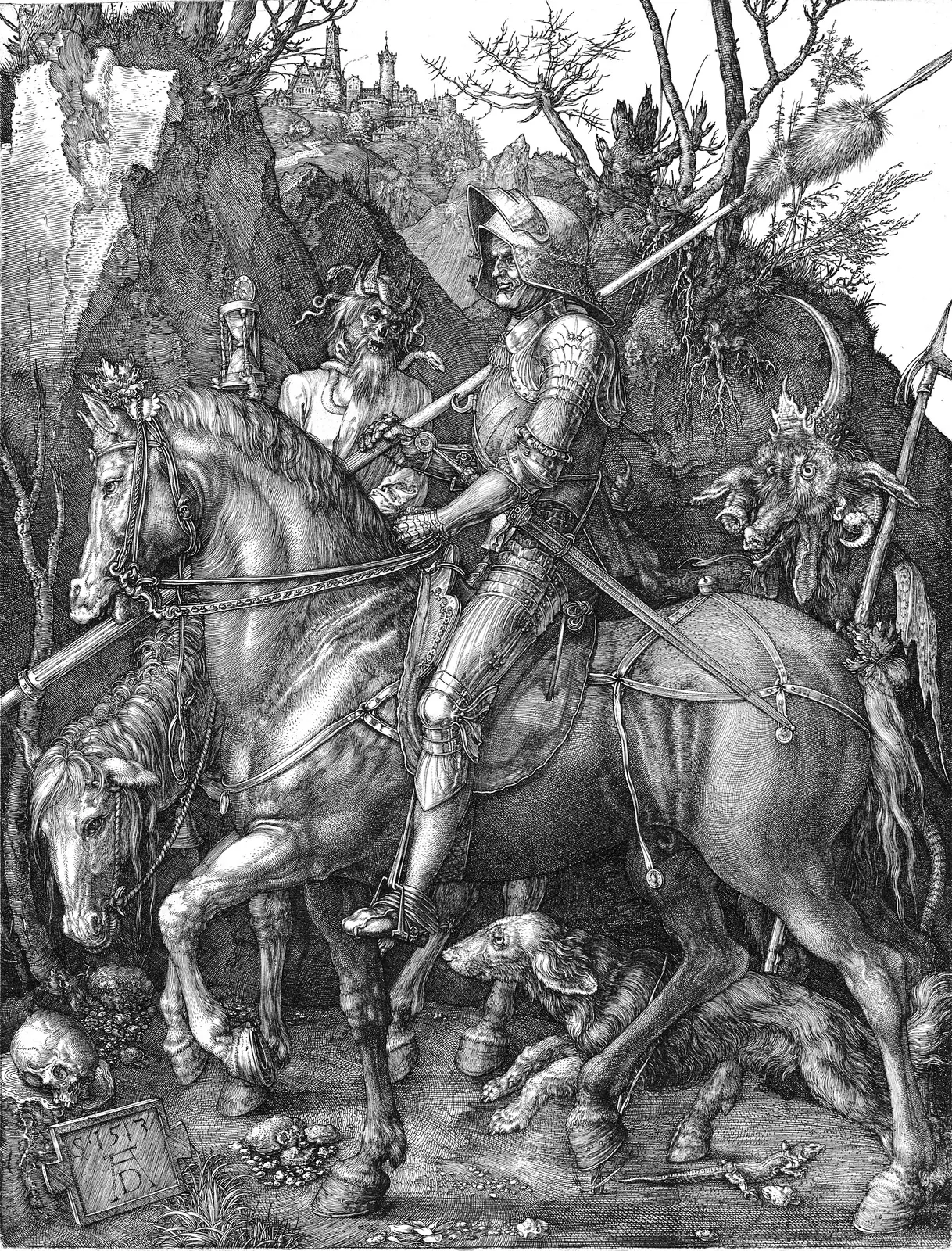
Look at Knight, Death and the Devil and Melencolia I. These are not illustrations of fixed doctrines; they are conceptual machines. Every object and every directional hatch contributes to a field of competing meanings: discipline versus temptation, reason versus paralysis, labor versus transcendence.
Method: line density as thought
Dürer's most distinctive tool is controlled line density. He models volume by changing the angle, interval, and pressure of hatching, creating transitions that feel almost sculptural. Fur, armor, skin, stone, and sky each receive distinct treatment. The effect is tactile, but also analytical: material differences become epistemic differences.
This is why his work rewards close looking. The macro composition may look balanced, yet the microstructure keeps producing new information. Dürer trusts viewers to read patiently, then rewards that patience with layered evidence.
Science, geometry, and the body
Dürer wrote treatises on geometry, measurement, and human proportion because he believed art could be studied with the same rigor as other disciplines. He did not reduce art to mathematics; he used mathematics to discipline invention. In his practice, geometry is not decorative order but a framework for testing visual claims, a pursuit that also underpins images like Vitruvian Man.
That framework helps explain apparently different works: allegorical engravings, religious panels, natural studies like The Rhinoceros, and self-portraits all share a concern with calibrated description. Even when the subject is mythical, the structure seeks empirical credibility.
Brand, authorship, and legal modernity
Dürer was also one of the first European artists to police his monogram as a recognizable signature. This is not trivia. It marks a shift in authorship, ownership, and reputation in the print economy. Copies of his works circulated quickly, and he fought to protect attribution and market value. In that sense, Dürer anticipates modern debates around reproduction and intellectual property.
His self-fashioning was deliberate: he presented himself as craftsman, theorist, and public intellectual at once. That triple identity became a model for later artists navigating patronage, market circulation, and scholarly legitimacy, from Michelangelo to modern printmakers.
Why Dürer still matters
In 2026, Dürer feels current because he solved a problem we still have: how to combine technical fidelity with conceptual depth in reproducible media. His prints are optimized for distribution, yet never flattened into mere content. They insist that wide circulation and high complexity are compatible.
His influence reaches beyond Renaissance studies into illustration, scientific imaging, political print culture, and contemporary visual essay formats where precision and interpretation must coexist.
Viewing protocol: hatch direction, symbol load, and evidence
Start by scanning the directional logic of hatching before decoding symbols. Then identify which objects are rendered with exceptional care and ask why those zones carry extra weight. Finally, compare spiritual narrative with empirical detail: the friction between them is often the true subject. This sequence keeps interpretation grounded in what the print is materially doing, not just what it might represent.
Key works in Explainary
Associated movements
Now test recall with the art quiz: can you recognize Albrecht Dürer from visual cues in works like Melencolia I?