
Northern Renaissance
The Rhinoceros
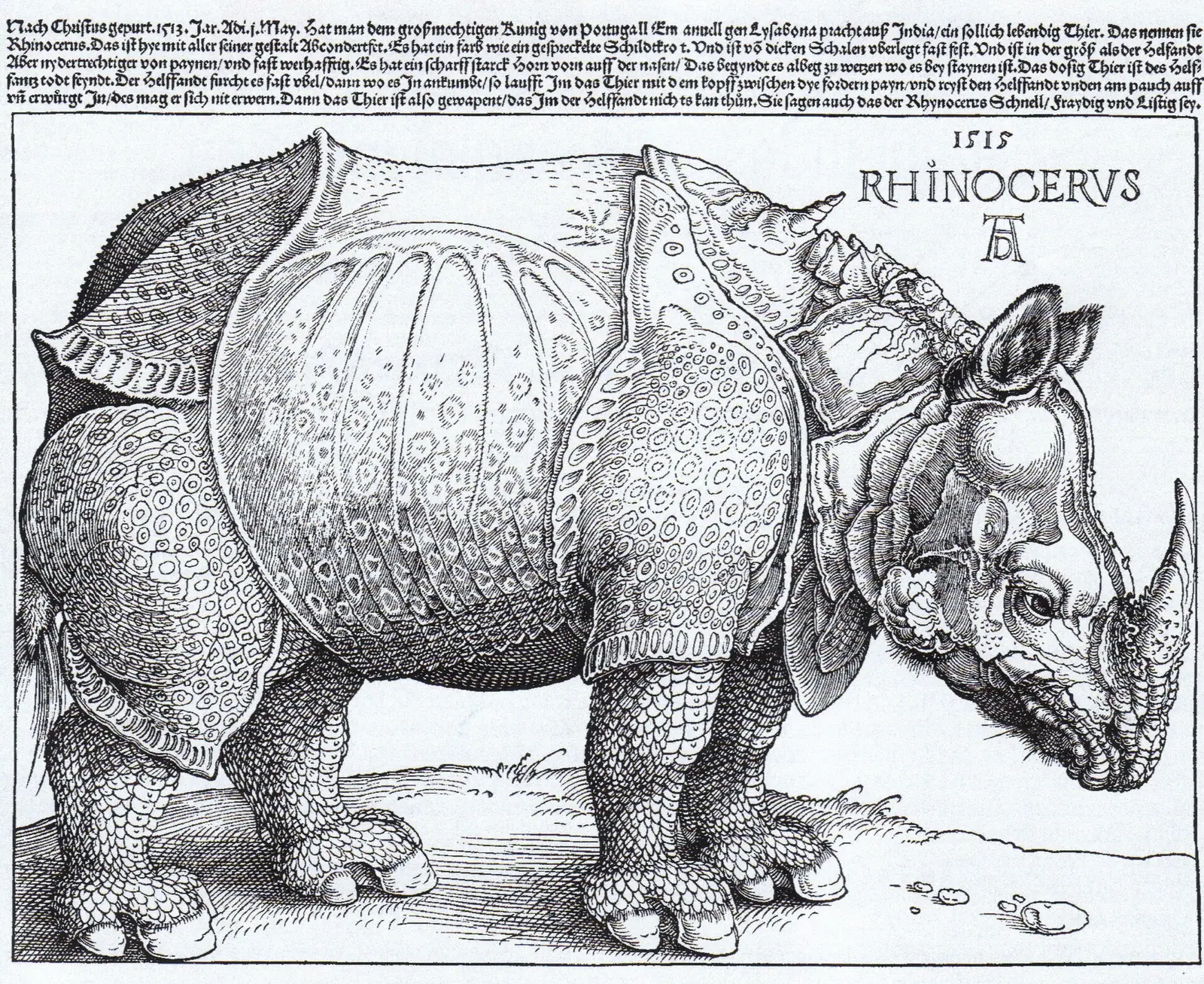
Dürer never saw a rhinoceros, yet his print taught Europe what a rhinoceros looked like. This is why the sheet matters: it is not only an image of an animal, but an early modern demonstration of how visual authority is manufactured.
1515 context: trade routes, diplomacy, and a sudden information shock
In 1515, a rhinoceros from western India reached Lisbon as a diplomatic gift to King Manuel I of Portugal. News of the animal spread quickly through merchant and court networks. Letters, short descriptions, and sketches began circulating before most Europeans could verify anything directly.
In Nuremberg, Albrecht Dürer received that second-hand material and converted it into a woodcut designed for print circulation. The result belongs fully to the Northern Renaissance: technical virtuosity joined to a market for reproducible knowledge.
Contemporary reports also amplified the story's drama: the animal was reportedly sent onward as a gift to Pope Leo X, and the ship was lost near the Italian coast. Whether readers knew every detail or only fragments, the episode intensified fascination. By the time Dürer's print circulated, the rhinoceros was already more than zoological news; it was a geopolitical spectacle tied to empire, trade, and prestige.
What the woodcut actually shows
The animal is presented in strict side view, with segmented plates that look like forged armor, rivet-like dots, patterned skin, and a small horn rising from the shoulder. Text above the image reinforces credibility by presenting the creature as factual report.
Those details are biologically wrong, but formally effective. Dürer maps an unfamiliar body onto familiar visual codes of protection, engineering, and order. Viewers recognize structure first, and only later ask whether the structure is accurate.
Intention: building a credible prototype from indirect data
The print is not careless fantasy. It is a deliberate synthesis problem: how do you create a persuasive image when direct observation is unavailable? Dürer solves it through line discipline, surface differentiation, and compact composition.
Woodcut technology amplifies that solution. Because the block can be printed many times, one convincing image can quickly become a default reference in workshops, libraries, and teaching contexts.
Why Europe trusted this rhinoceros for so long
For generations, artists and natural-history compilers repeated Dürer's model. Repetition gave the image institutional weight: copied images looked confirmed simply because they were everywhere. In practice, circulation often outran correction.
That mechanism makes the sheet historically important beyond its subject. It reveals how early information systems work when visual coherence is stronger than empirical verification.
The Rhinoceros became credible not because it was exact, but because it was repeatable.
What this engraving still teaches
The Rhinoceros remains useful because it compresses three histories into one page: global contact, print technology, and epistemic error. It shows that images do not just document knowledge; they help build it, including its distortions.
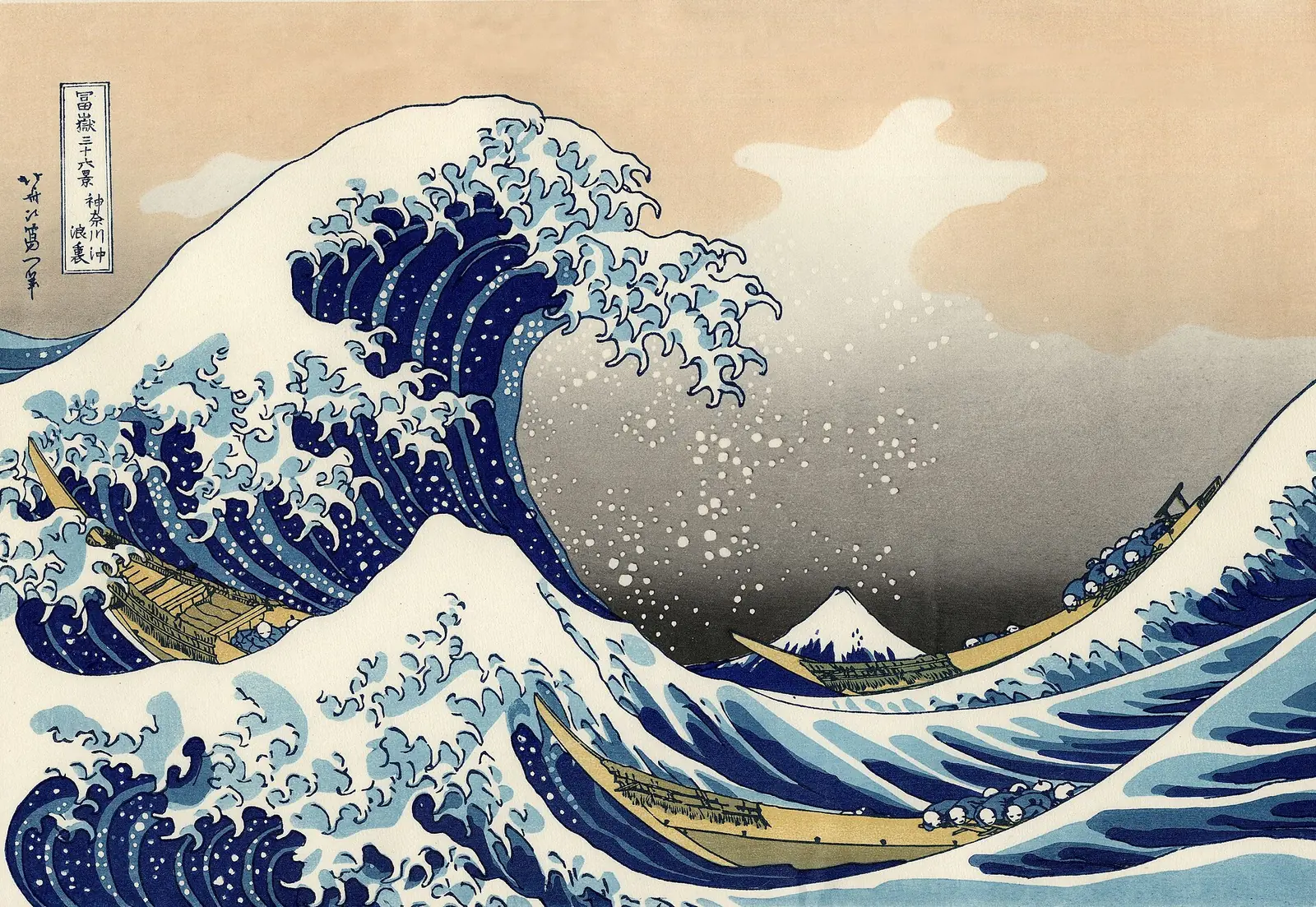
Printmaking crossover: continue with two other Durer prints - Melencolia I and Knight, Death and the Devil - then jump to Hokusai's The Great Wave off Kanagawa to compare how different print cultures turn reproducible images into global visual standards.
That cross-reading creates a strong opening angle for the page: from sixteenth-century Nuremberg to nineteenth-century Edo, print does not just reproduce images, it organizes what large publics learn to see as true, iconic, or authoritative.
If this reading feels clearer now, try the art quiz and see whether you can identify Dürer's visual logic quickly across related works.
Explore more
Related works
Primary sources
Frequently asked questions
It looks empirical, yet Dürer never saw the animal. The print turns second-hand reports into a convincing visual prototype through line, texture, and compositional authority.
It spread quickly through early print networks and became Europe's default rhinoceros image for generations, showing how reproducibility can outweigh direct observation.
Start with the armor-like plates and the small shoulder horn: those invented details reveal how Dürer translated rumor into visual authority.