
Mannerist Artist
El Greco
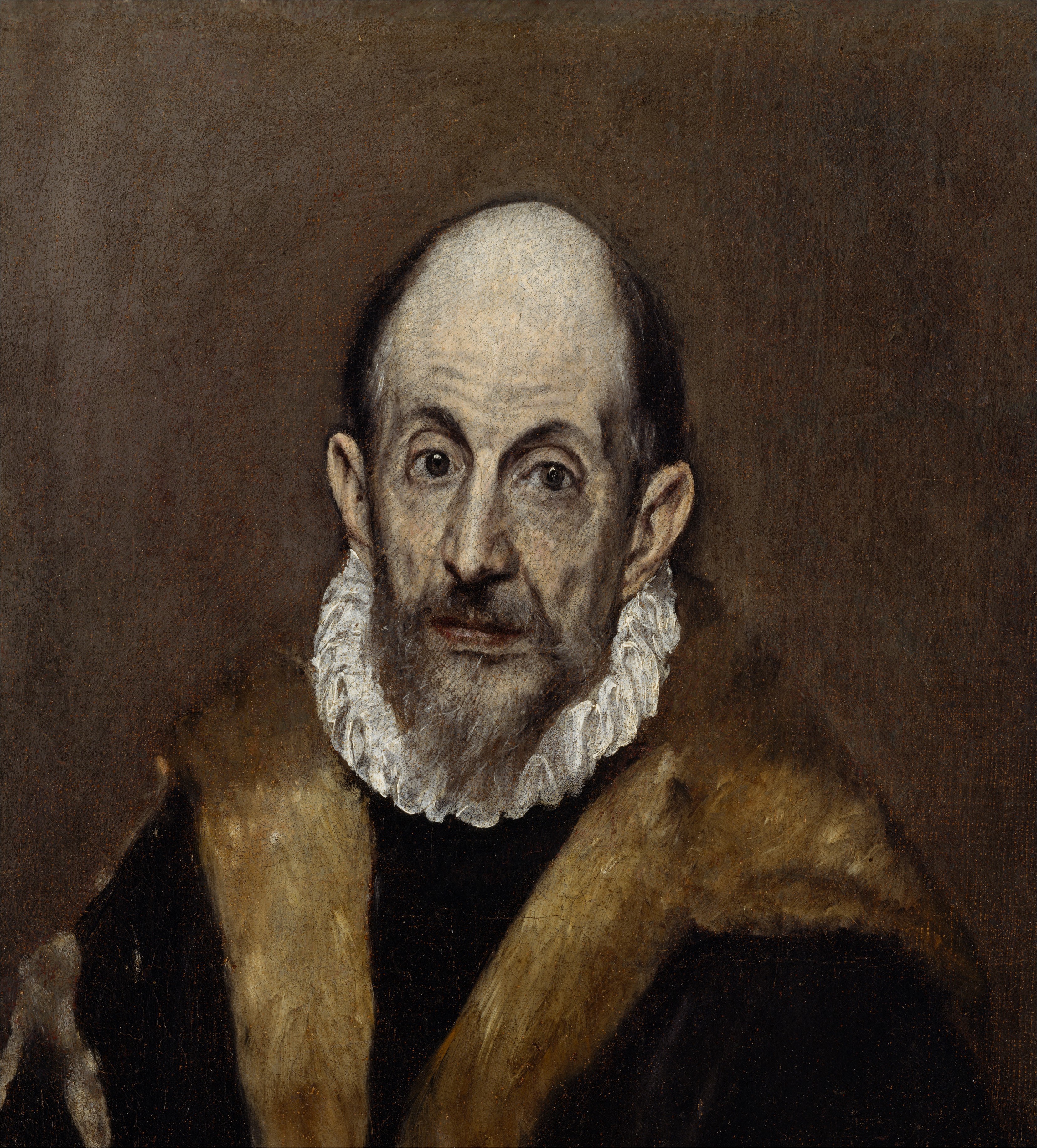
El Greco is the Cretan-born painter who carried Byzantine memory, Venetian color, and Roman figure style into Toledo, then turned them into one of the strangest coherent languages in European art. He matters not because he looks eccentric in isolation, but because he shows what happens when the authority of the High Renaissance is pushed toward spiritual tension instead of stable calm. That is why he stands so centrally in Mannerism.
From Candia to Toledo
El Greco was born Domenikos Theotokopoulos in Candia, on Crete, then part of the Venetian world. He first trained as an icon painter, which matters more than the usual biographical shorthand suggests. The frontal force, spiritual compression, and resistance to plain naturalism that remain visible in his mature work do not come from nowhere. They come from a visual culture in which sacred images were expected to do more than imitate the visible world.
From Crete he moved west. In Venice, he absorbed the lessons of Titian: color as structure, not decoration. In Rome, he confronted Michelangelo and the prestige of central Italian design. Then, in 1577, he settled in Toledo, where he found the setting that would truly fit him. Spain gave him ecclesiastical commissions, intellectual patrons, and the chance to make a painting language that did not have to resolve neatly into either Venetian softness or Roman monumentality.
Why his figures stretch
The easy answer is that El Greco distorts bodies. The better answer is that he uses elongation to change the emotional pressure of an image. In his work, bodies do not merely occupy space; they pull upward through it. Hands lengthen, heads tilt, draperies sharpen, and proportions refuse ordinary calm. That is why his figures often feel less weighty than lit from inside.
This is not incompetence and it is not random manner. It is a deliberate wager about what painting should do. If Renaissance balance makes the world look ordered and habitable, El Greco makes it look spiritually charged, unstable, and harder to contain. Form is no longer there only to reassure. It is there to intensify.
Where his full method comes together
The Burial of the Count of Orgaz is the painting where that method appears whole. The lower half is built as a grave civic portrait of Toledo, with individualized faces and clear ceremonial weight. The upper half abandons that solidity for a stretched and luminous heavenly zone. Earthly memory and spiritual ascent are held in the same vertical structure, but they are not painted in the same language.
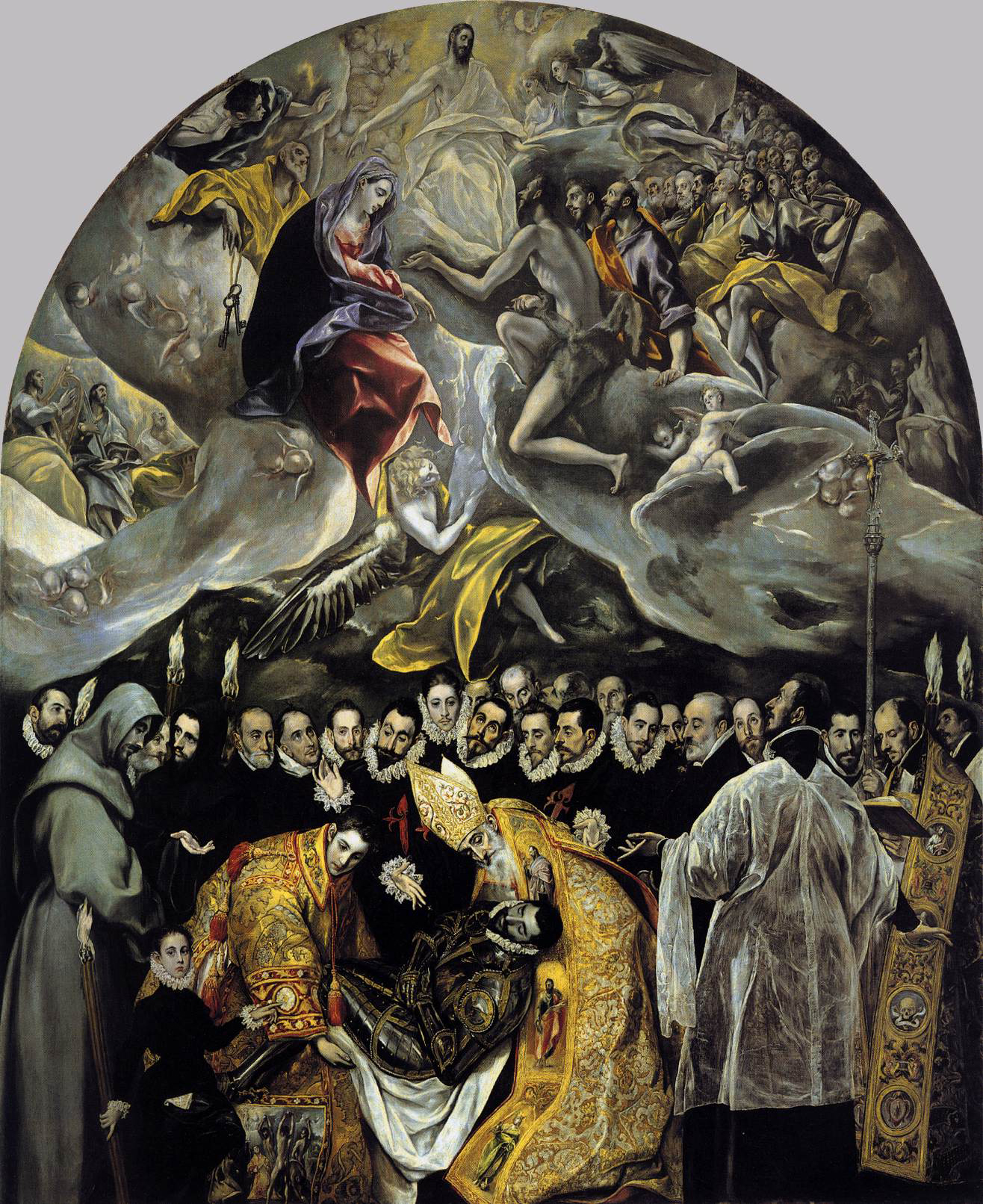
That painting also shows why El Greco should not be reduced to a painter of "expressive distortion." He can be exact when he wants to be exact. The gathered men in black are painted with sharp social intelligence. The strangeness begins when the image has to move from the seen world to the imagined one. He does not lose control there. He changes register.
A bridge between Renaissance and Baroque
El Greco stands in a crucial middle position. He inherits the ambition of the Renaissance: painting should be grand, serious, and intellectually charged. But he refuses its full confidence in balanced resolution. At the same time, he helps prepare the ground for the seventeenth century. His religious pictures are emotionally direct and made for a Counter-Reformation environment, yet they do not work like Caravaggio or Rubens. Their force remains vertical, visionary, and internally strained rather than fully Baroque in its immediacy.
That is why El Greco matters so much for period thinking. He makes it impossible to narrate art history as a clean march from High Renaissance order to Baroque event. His work keeps another path open: one in which form becomes more artificial, more spiritual, and more unstable before Baroque artists bring sacred drama back into a shared physical space.
Why modern painters came back to him
El Greco's reputation cooled after his lifetime, then rose sharply again in the nineteenth and twentieth centuries. Modern painters could see in him something that earlier academies distrusted: a painter who was willing to let color, elongation, and emotional pressure bend the visible world. That afterlife helps explain why he matters far beyond the Spanish sixteenth century. He becomes newly legible when modern art starts valuing expressive structure over classical finish.
His rediscovery also clarifies his historical depth. El Greco is not simply a strange outlier who accidentally resembles later modern artists. He is a disciplined painter who built a coherent solution to a specific sixteenth-century problem: how to keep religious painting intense after Renaissance balance has started to look too complete. Once that becomes clear, his place in the larger map of European art stops looking eccentric and starts looking structural.
Key pages on Explainary
Associated movements
Then try the art quiz.