Collective Makers
Insular Monastic Workshops
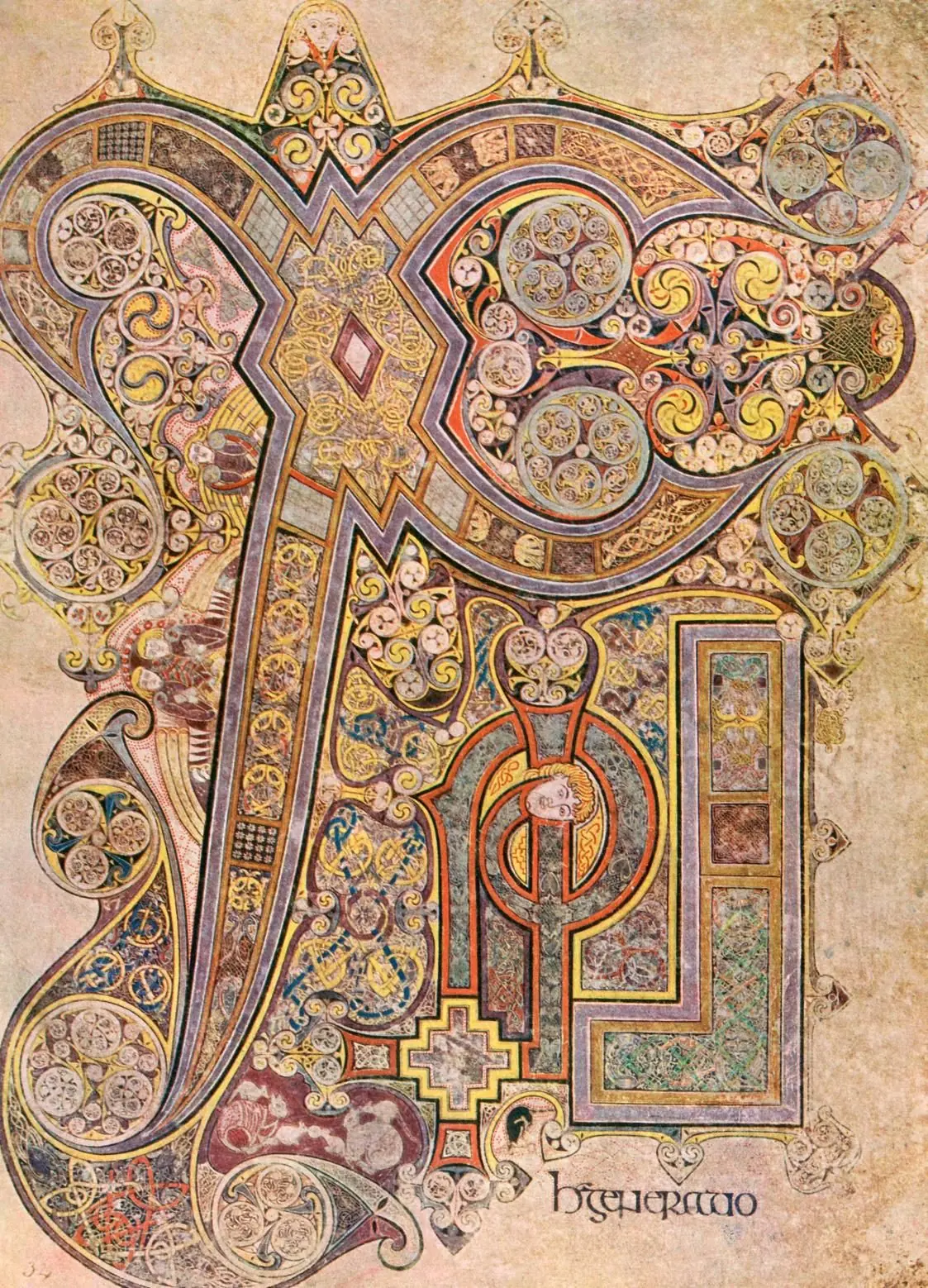
The great Insular Gospel books look miraculous, but they come out of a system. Vellum has to be prepared, pages ruled, text copied, initials distributed, pigments mixed, and ornament held together across months or years of work. “Insular monastic workshops” is a modern name for that system. The phrase keeps the makers visible without pretending that Durrow, Lindisfarne, or Kells came from a solitary genius.
The label covers communities in Ireland, Iona, Lindisfarne, Kells, and related houses between the seventh and ninth centuries. Their books serve liturgy, prestige, memory, and saintly cult at once, which is why the pages feel so concentrated. They are not private drawings enlarged into manuscripts, but public devotional objects made inside institutions that care about ritual order.
Where this world is, and why it forms there
In current geography, this world stretches across Ireland, the island of Iona off western Scotland, and Northumbria in what is now northern England and southeastern Scotland. Lindisfarne sits on the coast of present-day Northumberland. Kells is in County Meath, northwest of Dublin. The Insular zone is therefore not a vague medieval elsewhere. It is the Irish Sea region, where sea routes often connect monasteries more effectively than inland roads do.
Workshops take such strong hold there because, in the far west of the former Roman world, monasteries become some of the strongest institutions for learning, writing, liturgy, and visual production. Missionary movement between Ireland, Iona, and Northumbria carries books, people, relic cults, and habits of page design across the water. Rulers and church leaders want prestigious manuscripts, cult centers need objects worthy of their saints, and scriptoria turn religious discipline into durable artistic method.
A modern label for a real system
No medieval maker called himself part of the “Insular monastic workshops.” The phrase is ours, but it solves a real problem. These manuscripts are too coherent to be treated as anonymous fog, and too collective to be reduced to one heroic artist. The workshop is the scale that best fits the evidence.
Seen at that level, monasteries are not only places of prayer. They are places of training, planning, copying, correction, storage, and ceremonial use. The same house may nurture scribes, painters, metalworkers, readers, and churchmen, while travel between Irish and Northumbrian centers carries methods across the Irish Sea world. That mobility helps explain why Insular art looks both shared and locally inflected at the same time.
What happened inside a monastic workshop
A sacred book is a chain of technical decisions. The result looks ornamental, but the process is practical before it is expressive.
- Prepare vellum and rule the page so writing and ornament can stay aligned.
- Copy the Gospel text, manage abbreviations, and correct mistakes without breaking visual order.
- Plan initials, canon tables, evangelist symbols, and carpet pages at different scales.
- Prepare pigments and apply color in a sequence that strengthens rhythm rather than modeled depth.
- Assemble a book designed for liturgy, display, memory, and institutional prestige.
Those stages do not imply rigid modern job titles. One person may write and decorate; another may plan and supervise; corrections may come later. What holds the system together is shared discipline. Training makes the page readable before individual flair makes it dazzling.
From Durrow to Kells, the system learns to push further
The sequence is easiest to see across three books. The Book of Durrow keeps the grammar of Insular design open enough for a reader to parse it quickly: broad framing, separated units, repeated motifs, and controlled containment.
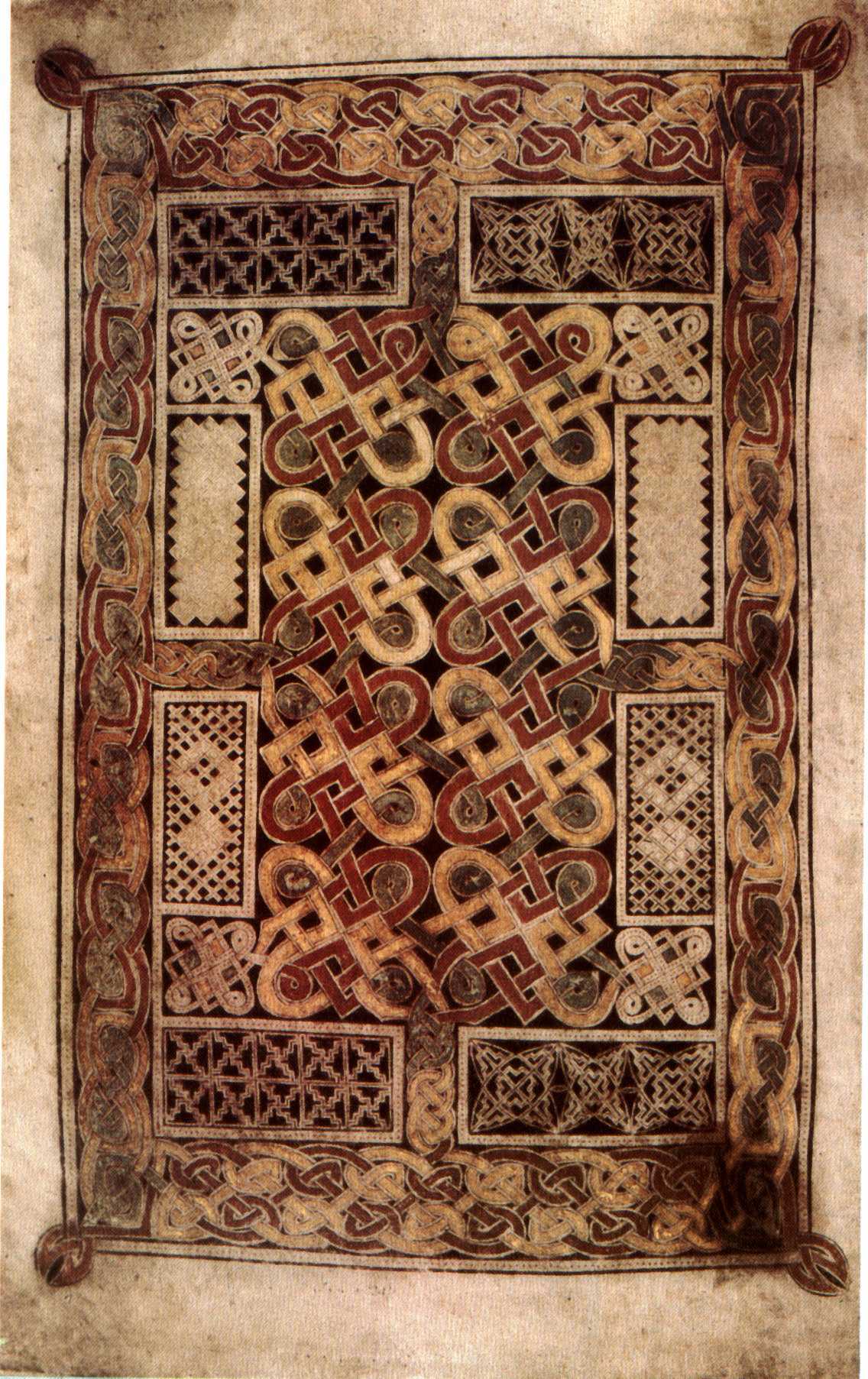
The Lindisfarne Gospels tighten that grammar. Ruling becomes more exact, compartments hold more pressure, and the page feels more fully governed by design. By the time of the Book of Kells, shown above, the same system can sustain much greater density and elasticity without collapsing. This is not just stylistic change. It is a workshop culture learning how far it can push rhythm, detail, and visual control.
Why Eadfrith does not cancel the workshop
Named figures still matter. Eadfrith of Lindisfarne gives one part of this world a human scale, but his name does not erase collaboration. It connects a bishop, a cult center, and an unusually coherent manuscript without turning monastic making into modern authorship.
Read the workshop first, then Eadfrith, then Lindisfarne again. The order helps separate what belongs to a governing intelligence from what belongs to a stable institutional method shared across houses and generations.
The same visual logic moves beyond manuscripts
The workshop story should not stop at parchment. The habits of Insular design also move into metalwork, especially in the Ardagh Chalice. Framed density, ornamental rhythm, and ceremonial emphasis survive the change of medium because they answer the same need: to make sacred use look ordered, precious, and concentrated.
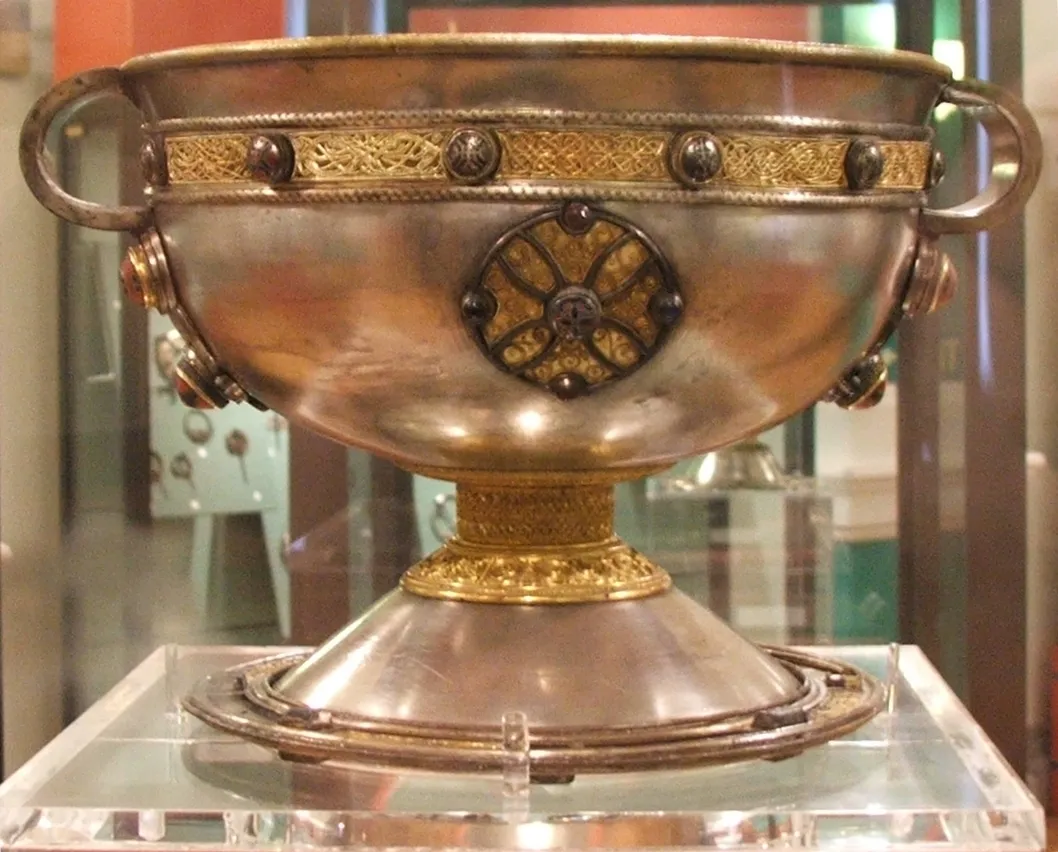
The workshops are not background labor hiding behind masterpieces. They are the makers. Once that becomes clear, Insular art stops looking like anonymous decoration and starts looking like a highly trained system of production.
Legacy and paths on Explainary
Their legacy is not just a style. It is a model of making in which script, ornament, liturgy, and institutional authority remain structurally bound together. Read this page with Insular art, then compare it with Carolingian art to see another medieval route toward order and legibility. For a closer visual distinction inside the Insular world itself, continue with Book of Kells vs Lindisfarne: How to Tell Them Apart.
Key paths on Explainary
Then use the art quiz and test whether Insular pages now stand out more clearly when medieval manuscripts and objects are mixed together.
Sources
Frequently asked questions
They are the monastic communities of Ireland, Iona, Lindisfarne, Kells, and related centers that planned, copied, and decorated Insular manuscripts between the seventh and ninth centuries.
They were made through collective work: preparing vellum, ruling pages, copying text, planning initials and carpet pages, applying pigments, correcting mistakes, and binding a book designed for liturgy and display.
It stretches across Ireland, Iona off western Scotland, and Northumbria in what is now northern England and southeastern Scotland, with strong connections across the Irish Sea.
No, not in the modern sense of a solitary master. Named figures such as Eadfrith matter, but the books remain products of shared training, institutional discipline, and collaborative monastic making.
Because it shows that the same Insular habits of framed density, ornamental rhythm, and ceremonial emphasis move beyond parchment into liturgical metalwork.