
Baroque
The Toilet of Venus
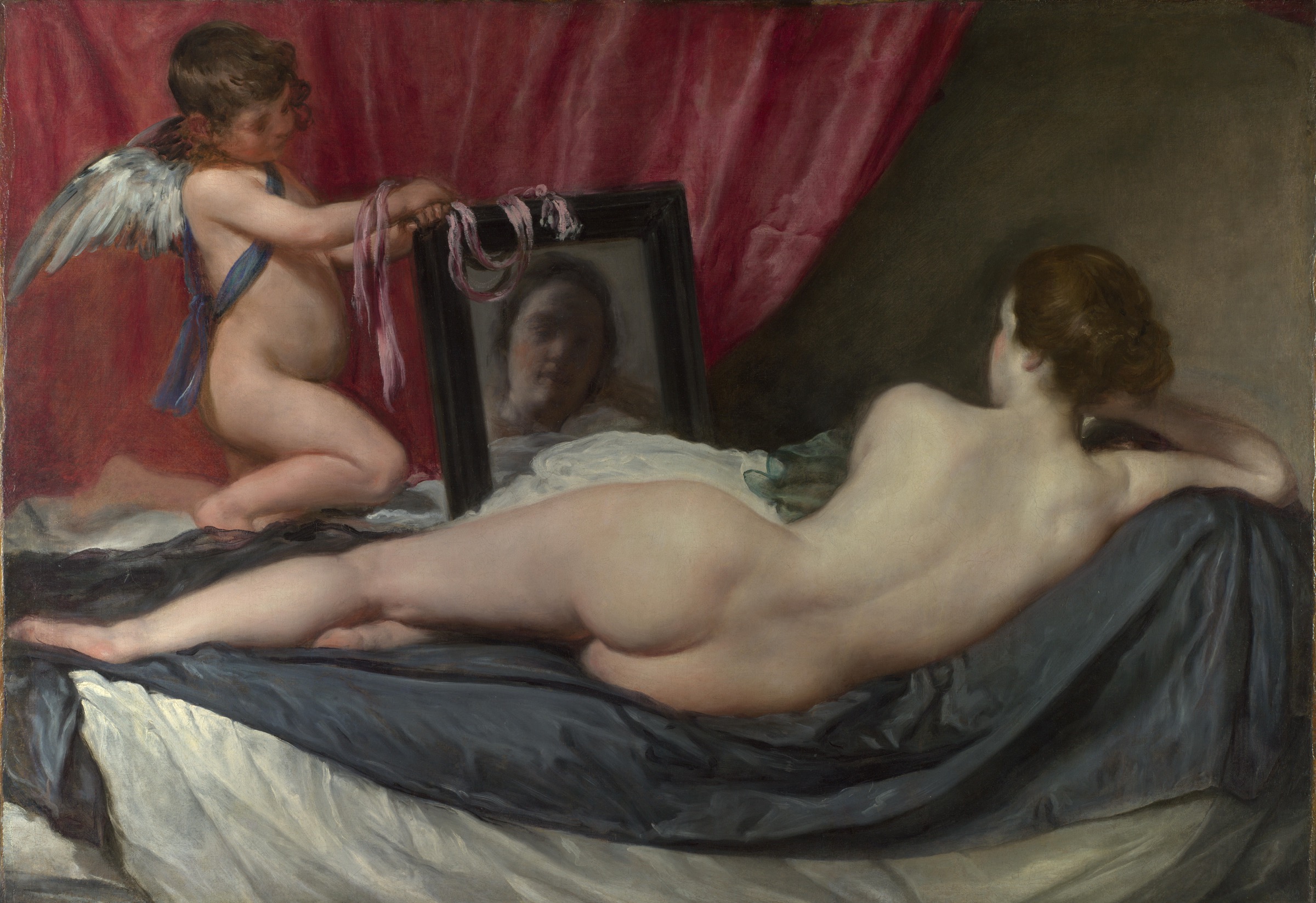
Venus turns her back to us while Cupid raises a mirror that refuses to give her clearly back. In The Toilet of Venus, often called the Rokeby Venus, Diego Velázquez makes the nude less available than it first appears. The body is close, luminous, and almost uninterrupted; the face arrives only as a small, blurred reflection. Instead of theatrical drama, Velázquez builds tension through restraint: the turned back, the small mirror, and the blurred face. The painting belongs to the Baroque, but its power comes from access, distance, and controlled looking.
A Spanish nude under restraint
The painting was probably made between 1647 and 1651, around the period of Velázquez's second Italian journey and his mature service to Philip IV of Spain. The National Gallery identifies it as the artist's only surviving female nude. That rarity gives the work a sharper historical edge. In seventeenth-century Spain, a nude could exist more easily when protected by mythology, elite ownership, and private display.
Velázquez does not simply import an Italian formula. He cools it down. The setting is spare rather than crowded, the erotic address is indirect, and the goddess is named through myth while visually withheld. The painting treats desire as a problem of access: the body is visible, but the face is mediated and blurred.
What the painting shows
Start with the back. Venus lies across pale sheets, her body forming a long horizontal curve from dark hair to extended feet. The drapery is light, the flesh is softly lit, and the red curtain warms the upper left of the scene. Nothing crowds the bed. The eye can follow the body almost without interruption.
Then the painting redirects us. Cupid kneels beside the bed and holds a dark-framed mirror toward Venus's face. The painting first gives us the body as a continuous curve, then sends us to the mirror for the face — but the mirror refuses clarity. The reflected face is small, blurred, and difficult to fix, more apparition than portrait.
We can see Venus closely, but not completely. Her body is near, her face is distant, and even that face reaches us only as a reflection. Velázquez's method is to move the viewer forward by withholding completion. The surface is seductive; the structure is evasive.
The mirror changes the contract
The viewer expects the mirror to reveal Venus. Instead, it reminds us that we are only allowed to see her indirectly. Cupid is not just decorative. He controls the mirror, and the mirror controls access to Venus's face. Sight depends on mediation.
This is not the only time Velázquez uses a mirror to disturb the viewer's position. In Las Meninas, the mirror complicates power and royal presence; in the Rokeby Venus, it complicates desire and access. One mirror draws the viewer into court authority. The other draws the viewer into a private scene where full possession is blocked.
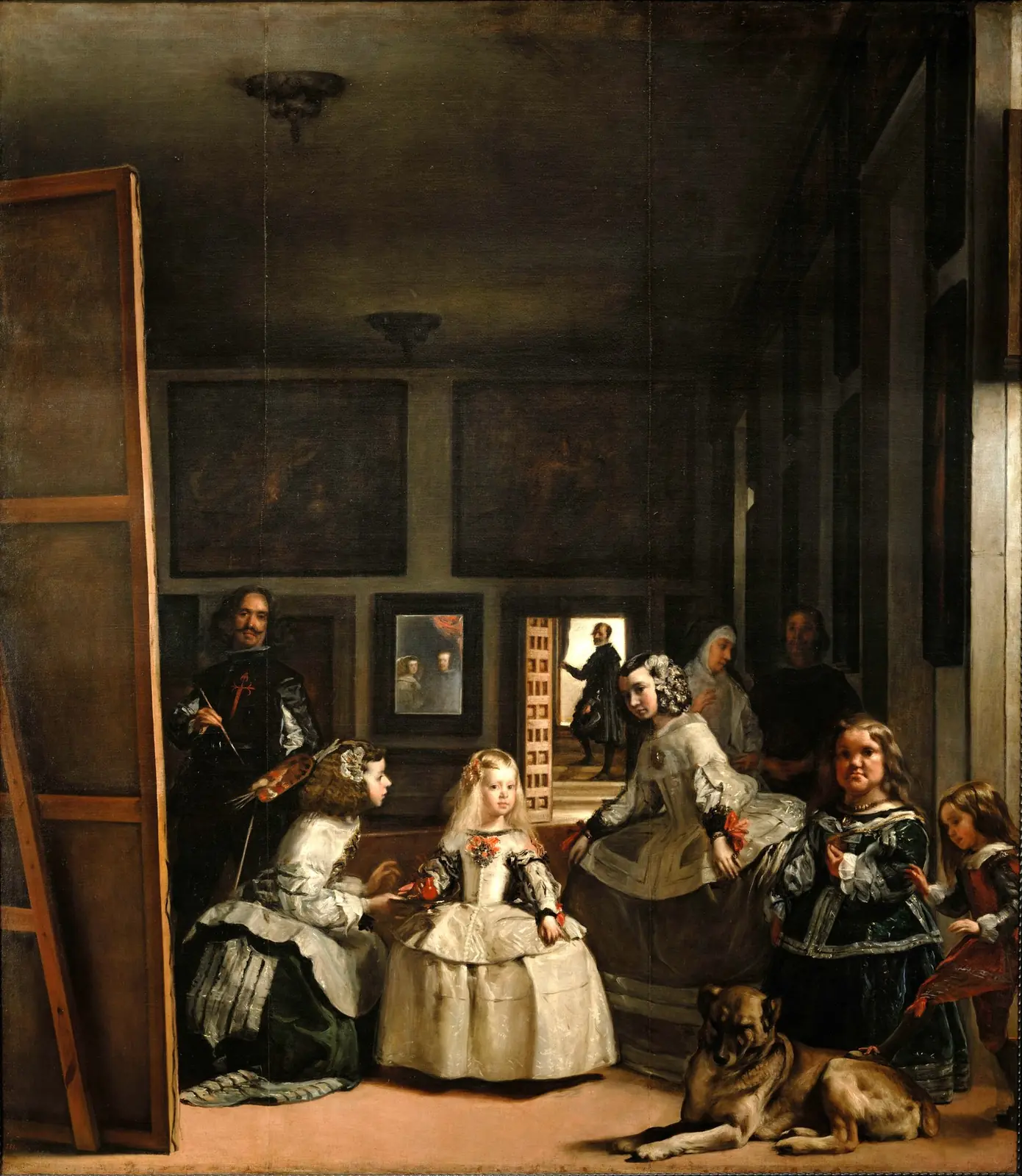
The blurred reflection keeps the goddess from becoming a stable possession of the eye. It also reverses the usual logic of beauty scenes. A mirror normally confirms appearance; here it unsettles appearance. The painting offers the viewer a body, then blocks the fantasy of full knowledge.
Rokeby, Godoy, and public display
The nickname Rokeby Venus comes from Rokeby Park in County Durham, where the painting hung for much of the nineteenth century. Before that, the National Gallery traces it through Spanish aristocratic collections and the circle of Manuel Godoy. The route places the picture in private, elite spaces where mythological and female nudes could be seen away from ordinary public display.
Godoy's rooms also included Goya's Nude Maja and Clothed Maja, a useful reminder that images of the female body often depended on ownership, privacy, and controlled access long before they entered museums. When the Rokeby Venus entered the National Gallery in 1906 through the Art Fund, it became a public icon rather than a private object.
Its public life was unusually charged. In 1914, suffragette Mary Richardson attacked the canvas at the National Gallery, turning the painting into a modern object of political conflict as well as connoisseurship. That episode does not define the work, but it sharpens its history: looking at Venus has never been a neutral act.
From Titian to Manet, with Velázquez in between
A clear comparison begins with Titian's Venus of Urbino. Titian's nude faces the viewer directly from a Venetian bedroom; servants, furniture, dog, color, and gaze fold myth into household space. The body is available, the gaze is frontal, and the viewer is addressed directly.
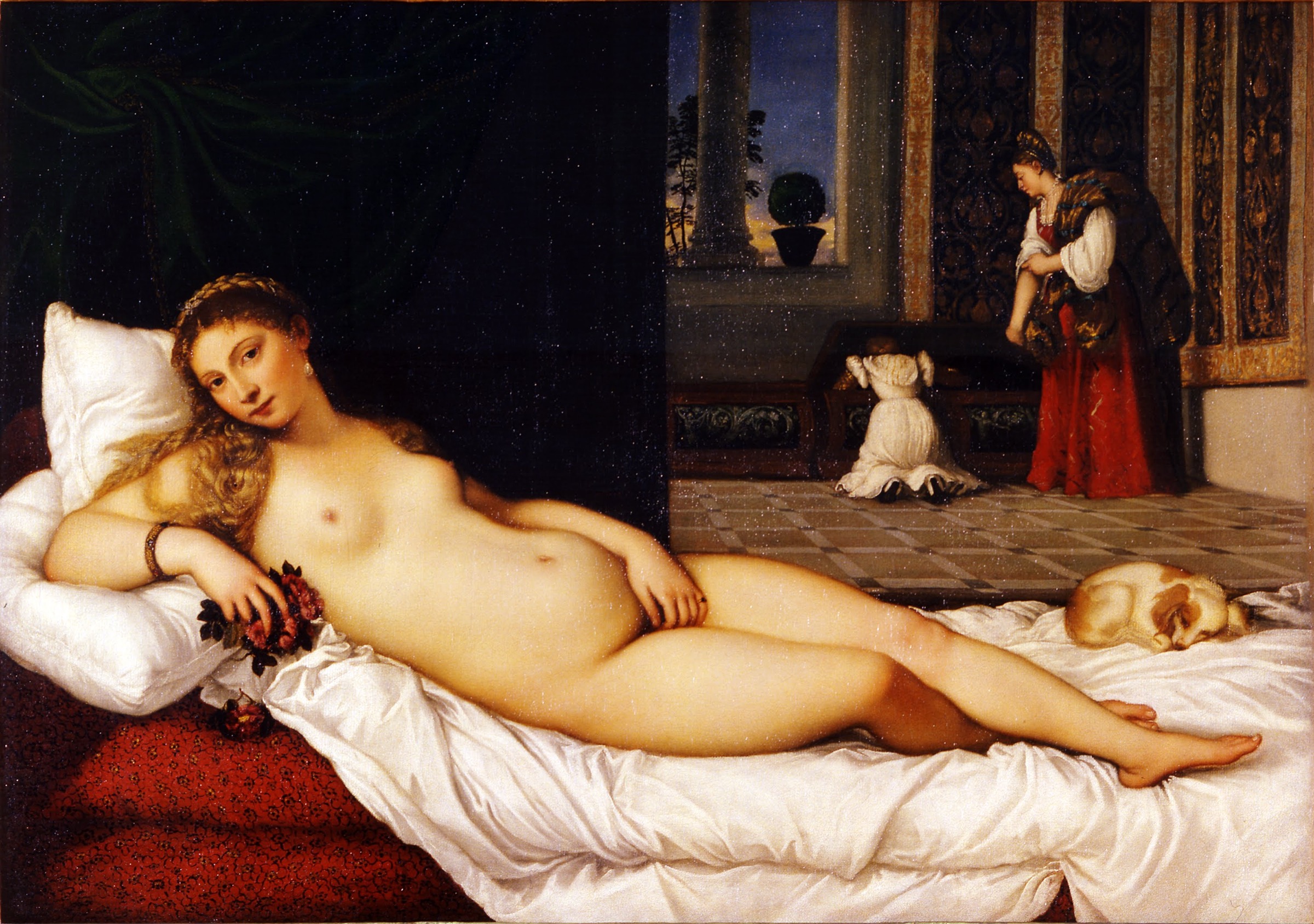
Velázquez keeps the reclining nude and the mythological name, but removes the frontal exchange. His Venus turns away. Her face is not given by presence but mediated by the mirror, so desire is delayed rather than answered. Manet's Olympia later makes the old structure confrontational again: the reclining body remains, the mythological shelter disappears, and the gaze returns as a modern challenge.
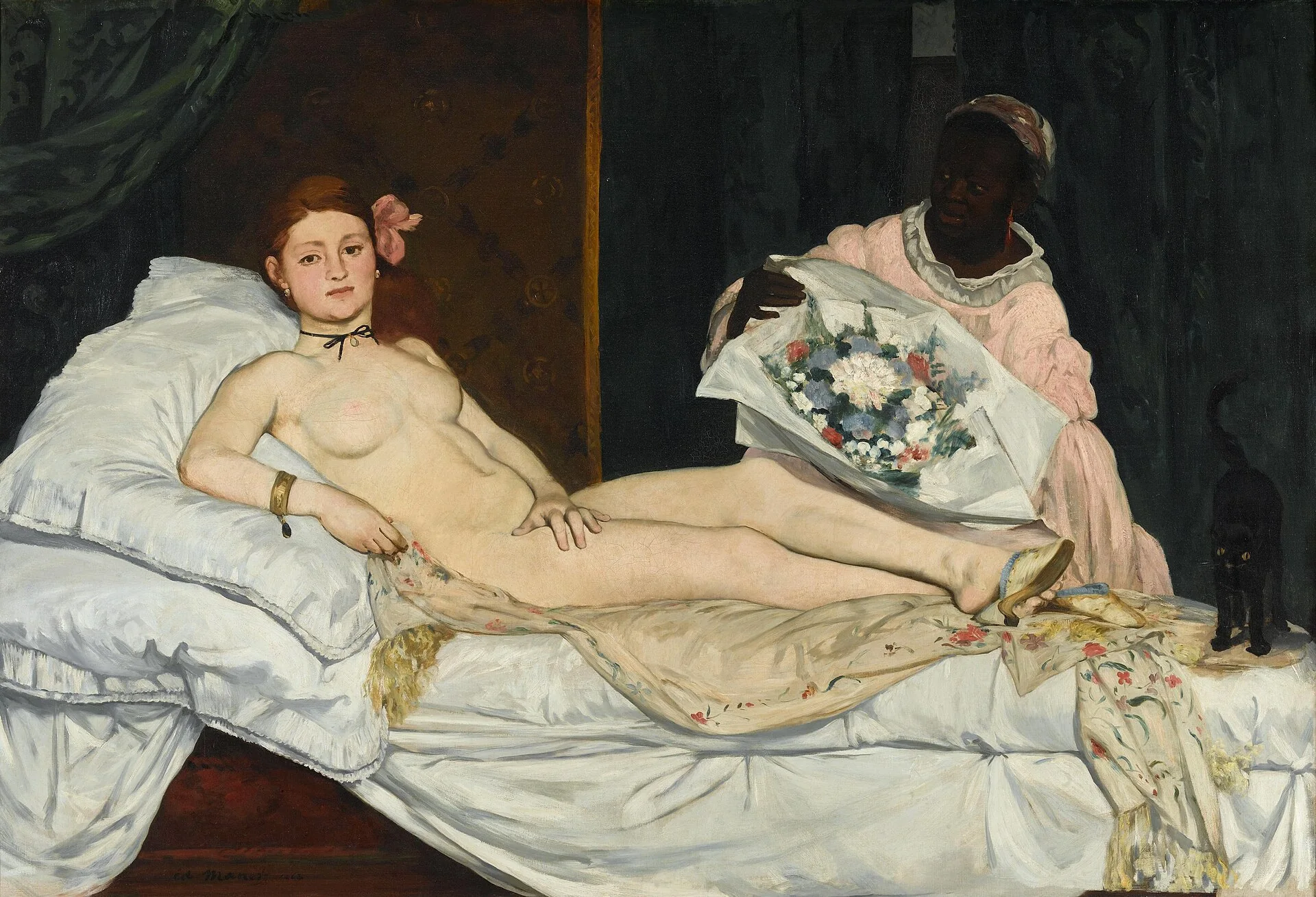
Titian offers presence, Velázquez offers distance, Manet offers confrontation. Velázquez sits between those poles. He does not give Titian's warm domestic address or Manet's modern refusal. He builds an image where desire must pass through a mirror and come back incomplete.
Where to look first
- Start with Venus's back: the body is close, continuous, and luminous.
- Move to Cupid: he is not decorative; he controls the mirror.
- Look into the mirror: the face appears, but without clear definition.
- Step back to the whole composition: the painting gives access and refusal at the same time.
Why the painting still holds attention
The lasting force of The Toilet of Venus comes from its contradictions. It is a nude that protects itself through indirection. It is a mythological image that feels physically immediate. It is a private elite picture that became a public museum landmark. It is beautiful, but its beauty is organized around refusal.
The eye moves from curtain to body, from body to Cupid, from Cupid to mirror, and from mirror to a face that never fully arrives. The surface seems calm, but the act of looking stays incomplete, mediated, and uncertain.
That is the quiet power of the painting: it shows beauty while making full possession impossible.
Continue from Velázquez
Comparison path
Then try the art quiz.
Primary sources
Frequently asked questions
The nickname comes from Rokeby Park in County Durham, where the painting hung for much of the nineteenth century before entering the National Gallery in London in 1906.
It is the only surviving nude painting by Velázquez. Its rarity is part of the work's force, especially in the context of seventeenth-century Spanish decorum and private collecting.
The blurred reflection keeps identity unstable. The viewer sees Venus from behind, then receives only an uncertain mirror image, so beauty is presented as projection, distance, and controlled access.