
Comparison
Chiaroscuro vs Tenebrism: What's the Difference?
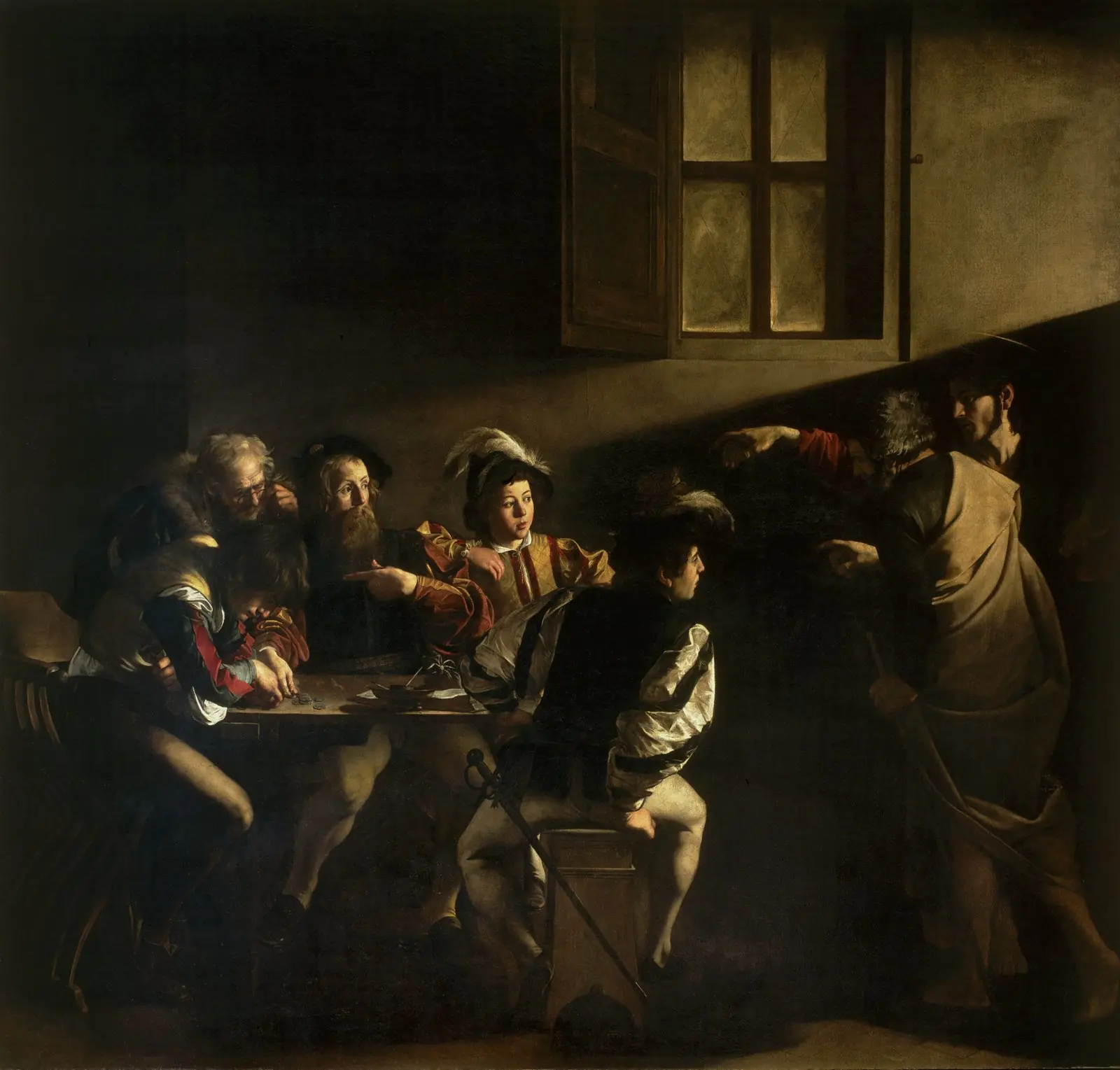
Chiaroscuro uses light and dark to shape an image; tenebrism pushes that contrast until darkness dominates. Caravaggio's The Calling of Saint Matthew is the clearest beginner case: a beam crosses a dark room, forms emerge from shadow, and the scene starts to feel staged by darkness itself. If you only remember one distinction, keep this one. Chiaroscuro is the broader technique. Tenebrism is the more extreme, theatrical version, where figures seem to emerge from a deep surrounding dark.
The terms are easy to confuse because both depend on contrast. A beginner may look at any dark painting and call it tenebrist. That is too fast. A painting can have strong chiaroscuro without becoming tenebrism. The difference is not simply whether a painting is dark. The difference is what darkness does to the whole structure of the image.
This page gives the quick answer. For the fuller method, examples, and historical range, continue afterward with What Is Chiaroscuro? Definition, Examples, and Chiaroscuro vs. Tenebrism.
Short answer
Chiaroscuro is any strong use of light and dark to model volume, guide the eye, and create depth. Tenebrism is a darker, sharper, more dramatic kind of chiaroscuro where most of the image falls into shadow and the lit subject appears isolated.
Caravaggio makes the difference easiest to see because his light does not simply reveal forms; it interrupts the scene and turns darkness into part of the drama.
Difference between chiaroscuro and tenebrism
| Question | Chiaroscuro | Tenebrism |
|---|---|---|
| Main idea | Light-dark contrast models form and guides attention. | Deep darkness isolates a bright dramatic zone. |
| How dark? | Can be soft, gradual, or moderately strong. | Usually very dark, abrupt, and engulfing. |
| Effect | Volume, focus, depth, hierarchy. | Shock, compression, revelation, stage-like drama. |
| Best shortcut | A painting sculpted by light. | A painting staged by darkness. |
What is chiaroscuro?
Chiaroscuro comes from Italian words meaning light and dark. In art, it describes the use of tonal contrast to make bodies look three-dimensional, separate foreground from background, and organize where the viewer looks first. The term is broad. It can describe Renaissance modeling, Baroque drama, Rembrandt's glowing interiors, or Vermeer's quiet faces against shadow.
The point is not only darkness. A painting uses chiaroscuro when light and shadow actively build the image. A cheek turns because one side receives light and the other falls away. A hand becomes important because it catches a brighter accent. A room feels deep because some zones stay legible and others recede. Chiaroscuro makes a flat surface behave like space.
What is tenebrism?
Tenebrism is a narrower and more forceful effect. It uses extreme contrast, often with large areas of black or near-black darkness, to make the illuminated subject feel isolated. The word comes from darkness itself. In tenebrist images, shadow does not merely model forms. It presses around them, cuts off the wider setting, and turns the lit zone into a kind of stage.
Tenebrism is closely associated with Caravaggio and artists influenced by him in the seventeenth century. It suits scenes of revelation, violence, conversion, and witness because it makes the event feel sudden. The world around the figure falls away. Light behaves less like daylight and more like a decisive interruption.
The easiest test for beginners
Ask three questions before naming the effect:
- Does light mostly model the forms? If yes, you are probably looking at chiaroscuro.
- Does darkness take over most of the image? If yes, the painting may be tenebrist.
- Does the lit figure feel isolated like an actor on a dark stage? If yes, tenebrism is likely.
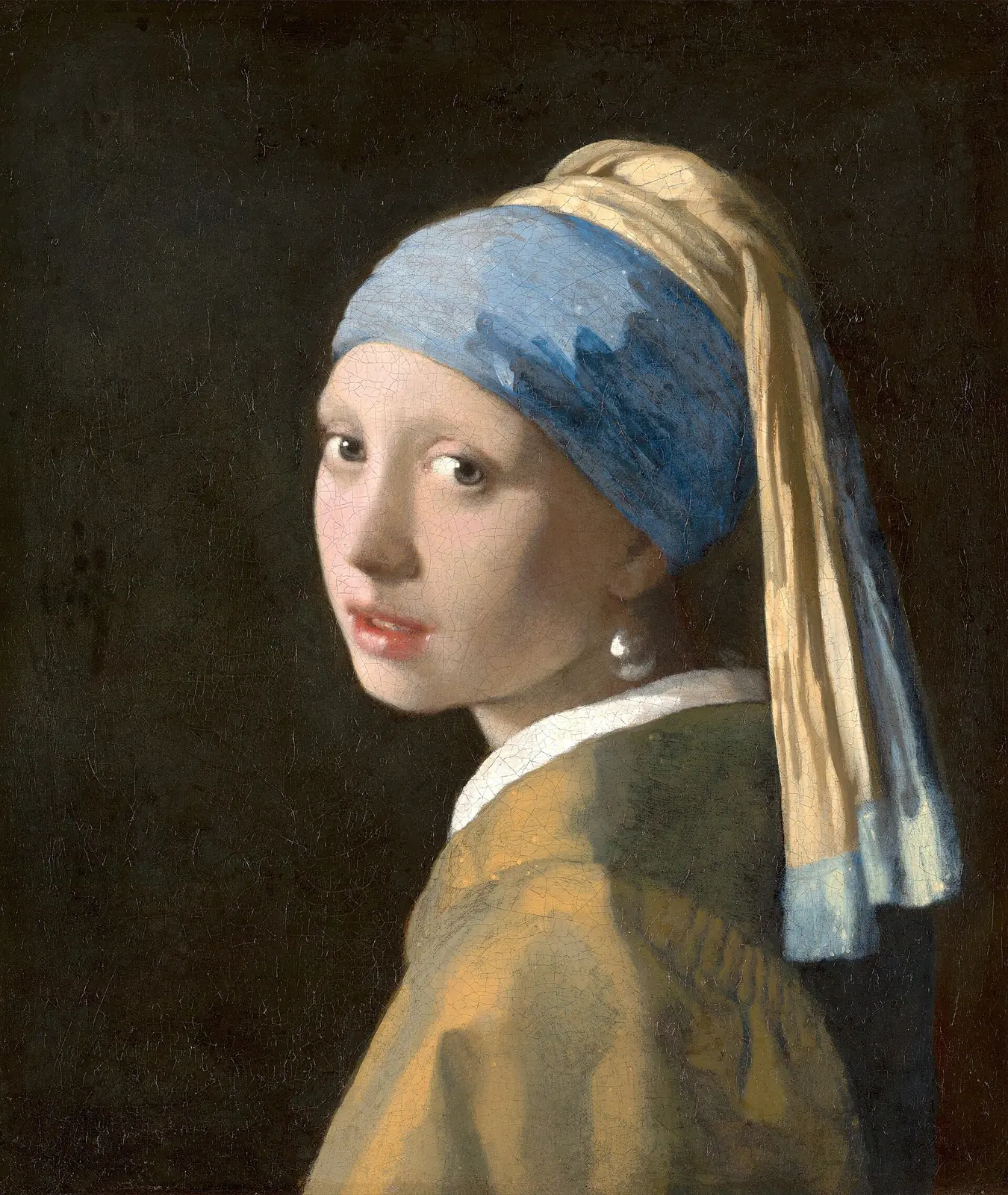
A dark background alone is not enough. Girl with a Pearl Earring has a dark ground, but it does not feel violently swallowed by shadow. It is a strong chiaroscuro image, not a clean example of tenebrism.
The common mistake: calling every dark painting tenebrism
The fastest way to misuse the term is to treat tenebrism as a synonym for “dark painting.” Many old master paintings use dark backgrounds, brown grounds, shaded interiors, or strong side light. That can produce chiaroscuro without producing tenebrism. In a chiaroscuro painting, darkness may help a cheek turn, a sleeve recede, a hand advance, or a figure separate from the background. The shadow remains part of a wider visual field.
Tenebrism is more aggressive. It makes darkness feel like an active force. The setting often shrinks. Peripheral information disappears. The lit figure seems exposed, cornered, called, threatened, or revealed. The image no longer feels like a naturally lit room with some shadow inside it. It feels like a stage where darkness has removed everything except the decisive action.
This is why the same artist can complicate the distinction. Rembrandt can use very dark passages without making the picture fully tenebrist, because his light often breathes through multiple figures and textures. Caravaggio more often sharpens contrast until the scene seems cut out of darkness. Use the behavior of the dark, not just the amount of dark, as the test.
Five examples that make the difference clear
1. Caravaggio, The Calling of Saint Matthew
The Calling of Saint Matthew is the classic border case. The painting uses chiaroscuro because light organizes the forms, the table, the faces, and Christ's gesture. It also moves toward tenebrism because much of the room is swallowed in darkness and the beam acts like a spiritual spotlight.
2. Artemisia Gentileschi, Judith Beheading Holofernes
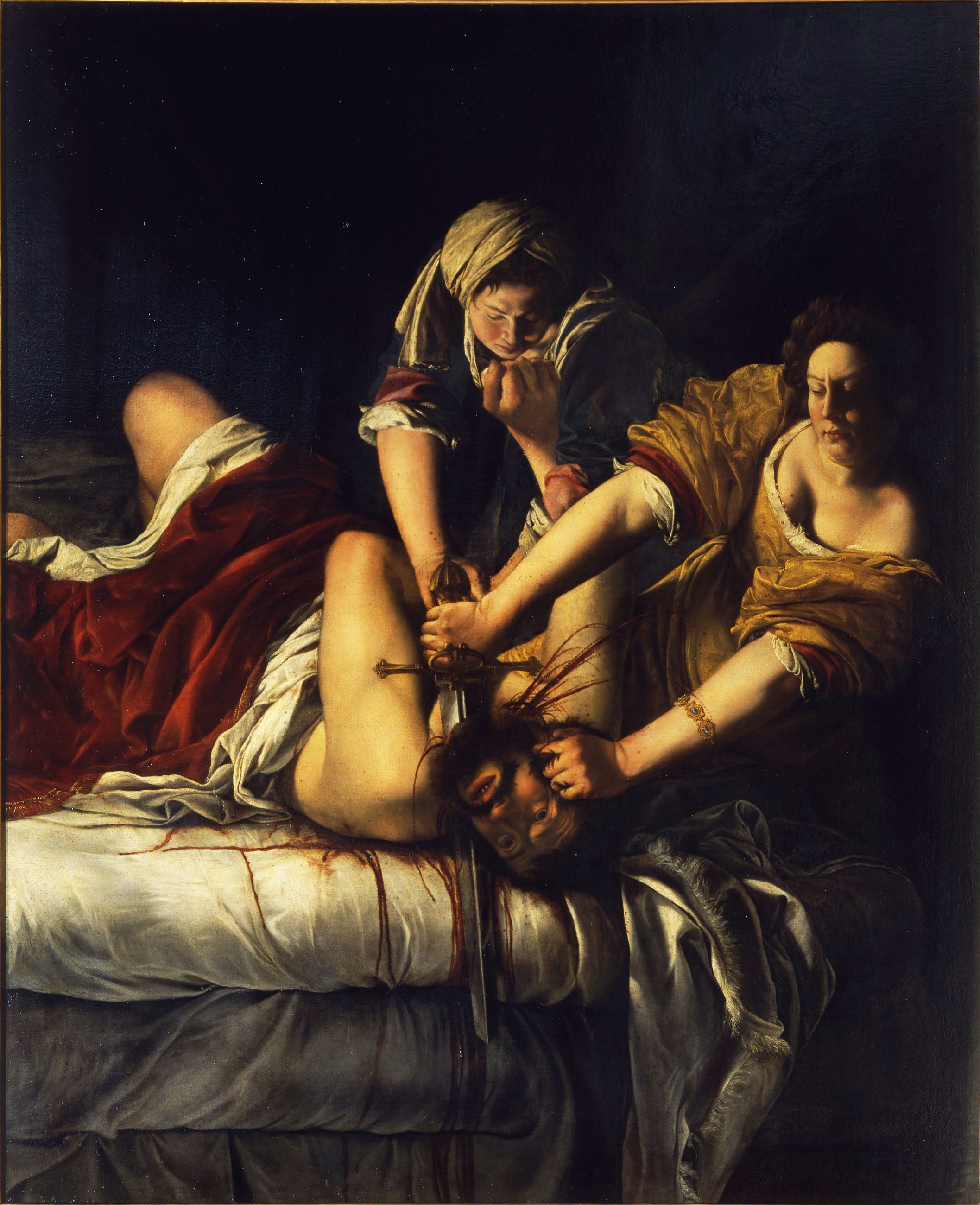
In Judith Beheading Holofernes, darkness compresses the action into a tight foreground. The light catches arms, blade, sheet, and blood, while the surrounding shadow removes escape. This is not just modeling. It is near-tenebrist pressure applied to bodies at work.
3. Rembrandt, The Night Watch
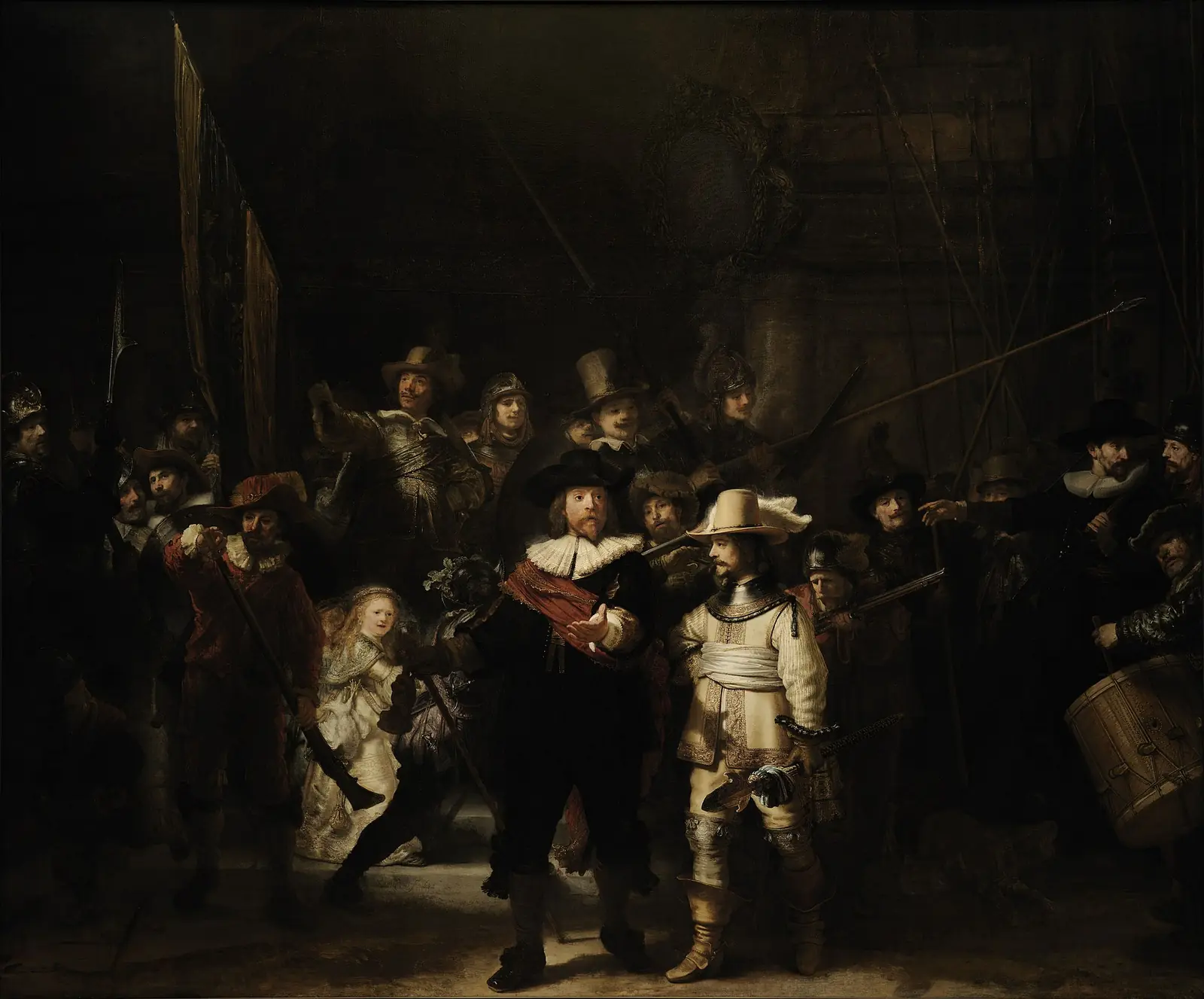
The Night Watch shows why chiaroscuro is broader than tenebrism. Rembrandt uses unequal light to animate a crowd, pull certain figures forward, and make the group portrait feel active. But darkness does not erase the whole setting. Light circulates through the scene rather than striking only one isolated figure.
4. Vermeer, Girl with a Pearl Earring
Girl with a Pearl Earring is useful because it prevents a common mistake. The background is dark, the face is lit, and the pearl flashes. Still, the darkness is calm. It does not create violent compression. Vermeer uses chiaroscuro for concentration and presence, not for tenebrist shock.
5. Goya, The Third of May 1808
In The Third of May 1808, a lantern exposes the victims and leaves the soldiers as a darker mass. The image borrows the force of sharp light-dark contrast, but the goal is not religious revelation. It is political accusation. Chiaroscuro turns into moral evidence.
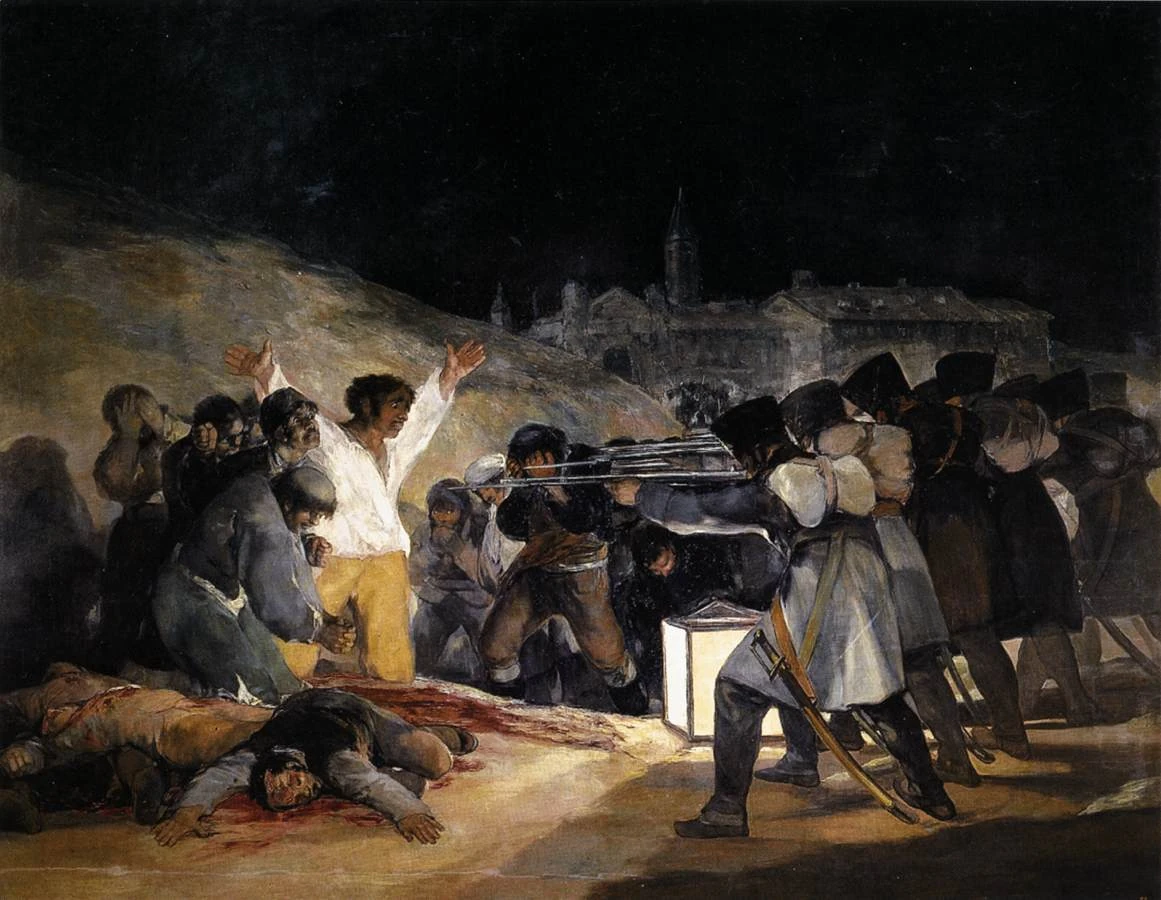
Goya also shows that these terms are tools, not cages. The painting is not a seventeenth-century tenebrist canvas, but it understands how darkness can organize fear and how light can isolate responsibility. That is the practical value of learning the distinction: it helps you describe what a painting is doing, even when the work does not fit a textbook category perfectly.
Where to go next
Use this page as the short answer. If you want the fuller explanation of how chiaroscuro works, where the term comes from, how it differs from sfumato, and how to reuse it in front of paintings, read the complete Explainary guide to chiaroscuro. The two pages are designed to work together: this one fixes the difference quickly; the longer guide trains the eye in more depth.
Primary sources
- National Gallery: Chiaroscuro glossary
- Britannica: Tenebrism
- The Met: Caravaggio and his followers
- Uffizi: Judith Beheading Holofernes
- Rijksmuseum: The Night Watch
- Mauritshuis: Girl with a Pearl Earring
Test your eye
Try the art quiz after reading. A useful next challenge is to recognize not only the artist, but also what kind of light logic the image uses.
Frequently asked questions
Chiaroscuro is the broad use of light and dark to model form, space, and attention. Tenebrism is a more extreme version in which large areas fall into darkness and a sharply lit zone creates a spotlight effect.
Yes. Tenebrism depends on light-dark contrast, so it can be understood as an intensified form of chiaroscuro. But many chiaroscuro paintings are not tenebrist.
Caravaggio uses chiaroscuro and often pushes it toward tenebrism, especially when figures emerge from deep darkness under a sharp beam of light.
Look for a scene where darkness dominates the image, the setting is strongly compressed, and the lit figures appear isolated as if on a stage.