
Museum guide
12 Must-See Artworks at the National Gallery in London
Wondering what to see at the National Gallery on a first visit? This 12-work route is built to help you understand the museum without trying to see everything.
From the gold-ground devotion of the Middle Ages to Northern precision, from Italian light to Baroque presence, then from British landscape to modern color, this route follows a simple idea: to see how European painting gradually transformed the way we look.
How to use this route at the National Gallery
Count about 90 minutes to two hours if you follow the twelve stops and read the short entries. The sequence is not a full floor plan. It gives the visit a thread: court devotion, early oil painting, Renaissance intellect, Baroque immediacy, landscape, modern industry, color, and optical experiment.
If you only have 45 minutes
Focus on six stops: The Arnolfini Portrait, The Virgin of the Rocks, The Ambassadors, The Supper at Emmaus, The Fighting Temeraire, and Sunflowers. This express route already gives a strong summary of the museum: Northern precision, Italian Renaissance atmosphere, humanist knowledge, Baroque revelation, modern memory, and expressive color.
The 12 artworks to see first
1. The Wilton Diptych
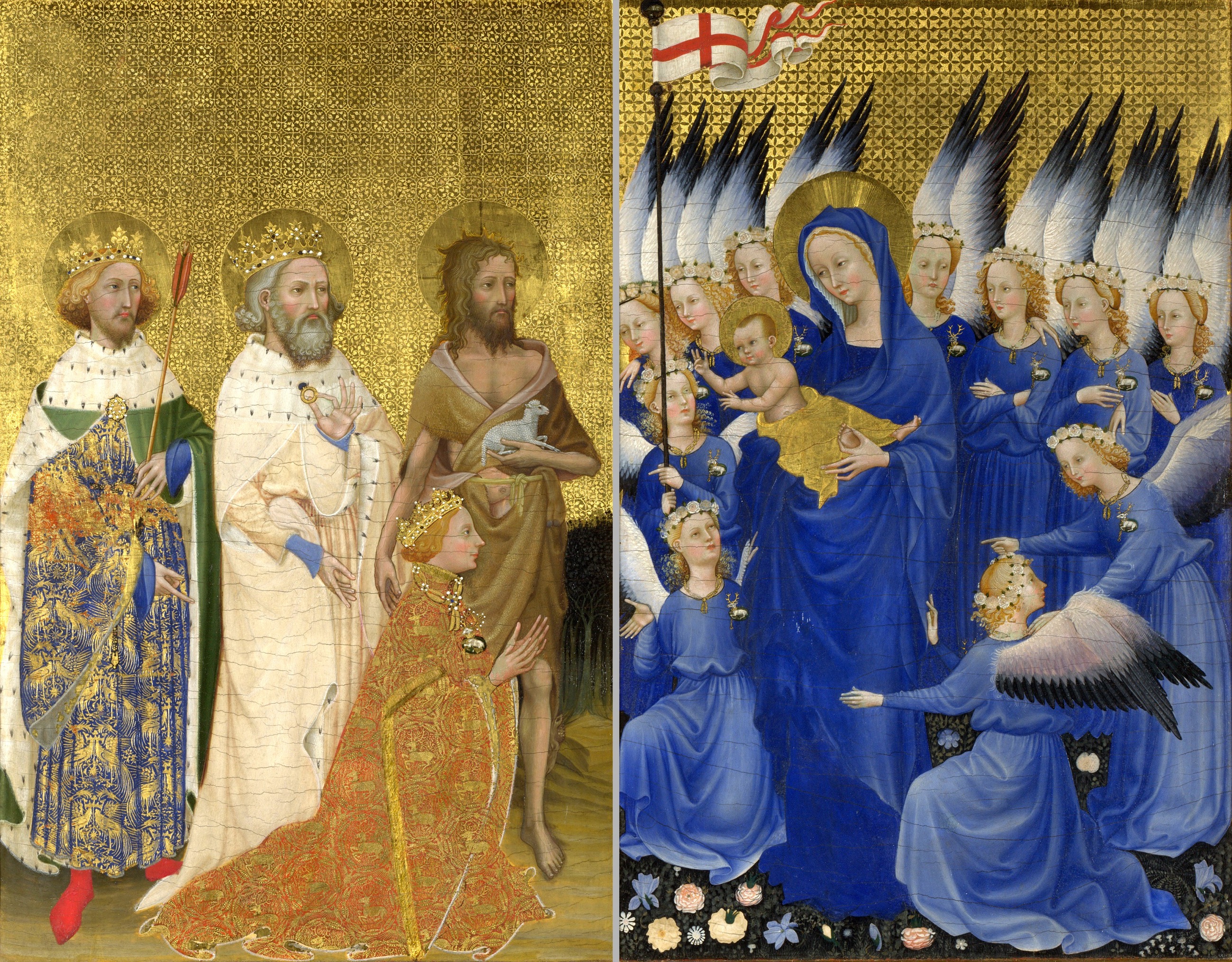
Start with scale. This is not a huge public altarpiece, but a portable diptych that could be opened like a precious book. The Wilton Diptych makes the International Gothic visible at once: gold, blue, ceremony, elegant figures, and political signs compressed into a courtly object.
2. Van Eyck, The Arnolfini Portrait
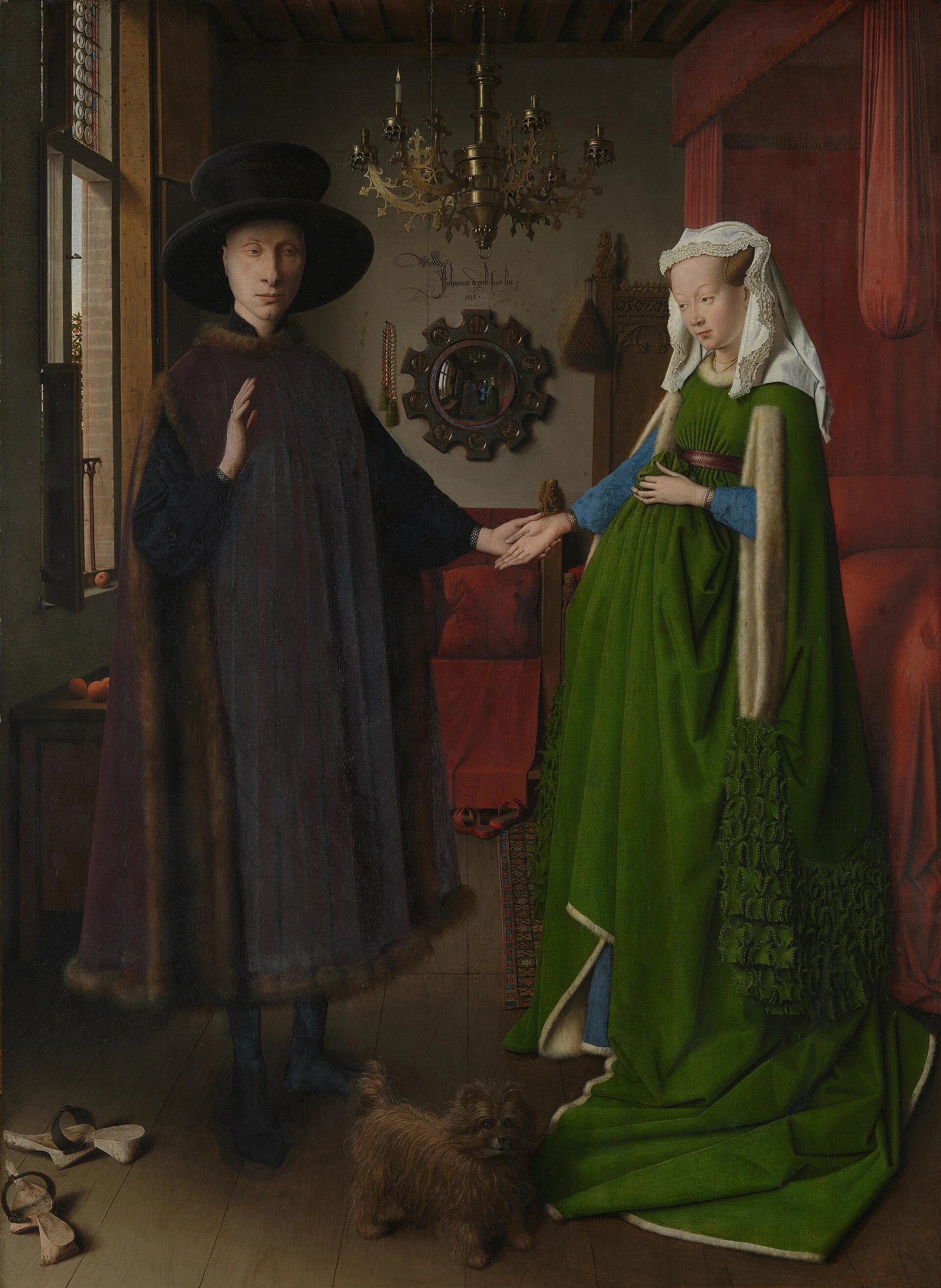
Jan van Eyck makes looking feel forensic. Look first at the mirror, the dog, the shoes, and the light on the different materials. The fruit, chandelier, bed, and joined hands then invite attention without settling into one simple explanation. As a Northern Renaissance stop, it shows oil painting becoming a medium of light, texture, status, and controlled ambiguity.
3. Leonardo, The Virgin of the Rocks
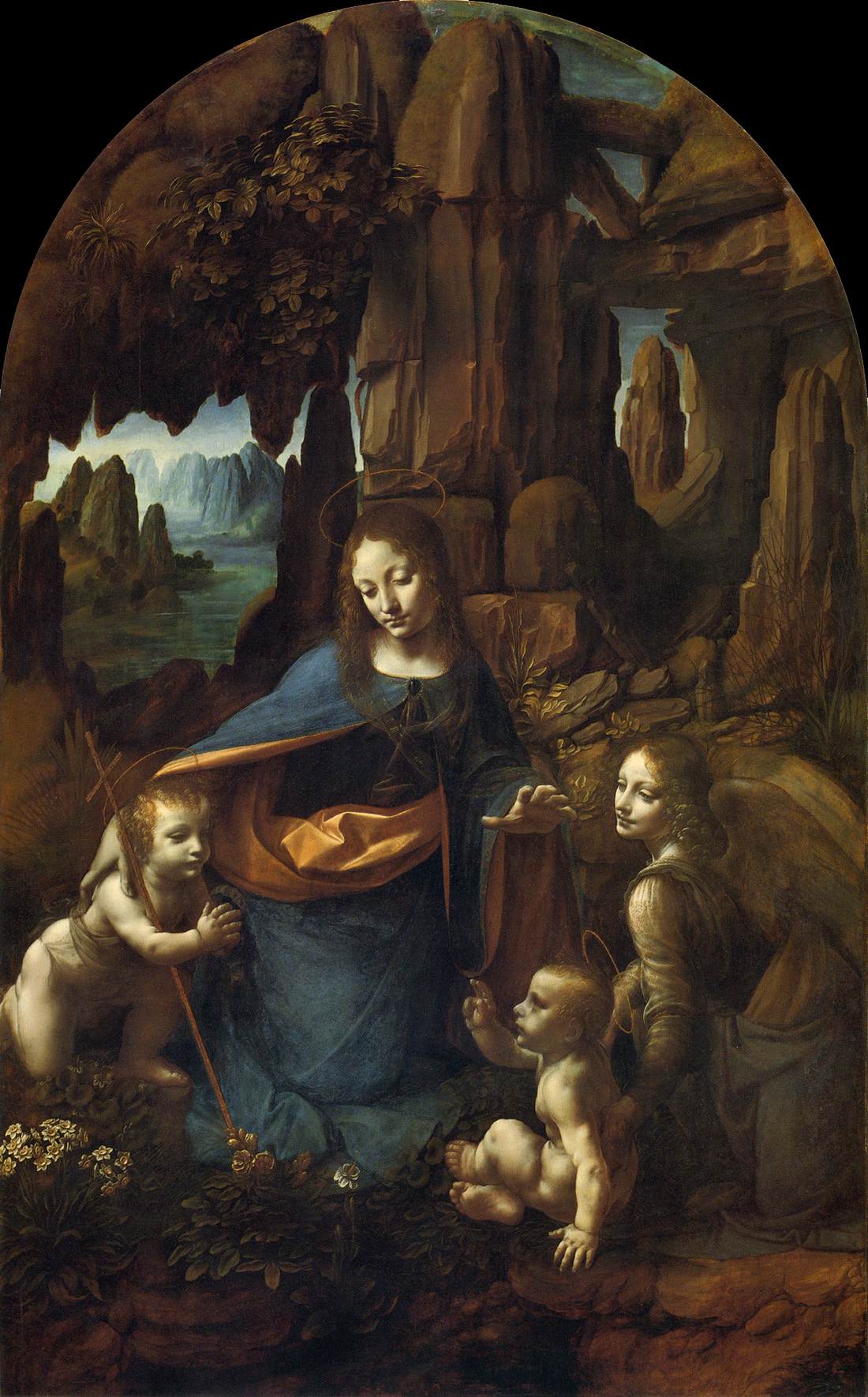
Leonardo da Vinci slows the religious scene down through shadow, gesture, and air. The figures form a soft triangle, but the cave keeps the image mysterious: rock, water, plants, hands, faces, and glances seem to belong to one living environment. It is an ideal stop for seeing Renaissance composition as atmosphere, not only geometry.
4. Holbein, The Ambassadors
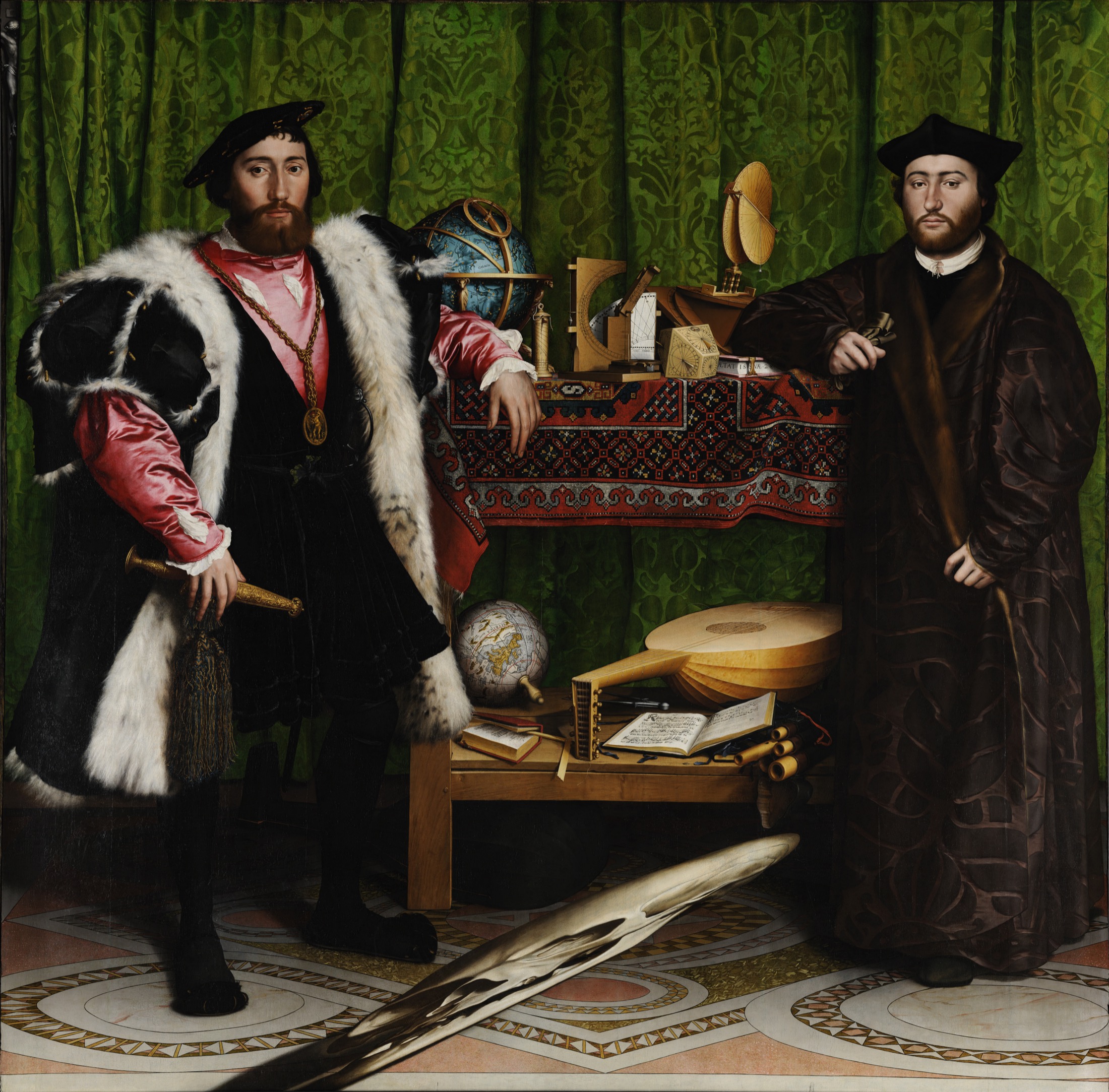
Hans Holbein the Younger gives the museum one of its great paintings about knowledge and instability. Globes, instruments, books, fabrics, a broken lute string, and the distorted skull make the double portrait more than a display of status. If you see it in the room, also move to the side: the anamorphic skull stops being a strange smear and becomes a clear presence. It is a court image that asks the viewer to move, decode, and accept that power is never free from mortality.
5. Caravaggio, The Supper at Emmaus
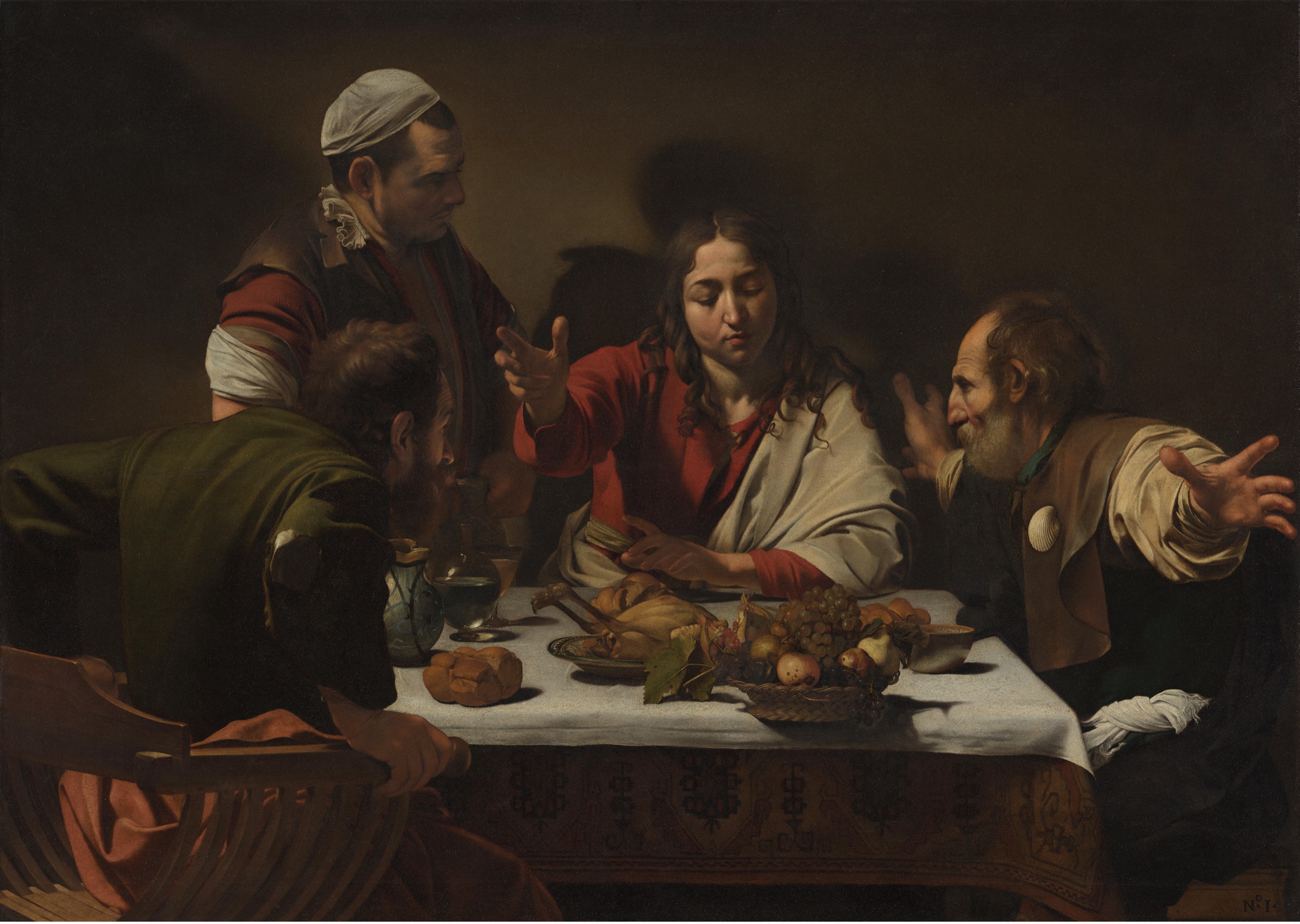
Caravaggio turns recognition into a physical event. Christ blesses the bread, one disciple throws his arms wide, another pushes back, and the fruit basket seems almost ready to fall into our space. Look at the basket on the table edge: it pulls our own space into the picture. The Baroque force of the painting comes from proximity: the miracle is not far away; it is across the table.
6. Velázquez, The Toilet of Venus
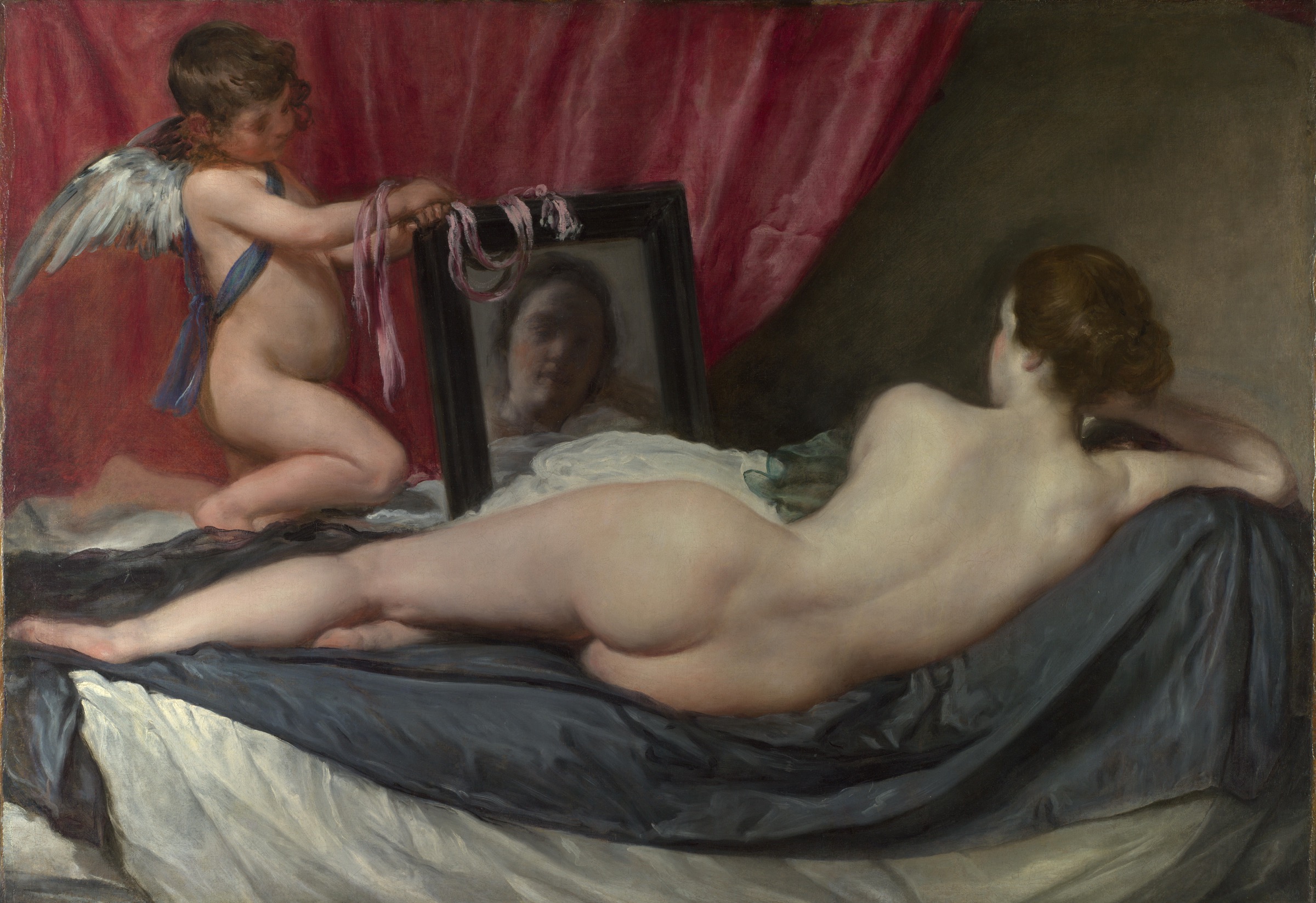
Diego Velázquez paints desire as a problem of access. Venus is close, luminous, and turned away; her face arrives only through the mirror held by Cupid. The painting belongs in this route because it is not simply a nude. It is a painting about looking, delay, and the impossibility of full possession.
7. Constable, The Hay Wain
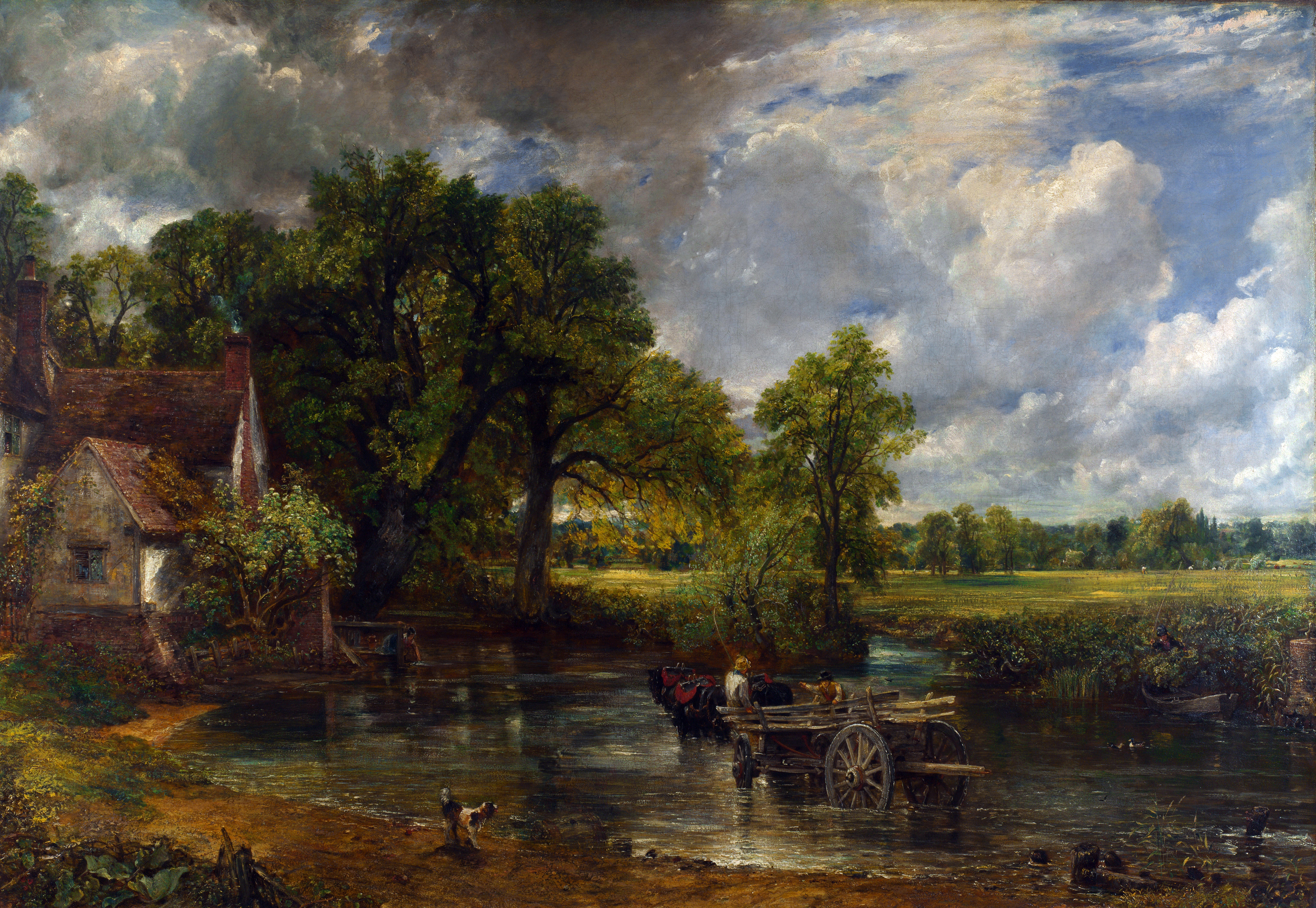
John Constable anchors the route in a different kind of modernity: weather, labor, local memory, and rural change. The cart sits in shallow water, clouds move above, and the mill landscape feels ordinary before it becomes national. Look for the balance between affection and construction: the scene appears natural because it is so carefully organized.
8. Turner, The Fighting Temeraire
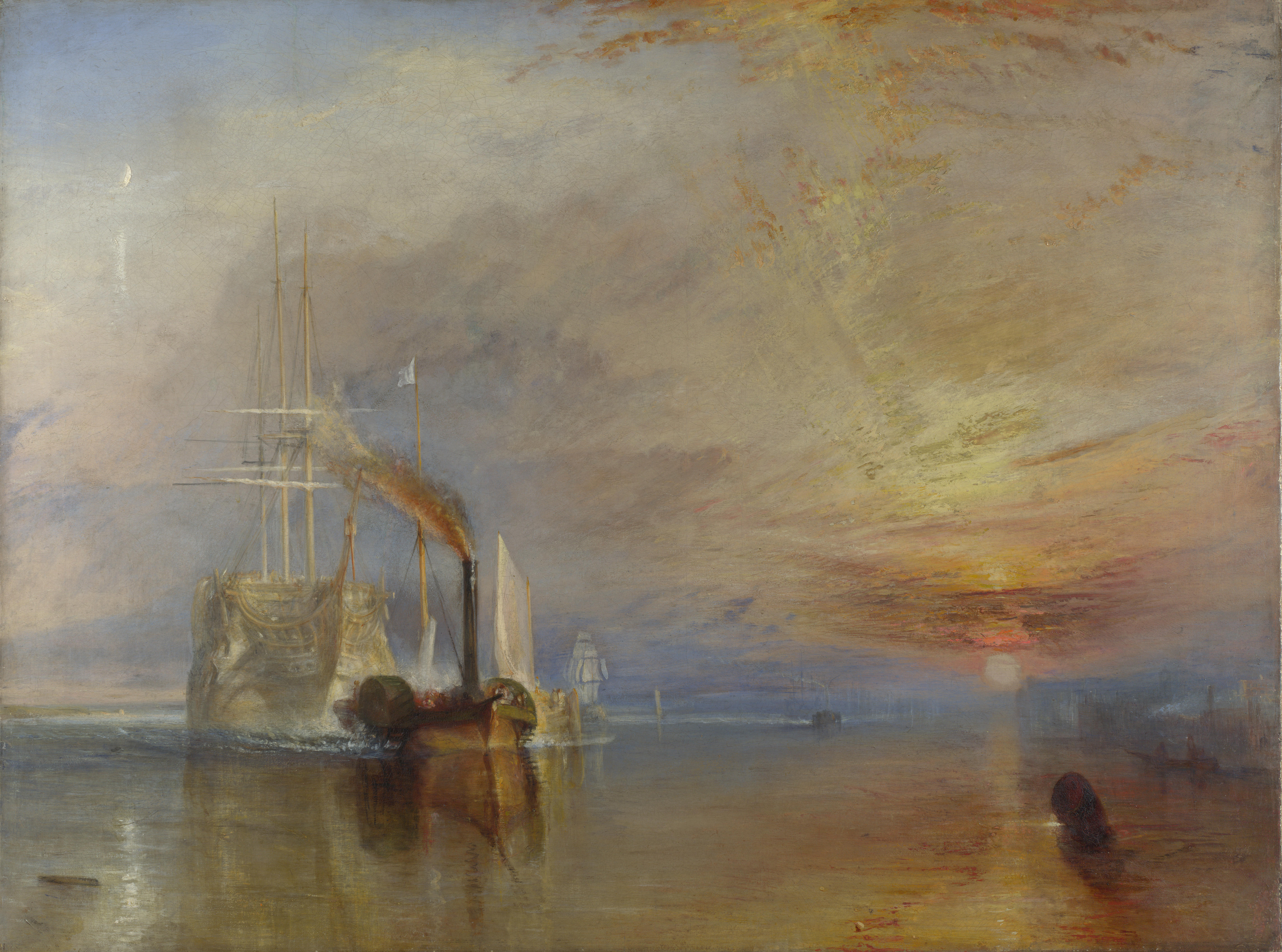
J. M. W. Turner turns maritime history into atmosphere. The pale old ship is pulled by a dark tug while sunset burns behind it, so the picture is both elegy and modern image. Do not look only for the ship: watch how color already begins to dissolve the forms. It is one of the National Gallery's clearest lessons in how color can carry historical feeling.
9. Turner, Rain, Steam, and Speed
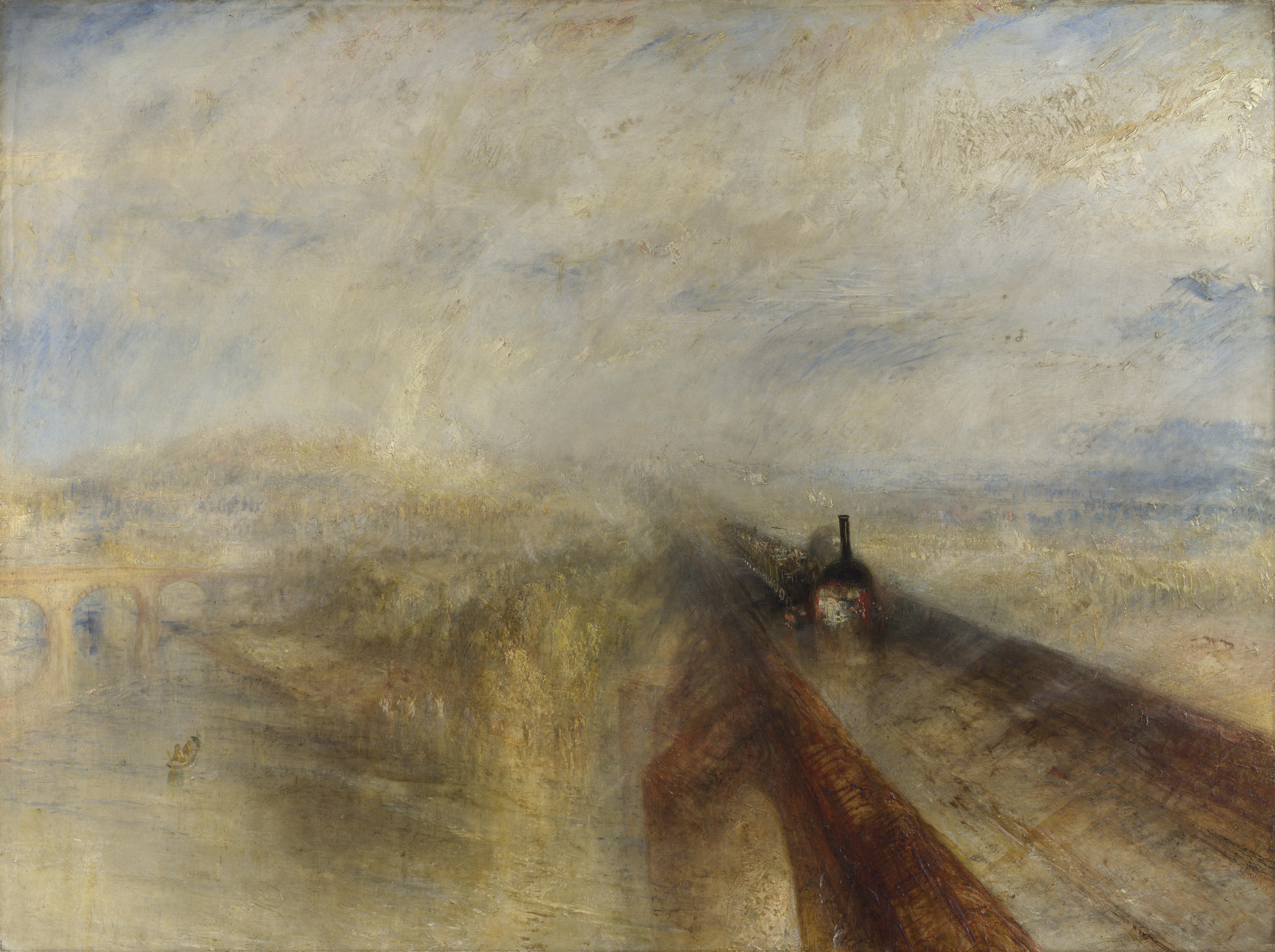
See this after The Fighting Temeraire if you can. Turner moves from the old ship to the speeding train, from national memory to industrial acceleration. Here too, do not look only for the train. The railway is visible, but the real subject is perception under pressure: bridge, storm, steam, river, and speed fuse into one unstable image.
10. Van Gogh, Sunflowers
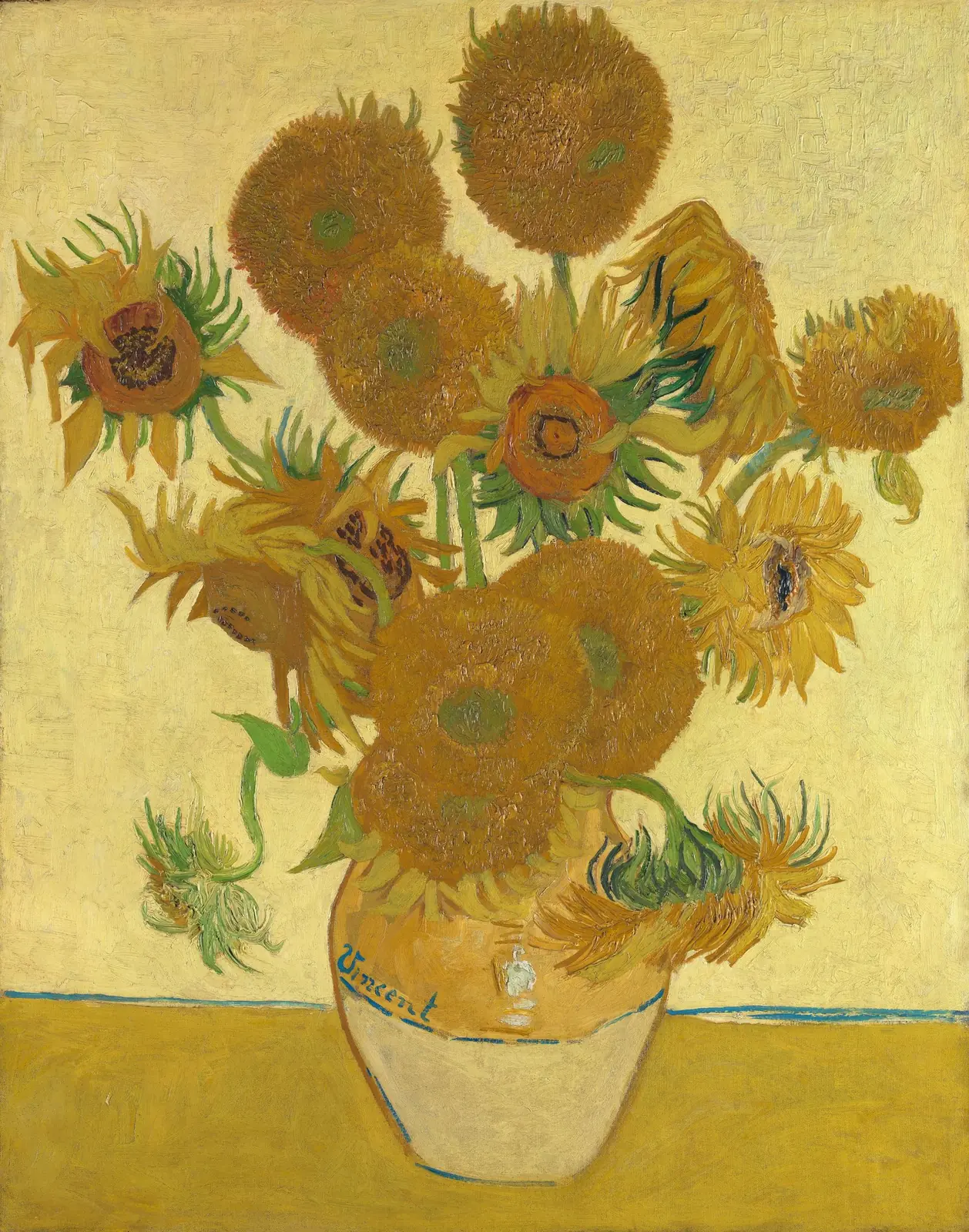
Vincent van Gogh compresses a still life into heat, surface, and repetition. The flowers are not all fresh; some droop, darken, and thicken into matter. After the earlier rooms, Sunflowers changes the question: not how painting describes the world, but how color and touch can make an object feel alive.
11. Seurat, Bathers at Asnières
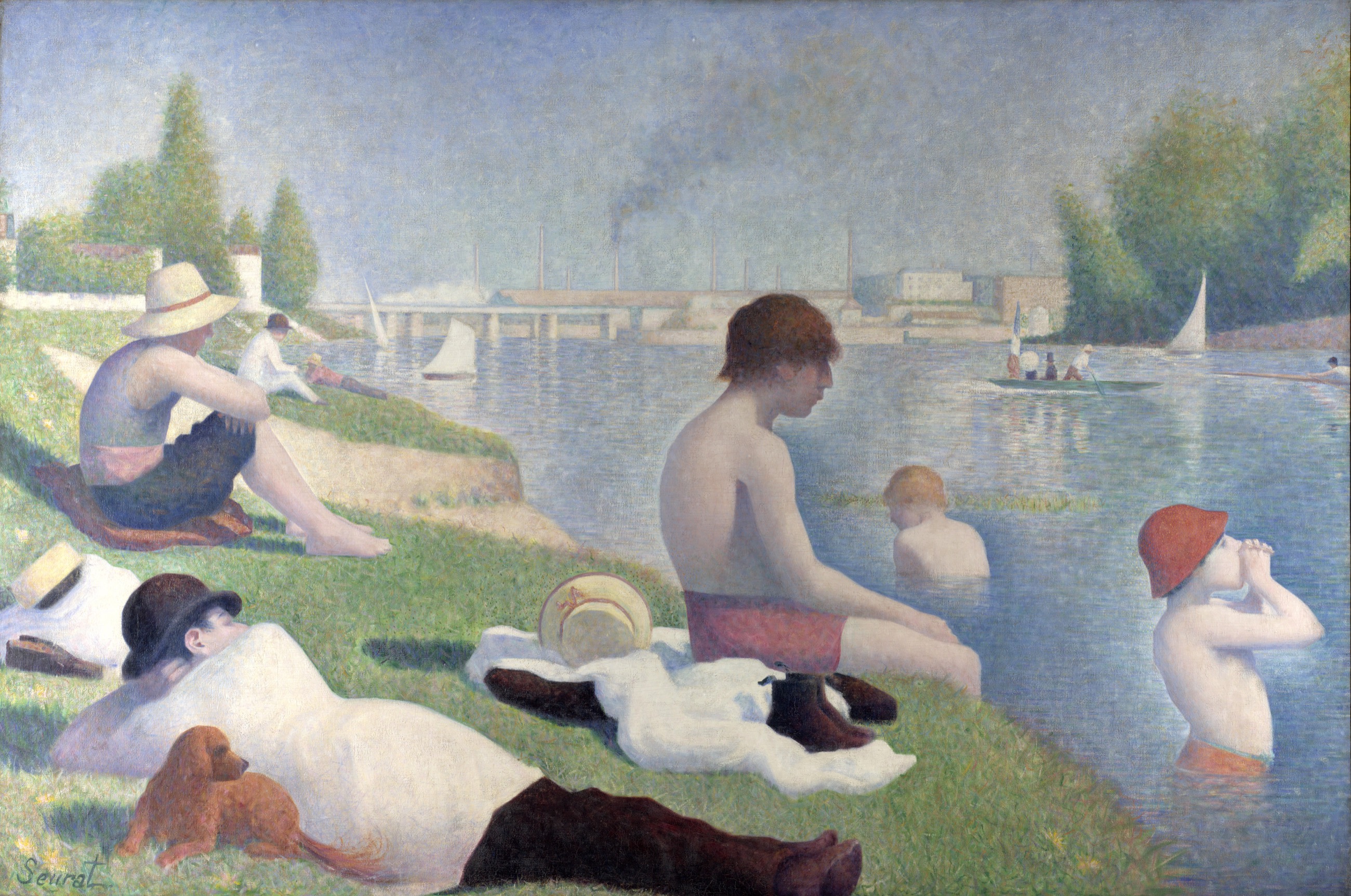
Georges Seurat turns a scene of rest near the Seine into something calm, social, and strangely distant. The figures share the riverbank, but each seems absorbed in a separate time. The work points toward Neo-Impressionism without yet becoming full pointillism: color already serves construction.
12. Monet, Water Lilies
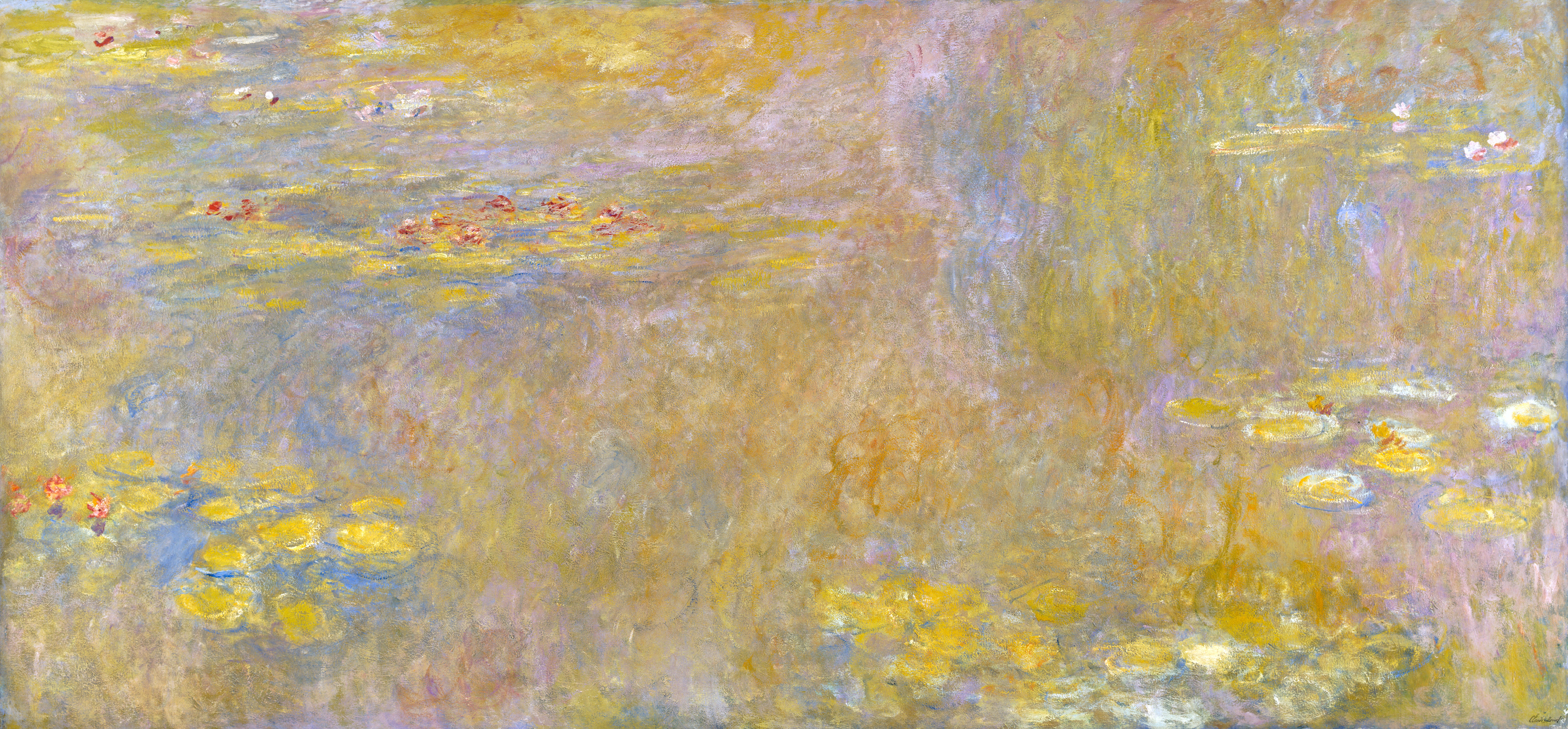
Claude Monet changes the tempo again. There is no single dramatic figure and no stable horizon; the eye moves across leaves, reflections, water, and brushwork. As an Impressionist final stop, it shows how far the National Gallery route can travel: from gold-ground ceremony to painting as an open field of perception.
A simple way to visit
If time is short, keep the route in three movements. First, look at how images build authority: the Wilton Diptych, Van Eyck, Leonardo, Holbein, Caravaggio, and Velázquez. Then watch landscape and modern history take over with Constable and Turner. Finally, let color become the main structure with Van Gogh, Seurat, and Monet.
The National Gallery rewards this kind of selective visit. You do not need to see everything in one pass. A strong route lets each room become a doorway into a painter, a movement, or a new way of looking. At the National Gallery, a good visit is not about ticking everything off. It is about leaving with a few images truly seen.
Good to know
The National Gallery is on Trafalgar Square in central London. General admission is free, but some temporary exhibitions may be ticketed. Displays can change, so check the artwork page before a visit. The National Gallery is not the National Portrait Gallery, even though the two institutions are neighbors.
Sources
- The National Gallery: about the collection
- The National Gallery: The Wilton Diptych
- The National Gallery: Van Eyck, The Arnolfini Portrait
- The National Gallery: Leonardo, The Virgin of the Rocks
- The National Gallery: Holbein, The Ambassadors
- The National Gallery: Caravaggio, The Supper at Emmaus
- The National Gallery: Velázquez, The Toilet of Venus
- The National Gallery: Constable, The Hay Wain
- The National Gallery: Turner, The Fighting Temeraire
- The National Gallery: Turner, Rain, Steam, and Speed
- The National Gallery: Van Gogh, Sunflowers
- The National Gallery: Seurat, Bathers at Asnières
- The National Gallery: Monet, Water-Lilies
FAQ
Start with The Wilton Diptych, The Arnolfini Portrait, The Virgin of the Rocks, The Ambassadors, The Supper at Emmaus, The Toilet of Venus, The Hay Wain, The Fighting Temeraire, Rain, Steam, and Speed, Sunflowers, Bathers at Asnières, and Water Lilies.
Allow about 90 minutes to two hours if you follow the twelve stops and read the short entries. Add time if you open the full Explainary analyses or pause in the Turner, Impressionist, and Renaissance rooms.
No. The National Gallery focuses on Western European paintings, while the National Portrait Gallery focuses on portraits and British historical identity. They are neighboring but separate museums in central London.